IRDAI slaps ₹1 crore penalty on Canara HSBC Life for mis-selling policy to 88-year-old

Synopsis
IRDAI imposed a ₹1 crore fine on Canara HSBC Life Insurance after it sold a deferred annuity policy to an 88-year-old — despite the product's own eligibility cap of 80 years. The case was triggered not by a formal complaint, but by a social media post the regulator noticed on its own, signalling a new era of digital-era insurance watchdogging in India.
Key Takeaways
IRDAI has imposed a ₹1 crore penalty on Canara HSBC Life Insurance Company Limited for mis-selling a deferred annuity policy.
The policy was sold to an 88-year-old customer, though the approved product had an entry age cap of 80 years .
The policy carried an annual premium of ₹2 lakh payable over four years and was sold via Canara Bank as corporate agent.
Lapses included failure to assess financial suitability, missing Customer Information Sheet, unverified benefit illustration, and premium collected before policy issuance.
IRDAI initiated the case suo motu after a social media post brought the sale to the regulator's attention.
Separately, IRDAI has proposed a Public Insurance Registry (PIR) to improve transparency and competition in the insurance sector.
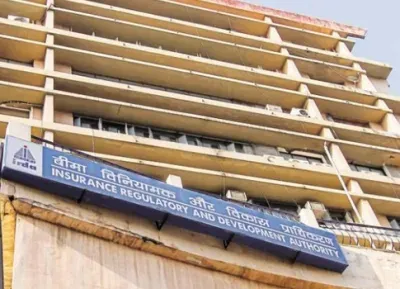
The Insurance Regulatory and Development Authority of India (IRDAI) has imposed a penalty of ₹1 crore on Canara HSBC Life Insurance Company Limited for mis-selling a deferred annuity policy to an 88-year-old customer, citing multiple systemic failures in the sales process. The action, taken after the regulator invoked suo motu powers following a viral social media post, underscores growing regulatory scrutiny of insurance distribution practices targeting senior citizens.
What the Policy Involved
The policy in question was a deferred annuity product sold through Canara Bank, the insurer's corporate agent. It carried an annual premium of ₹2 lakh, payable over four years, with the customer's daughter named as the annuitant. Critically, the approved product permitted entry only for customers aged between 30 and 80 years — the proposer was 88 years old at the time of purchase, placing the sale in clear violation of the product's own eligibility criteria.
Key Lapses Identified by IRDAI
IRDAI's examination uncovered a cascade of procedural and compliance failures. The insurer did not conduct an adequate assessment of the customer's financial circumstances or evaluate the product's suitability given his advanced age and the size of the premium commitment. The regulator also noted deficiencies in the verification call, the proposal form, and disclosure of key policy features.
The benefit illustration lacked a verifiable acknowledgement from the policyholder. The Customer Information Sheet and proposal form were reportedly not provided to the customer at the point of sale. Furthermore, the premium was collected before the policy was formally issued, and the implications of the proposer's death during the premium-paying period had not been adequately explained.
How the Case Came to Light
Notably, the regulatory proceedings were not triggered by a formal complaint — IRDAI initiated action after taking suo motu cognizance of a social media post that highlighted the sale. This marks a significant moment in Indian insurance regulation, where public posts on digital platforms are being treated as actionable intelligence by the watchdog. It reflects a broader shift in how regulators are engaging with citizen-sourced evidence.
IRDAI's Proposed Public Insurance Registry
In a separate but related development, IRDAI has proposed the creation of a Public Insurance Registry (PIR) — a digital public infrastructure designed to foster a more connected, transparent, and efficient insurance ecosystem. According to the regulator, the PIR would help reduce information asymmetry, promote competition among insurers, and encourage innovation in product design, pricing, and customer service. The initiative signals that IRDAI is moving on two fronts simultaneously: enforcement on the back end and structural reform on the front end.
What This Means for the Industry
The penalty against Canara HSBC Life is a pointed warning to bancassurance channels — bank-linked insurance distributors — which have historically faced criticism for pushing unsuitable products to customers who may not fully understand complex annuity structures. With India's senior citizen population set to grow sharply over the coming decade, regulators are expected to tighten suitability norms further. Industry observers say the case could accelerate mandatory age-gating checks at the point of sale across all insurers.
Point of View
And compliance checks are too often treated as paperwork rather than protection. The fact that IRDAI had to rely on a social media post — rather than an internal audit or a customer grievance mechanism — to catch an age-eligibility violation this egregious raises uncomfortable questions about supervisory depth. A ₹1 crore fine on a large insurer is unlikely to sting enough to change incentive structures; a systemic fix would require tying senior executive accountability to mis-selling outcomes. The PIR proposal is promising, but transparency infrastructure without enforcement teeth rarely moves the needle.
NationPress
13 Sept 2026
Frequently Asked Questions
Why did IRDAI penalise Canara HSBC Life Insurance?
IRDAI fined Canara HSBC Life Insurance ₹1 crore for mis-selling a deferred annuity policy to an 88-year-old customer, in violation of the product's own age eligibility criteria of 30 to 80 years. The regulator found multiple lapses including failure to assess suitability, missing disclosures, and premium collection before policy issuance.
How did IRDAI find out about the mis-selling case?
IRDAI took suo motu cognizance of a social media post that highlighted the sale of the policy to the senior citizen, rather than acting on a formal complaint. This makes it a notable instance of regulators using social media as an early warning system for consumer protection violations.
What specific violations were found in the Canara HSBC Life case?
Violations included selling the policy to an 88-year-old despite an 80-year entry age cap, inadequate suitability assessment, a deficient verification call, missing Customer Information Sheet and proposal form at point of sale, an unverified benefit illustration, and collecting the premium before the policy was issued.
What is the proposed Public Insurance Registry (PIR) by IRDAI?
The Public Insurance Registry is a proposed digital public infrastructure initiative by IRDAI aimed at reducing information gaps in the insurance sector, promoting competition among insurers, and improving product innovation, pricing transparency, and customer experience. It is separate from the enforcement action against Canara HSBC Life.
Who is affected by the IRDAI action against Canara HSBC Life?
The immediate victim is the 88-year-old policyholder and his family. More broadly, the case puts all bancassurance channels — particularly bank-linked insurance distributors — on notice that IRDAI is actively monitoring sales practices, especially those targeting senior citizens.