Afghan victims of Italy fire attack return home after two months
Synopsis
Three Afghan farm labourers burnt alive inside a minivan in Italy's Calabria region have finally been returned home — more than two months after their deaths. The sole survivor's account of a gasoline attack over a refused payment demand has put a spotlight on the organised exploitation of migrant workers in southern Italy's agricultural belt.
Key Takeaways
Remains of three Afghan nationals killed in Italy arrived in Kabul on 27 and 28 July and were delivered to families in Balkh , Kabul , and Parwan provinces.
Four migrants — three confirmed Afghans — were burnt alive in a minivan in Amendolara , Calabria , in June .
Two Pakistani nationals were arrested and charged with voluntary manslaughter over the attack.
The sole survivor, an Afghan farm labourer, said the attackers threw gasoline and a lighter into the car after the victims refused to pay transportation money.
The Taliban Foreign Ministry condemned the killings; Italian PM Giorgia Meloni pledged justice for the victims' families.
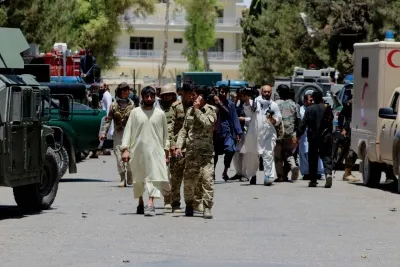
The remains of three Afghan nationals killed by Pakistani men in Italy have been repatriated to Afghanistan, arriving in Kabul on 27 and 28 July, according to the Taliban Ministry of Refugees and Repatriation. The bodies were subsequently handed over to the victims' families in the provinces of Balkh, Kabul, and Parwan, local media reported.
What Happened in Amendolara
In June, four migrants — three of them confirmed Afghans — were burnt alive inside a minivan parked near a gas station along the Ionian State Road 106 in Amendolara, a town in Cosenza province in Italy's Calabria region. Two Pakistani nationals were subsequently arrested on suspicion of the murders and charged with voluntary manslaughter.
According to a survivor who was tracked down and interviewed exclusively by TGR Calabria, the attackers demanded transportation money from the migrants. When the victims refused, the two men allegedly threw gasoline into the car and then ignited it with a lighter, burning all four migrants alive. The survivor, a young Afghan farm labourer who had been living with the victims in Villapiana, managed to escape by breaking a window.
Survivor's Account
'I saw the horror; I'm alive by a miracle,' the sole survivor told journalist Francesco Salvatore. 'I thought I was going to die,' he added, describing the moment the car was set ablaze. The survivor also alleged that the Pakistani men had used knives and guns to coerce him and others into working without pay. 'They didn't give us money, food yes, a house yes, but money no,' he said, also claiming there is a 'large mafia in Pakistan' behind the exploitation of migrant workers.
International Response
Following the killings, the Taliban's Foreign Ministry condemned the attack and called for a transparent and fair investigation by Italian authorities. Italian Prime Minister Giorgia Meloni expressed condolences to the families of the victims and pledged that those responsible would face justice, according to reports.
Context and Significance
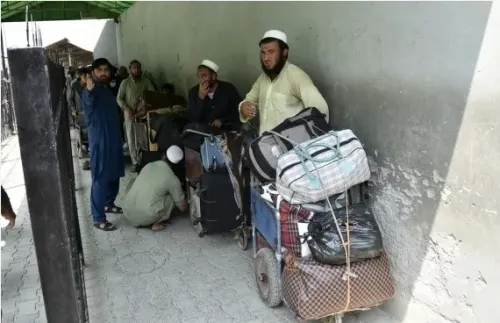
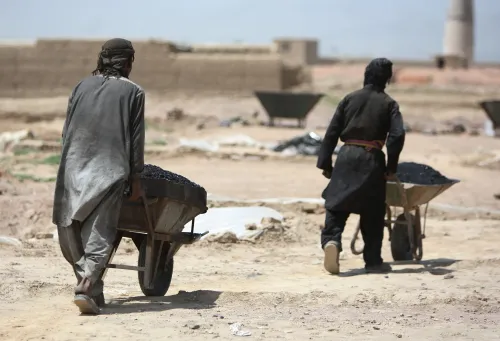
The incident has drawn attention to the vulnerability of Afghan migrant labourers in southern Italy's agricultural sector, where exploitation and informal labour arrangements are reportedly widespread. This comes amid a broader European conversation about migrant worker protections and the role of organised criminal networks in facilitating labour abuse. The repatriation of the remains — more than two months after the killings — marks a grim closure for the families, even as the criminal proceedings in Italy continue.
Point of View
Where labour coercion and non-payment are reportedly normalised. The survivor's account of knives, guns, and withheld wages points to organised exploitation that preceded the killing, not merely a spontaneous dispute over a fare. Italian authorities have moved on the perpetrators, but the broader network the survivor described — what he called a 'large mafia in Pakistan' — remains uninvestigated in public reporting. The two-month delay in repatriating the bodies also raises questions about consular access and the Taliban government's capacity to advocate for its citizens abroad.
NationPress
17 Sept 2026
Frequently Asked Questions
What happened to Afghan migrants in Amendolara, Italy?
Four migrants, three of them Afghan nationals, were burnt alive inside a minivan near a gas station in Amendolara, Calabria, in June. Two Pakistani nationals were arrested and charged with voluntary manslaughter after allegedly throwing gasoline and a lighter into the car when the victims refused to pay transportation money.
When were the bodies returned to Afghanistan?
The remains arrived in Kabul on 27 and 28 July, according to the Taliban Ministry of Refugees and Repatriation. They were subsequently handed over to the victims' families in Balkh, Kabul, and Parwan provinces.
Who survived the Amendolara fire attack?
One Afghan farm labourer survived by breaking a car window during the attack. He was tracked down and interviewed exclusively by TGR Calabria, and described being coerced into unpaid labour before the fatal incident.
How did the Italian and Afghan governments respond?
Italian Prime Minister Giorgia Meloni expressed condolences and pledged that those responsible would face justice. The Taliban's Foreign Ministry condemned the killings and called for a transparent and fair investigation by Italian authorities.
What does the survivor's account reveal about conditions for migrant workers?
The survivor alleged that Pakistani men used knives and guns to force him and others to work without wages, providing only food and shelter. He also claimed the existence of a 'large mafia in Pakistan' involved in the exploitation of migrant labourers in Italy.