Bangladesh immigration officials bar unmarried women from travel, High Court steps in
Synopsis
Three adult Bangladeshi women with valid documents were barred from flying to Nepal by an immigration officer who objected to them travelling without a male guardian. After police ignored their complaints for weeks, the case reached the High Court — which has now questioned whether gender-based travel curbs are lawful at all, in a ruling that could set a precedent for women's mobility rights across Bangladesh.
Key Takeaways
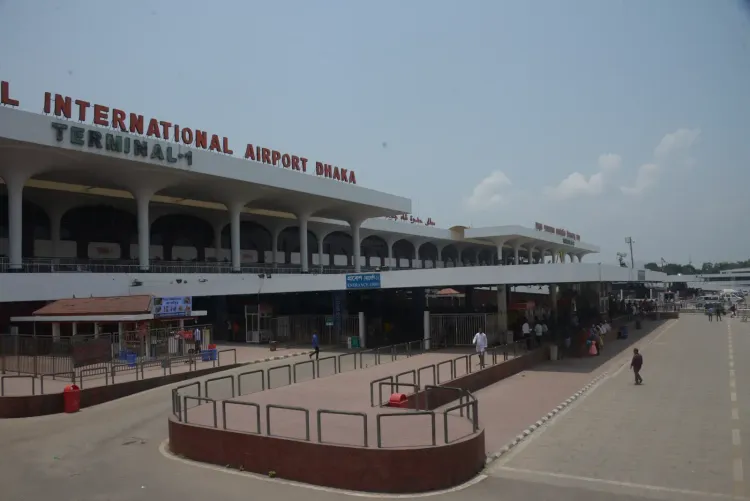
On 8 August , three adult women — Rifa Tamanna , Sohani Islam Samapti , and Naznin — were barred from flying to Nepal at Shahjalal International Airport, Dhaka for lacking a male companion.
All three carried valid travel documents and had no criminal record; they were turned away solely on gender and marital-status grounds, according to reports.
After police inaction over 31 days , the women filed a writ petition with the Bangladesh High Court on 15 September .
A bench of Justice KM Kamrul Kader and Justice Fatema Anwar issued a rule on Tuesday questioning the lawfulness of gender-based travel restrictions.
The Immigration Branch has been ordered to dispose of the women's complaint within seven days and submit a compliance report to the court.
Lawyer Ishrat Hasan noted that police have no legal authority to block a passport-holder from travelling without a court order or active criminal case.
Bangladesh's immigration authorities are facing mounting scrutiny after allegations emerged that officials at Shahjalal International Airport in Dhaka have been routinely subjecting unmarried women to intrusive questioning about their personal lives, travel companions, and reasons for travelling abroad — and in at least one documented case, blocking them from boarding altogether. The practice, reportedly widespread, came to a head when three young women were stopped from flying to Nepal and forced to return home, prompting a legal battle that has now reached the Bangladesh High Court.
What Happened at Shahjalal Airport
On 8 August, three adult friends — Rifa Tamanna, Sohani Islam Samapti, and Naznin — arrived at Shahjalal International Airport with valid travel documents, no criminal cases against them, and their families' consent, intending to travel to Nepal. An immigration officer, according to reports, refused to allow them to proceed on the grounds that they had no male companion and none of them was married. All three were turned back from the airport.
The incident drew immediate condemnation. The women subsequently pursued every available official channel before turning to the courts.
The Legal Escalation
On 31 August, the three women submitted a written complaint to the Additional Inspector General of Police (IGP) of the Immigration Branch, demanding that CCTV footage from the incident be preserved, that those responsible be held accountable, and that compensation be provided. When the police took no action within a month, the women sent a formal legal notice on 6 September. Receiving no response to that either, they filed a writ petition with the High Court on 15 September, naming the officer-in-charge of the Immigration Police as a respondent.
High Court Issues Rule, Demands Compliance
During a hearing on Tuesday, a bench comprising Justice KM Kamrul Kader and Justice Fatema Anwar issued a formal rule questioning 'why preventing adult female citizens from legally travelling abroad solely because they are unmarried, travelling without a guardian or on gender-based grounds should not be declared to be without lawful authority.' The court additionally directed the Additional IGP to dispose of the women's complaint within seven days and submit a compliance report.
The three women's lawyer, Ishrat Hasan, was unequivocal about the legal position. 'Police cannot prevent anyone from travelling abroad without a court order or a criminal case. If an adult woman has a valid passport, the police have no scope to see whether her family has given consent or not,' Hasan said, according to reports.
A Deeper Social Problem, Experts Say
Legal advocates and former officials say the airport incident is a symptom of entrenched gender bias rather than an isolated lapse. Former Inspector General of Police Baharul Alam told the Times of Bangladesh, 'This society is not women-friendly. When police see a woman traveling alone at night, they approach her in a way that she is a bad woman. If a young woman returns home at night, another woman may also make negative comments. These stereotypes exist within our society itself.'
This comes amid broader concerns in South Asia about discriminatory enforcement practices that disproportionately affect women at points of entry and exit. Notably, Bangladesh has no legal provision requiring a woman to travel with a male guardian — making the immigration officer's reported conduct not merely discriminatory, but arguably ultra vires.
What Happens Next
The Bangladesh High Court is now awaiting a compliance report from the Immigration Branch within seven days. The case is being watched by rights organisations as a potential landmark ruling that could formally prohibit gender-based travel restrictions at Bangladeshi airports. Whether the government responds with systemic reform — or treats the case as an isolated administrative matter — will determine the ruling's long-term impact on women's mobility rights in the country.
Point of View
And the government's next move will signal whether this is treated as an aberration or an inflection point.
NationPress
1 Oct 2026
Frequently Asked Questions
Why were the three Bangladeshi women stopped at Shahjalal Airport?
According to reports, an immigration officer at Shahjalal International Airport refused to allow the three women — Rifa Tamanna, Sohani Islam Samapti, and Naznin — to board their flight to Nepal on 8 August because they had no male companion and none of them was married. All three held valid documents and had no criminal cases against them.
What action has the Bangladesh High Court taken?
A High Court bench comprising Justice KM Kamrul Kader and Justice Fatema Anwar issued a rule on Tuesday asking why blocking adult female citizens from travelling abroad on gender-based or marital-status grounds should not be declared unlawful. The court has also directed the Additional IGP of the Immigration Branch to resolve the women's complaint within seven days and file a compliance report.
Is there any Bangladeshi law that allows immigration officials to bar women from travelling without a male guardian?
No. According to the women's lawyer Ishrat Hasan, Bangladesh has no legal provision that allows police to prevent a passport-holding adult from travelling abroad without a court order or an active criminal case. The officer's reported conduct therefore had no statutory basis.
What steps did the women take before approaching the High Court?
The women first filed a written complaint with the Additional IGP of the Immigration Branch on 31 August seeking CCTV preservation, action against those responsible, and compensation. When no action was taken within a month, they sent a legal notice on 6 September. After receiving no response, they filed a writ petition with the High Court on 15 September.
Why do experts say gender bias persists in Bangladesh's immigration enforcement?
Former Inspector General of Police Baharul Alam told the Times of Bangladesh that the problem reflects broader societal stereotypes — police officers, he said, tend to view women travelling alone at night through a negative lens, mirroring attitudes prevalent in society at large. Advocates argue this cultural bias has seeped into institutional practice despite having no legal sanction.