Chinese nationals arrested in Bangladesh for organised crime, drug trafficking
Synopsis
Chinese nationals entering Bangladesh on tourist visas have been running organised crime networks spanning drug manufacturing, dark-web narcotics trafficking, online fraud, and women trafficking — with makeshift labs in Dhaka apartments and over 6,000 SIM cards fuelling illegal VoIP and gambling rackets. Bangladeshi agencies are now probing whether these are linked cells of a single transnational operation.
Key Takeaways
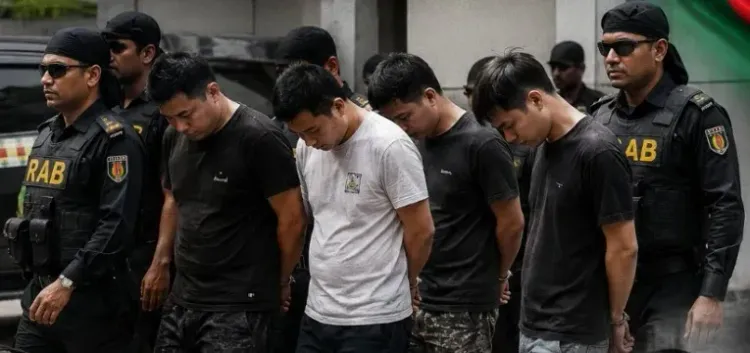
Chinese nationals on tourist visas have been arrested in Dhaka for drug trafficking , online fraud , and women trafficking , according to reports dated 24 August .
In March , the DNC seized 6.3 kg of ketamine and arrested Li Bin , Yang Chunhing , and Yo Zhi from a makeshift lab in Uttara, Dhaka .
Suspects allegedly used the dark web for orders and the TRON cryptocurrency network for payments.
A separate August operation in Bashundhara led to the seizure of over 6,000 active SIM cards , 20 GSM gateways , 14 laptops , and 16 smartphones .
Investigators are probing whether the separate cases form part of a single transnational criminal network using Bangladesh as an operational base.
Several Chinese nationals who entered Bangladesh on tourist visas have been arrested in connection with a range of organised criminal activities, including international drug trafficking, online fraud, and the trafficking of Bangladeshi women, according to local media reports published on Monday, 24 August. Recent crackdowns by Bangladeshi law enforcement agencies have exposed networks allegedly operating with the help of local accomplices across multiple districts.
Key Arrests and Discoveries
The most significant breakthrough came in March this year, when the Department of Narcotics Control (DNC) seized 50 grams of ketamine concealed inside a Bluetooth speaker at a courier office in Dhaka, as reported by The Dhaka Tribune. The discovery led investigators to a flat in Uttara, where they arrested three Chinese nationals — Li Bin, Yang Chunhing, and Yo Zhi.
During the raid, authorities recovered 6.3 kg of ketamine, along with chemicals, laboratory and packaging equipment, digital scales, mobile phones, and foreign currencies from what appeared to be a makeshift drug processing unit.
How the Drug Network Operated
DNC Deputy Director Mehedi Hasan told The Dhaka Tribune that the accused, during initial interrogation, confessed to collecting liquid ketamine, processing it into powder form inside the flat, and attempting to smuggle it abroad through courier services. Investigators further established that the suspects allegedly received orders via the dark web, concealed narcotics inside electronic devices for international shipment, and settled transactions using cryptocurrency — specifically the TRON network.
According to investigators, the suspects had set up operational bases primarily in Dhaka's Uttara, Bashundhara, and Nikunja areas. Evidence from separate cases points to transnational networks that reportedly cycled members in and out of Bangladesh using short-term tourist visas.
Online Fraud and SIM Card Racket
Earlier in August, the Detective Branch (DB) of the Dhaka Metropolitan Police (DMP) arrested three more Chinese nationals and a Bangladeshi woman in the Bashundhara area, uncovering an alleged network involved in online fraud, illegal VoIP operations, and gambling activities. The operation resulted in the seizure of over 6,000 active SIM cards, 20 GSM gateways, 14 laptops, and 16 smartphones.
According to investigators, victims were initially contacted via messages offering employment opportunities, attractive financial deals, or supplementary income, before being redirected to fraudulent links designed to extract money or personal data.
What Authorities Said
DMP Detective Branch chief Shafiqul Islam told The Dhaka Tribune: 'Various crimes committed by Chinese citizens are coming to light. Several citizens have already been arrested on charges of online fraud. They are getting the courage to commit crimes with the connivance of some domestic individuals. Some more issues have come to light during the investigation. These are being worked on.'
The Broader Challenge
The mounting cases present a complex challenge for Bangladeshi law enforcement: determining whether these are isolated criminal cells or interconnected nodes of a broader transnational network using Bangladesh as an operational base for drugs, cybercrime, and human trafficking. This comes amid growing scrutiny across South Asia of organised criminal groups exploiting tourist visa frameworks to establish illicit operations. The coming weeks are likely to see further arrests as investigators pursue leads across the identified networks.
Point of View
Dark-web orders, cryptocurrency settlements, and local accomplices are hallmarks of organised transnational crime, not opportunistic offending. Bangladesh's law enforcement has made arrests, but the harder question is structural: how are multiple Chinese nationals repeatedly entering on short-term visas, setting up labs and fraud operations, and exiting without early detection? The SIM card haul alone — over 6,000 active cards — signals an operation of considerable scale and duration. If investigators confirm these cells are networked rather than independent, Bangladesh faces a law enforcement challenge that extends well beyond individual arrests into visa policy, financial monitoring, and cross-border intelligence sharing.
NationPress
24 Aug 2026
Frequently Asked Questions
Why were Chinese nationals arrested in Bangladesh?
Chinese nationals were arrested in Bangladesh for running organised crime networks involving drug manufacturing and trafficking, online fraud, illegal VoIP operations, gambling, and the trafficking of Bangladeshi women. Multiple operations by the DNC and DMP Detective Branch in 2025 uncovered these activities across Dhaka.
What drugs were seized in the Dhaka raids?
The Department of Narcotics Control seized a total of 6.3 kg of ketamine from a makeshift laboratory in Uttara, Dhaka, in addition to an initial 50 grams found hidden inside a Bluetooth speaker at a courier office. The suspects allegedly processed liquid ketamine into powder form for international smuggling.
How did the online fraud network operate?
According to investigators, the fraud network used over 6,000 active SIM cards and 20 GSM gateways to run illegal VoIP and gambling operations. Victims were approached with messages offering jobs or financial deals and then directed to fraudulent links to extract money or data.
Who are the key suspects named in the drug case?
Three Chinese nationals — Li Bin, Yang Chunhing, and Yo Zhi — were arrested from a flat in Uttara, Dhaka, following the DNC's discovery of ketamine hidden in a courier package. They allegedly confessed to running a drug processing and smuggling operation using dark web orders and cryptocurrency payments.
Are the separate crime cases in Bangladesh connected?
Investigators are currently probing whether the drug trafficking network and the online fraud operation are part of a broader transnational criminal structure using Bangladesh as an operational base. No confirmed link has been established yet, according to reports.