Is 'G20' the Most Prominent Term in South Africa for 2025?
Synopsis
Discover why the term 'G20' has dominated South African discourse in 2025! As the country hosted the G20 Leaders' Summit, key discussions on disaster resilience and energy access emerged. Dive into the report by PanSALB revealing how this term outshined others amidst crucial political and economic developments.
Key Takeaways
"G20" was the most frequently mentioned term in South Africa in 2025.
South Africa hosted the landmark G20 Leaders' Summit.
Discussions included disaster resilience and energy access.
Over 600 million Africans lack electricity access.
The Critical Minerals Framework was endorsed for sustainable development.
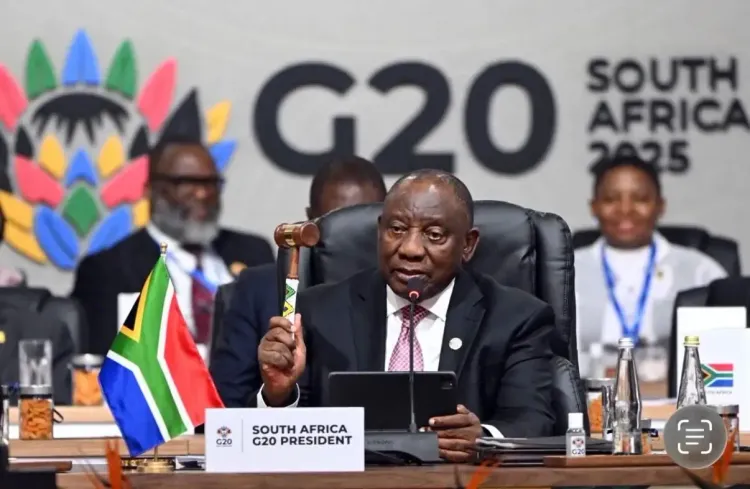
Johannesburg, Dec 23 (NationPress) The word "G20" has emerged as the most utilized term in South Africa in 2025, according to the Pan South African Language Board (PanSALB) which made the announcement on Tuesday.
PanSALB, an organization dedicated to fostering multilingualism, developing and safeguarding South Africa's 12 official languages, and upholding language rights, collaborated with a media research firm to evaluate frequency data. Their findings revealed that "G20" was a prominent feature across reputable print, broadcast, and online media.
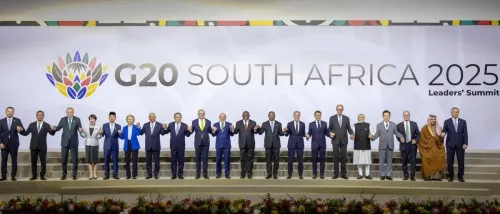
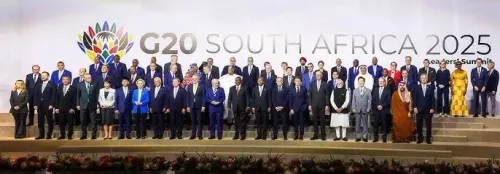
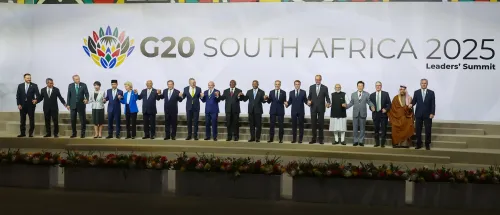
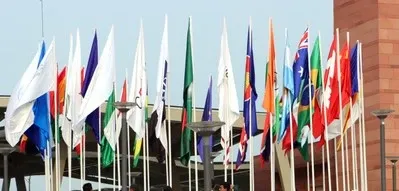
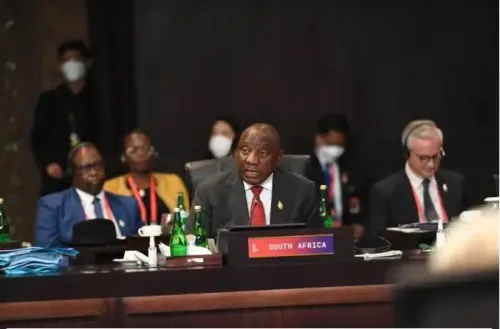
The selection process entailed a thorough examination of genuine language usage, with "G20" rising to the forefront primarily due to South Africa's leadership as the G20 presidency in 2025 and its role in hosting the G20 Leaders' Summit, as reported by Xinhua News Agency.
Following "G20", the phrases "Government of National Unity" and "Tariffs" took the second and third spots respectively, highlighting significant political shifts, international relations, and economic discussions that influenced the nation throughout the year, noted the agency.
Recently, South Africa successfully hosted the 20th Group of 20 (G20) Summit, where global leaders reached a consensus on crucial issues such as disaster resilience, debt sustainability, energy transitions, and critical minerals, culminating in the adoption of the G20 South Africa Summit's Leaders' Declaration.
The declaration's announcement coincided with the summit's commencement, marking the first such event to be held in Africa. It cautioned that the increasing frequency and severity of disasters are jeopardizing development and overwhelming response systems. Leaders acknowledged that these challenges hinder progress toward sustainable development and strain both national and international response capabilities.
They advocated for integrated, people-centered strategies and underscored the necessity for strengthened disaster resilience and response, especially for vulnerable small island developing states and the least developed countries.
Energy access and transition were also critical topics. The declaration pointed out stark disparities, indicating that "over 600 million Africans lack access to electricity."
Leaders expressed support for initiatives aimed at tripling global renewable capacity and doubling energy-efficiency improvements by 2030, stressing the urgent need to mobilize increased investment and facilitate low-cost financing for developing nations according to their circumstances. They also emphasized the significance of voluntary technology transfer "on mutually agreed terms."
Concerning critical minerals, the G20 endorsed a Critical Minerals Framework, presenting it as a voluntary guide for “sustainable, transparent, stable, and resilient critical minerals value chains” essential for industrialization and sustainable development.
Point of View
It is clear that the prominence of the term 'G20' in South Africa's discourse signifies the country's growing engagement with global issues. As we reflect on the G20 Leaders' Summit, it is essential to recognize how these discussions shape our national narrative and influence our policies moving forward.
NationPress
21 Sept 2026
Frequently Asked Questions
What does G20 stand for?
G20 refers to the Group of Twenty, which is an international forum for governments and central bank governors from 19 countries and the European Union.
Why was G20 significant in South Africa in 2025?
South Africa held the G20 presidency and hosted the G20 Leaders' Summit in 2025, focusing on critical global issues.
What were the main topics discussed at the G20 Summit?
The summit addressed disaster resilience, debt sustainability, energy transitions, and critical minerals.
How many people lack access to electricity in Africa?
Over 600 million Africans do not have access to electricity, highlighting significant energy disparities.
What is the Critical Minerals Framework?
It is a voluntary guide aimed at promoting sustainable and resilient critical minerals value chains essential for development.