Hasina's son alleges $50mn US-USAID role in Bangladesh's 2024 ouster
Synopsis
Sajeeb Wazed Joy, son of ousted Bangladesh PM Sheikh Hasina, stood in Washington and accused the Biden administration of spending $50 million through USAID to topple his mother's government — unverified claims, no documentary proof, but explosive enough to complicate US-Bangladesh relations and reignite a geopolitical debate that stretches from Dhaka to New Delhi to Beijing.
Key Takeaways
Sajeeb Wazed Joy alleged the Biden administration spent $50 million via USAID to engineer the August 2024 removal of his mother, Sheikh Hasina .
He accused the National Democratic Institute and International Republican Institute of organising and training protest groups in Bangladesh .
Joy claimed Muhammad Yunus was installed as interim chief through direct US diplomatic pressure on Bangladesh 's military leadership.
He alleged Lashkar-e-Taiba -linked individuals appeared at public events in Bangladesh and that Pakistan -linked militant groups had expanded activity.
Joy questioned Bangladesh 's capacity to pay for 29 Boeing aircraft and settle debts to American energy suppliers.
The allegations were not independently verified and no documentary evidence was presented at the press conference.
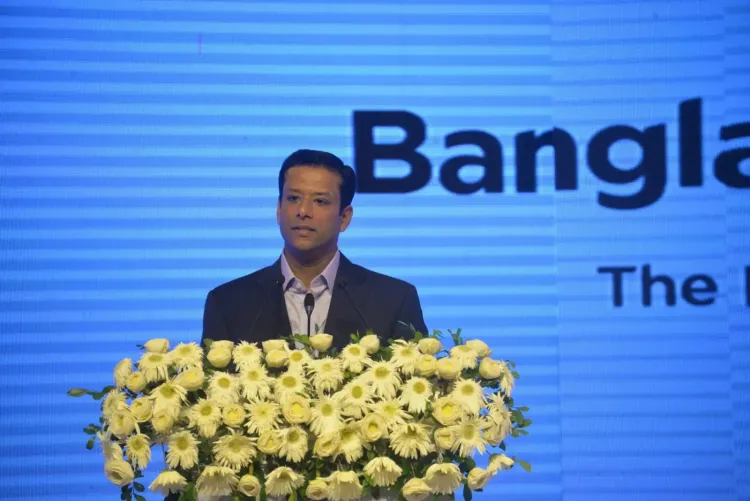
Sajeeb Wazed Joy, son of former Bangladesh Prime Minister Sheikh Hasina, alleged on 20 October at a Washington press conference that the United States actively helped engineer the 2024 protests that forced his mother from power. Speaking at an event organised by the Center for US-Bangladesh Relations, Joy claimed the former Biden administration channelled $50 million through the United States Agency for International Development (USAID) to fund what he described as a deliberate regime-change operation.
The Core Allegations
Joy accused USAID, along with the National Democratic Institute and the International Republican Institute — both US-backed democracy-promotion bodies — of helping organise and train groups that subsequently participated in the unrest leading to Hasina's removal in August 2024. 'Of course, the Biden administration was heavily involved through USAID funding to the tune of $50 million for this regime change,' he said.
Joy further alleged that former interim government chief Muhammad Yunus was installed as a direct result of American diplomatic pressure on Bangladesh's military leadership, and that the US ambassador in Dhaka had specifically influenced the selection of Yunus to head the transitional administration.
Crucially, Joy did not present documentary evidence during the press conference to substantiate that US government funds were directed at overthrowing Hasina. His allegations have not been independently verified.
Security and Regional Risks Cited
Turning to security concerns, Joy alleged that the post-Hasina authorities had released convicted militants and allowed extremist organisations to regain influence inside Bangladesh. He claimed that individuals linked to Lashkar-e-Taiba had appeared at public gatherings in the country, and that Pakistan-linked militant groups had expanded their activities.
Joy argued these developments posed potential risks to India and the broader region, particularly as Bangladesh's political and security alignments continued to shift. This comes amid longstanding concerns in New Delhi about the strategic direction of Dhaka following the Hasina government's collapse.
China Ties and Economic Concerns
Joy also accused the current Dhaka authorities of deepening ties with China, alleging that Chinese companies had benefited commercially from the political transition and that corruption had influenced those business relationships.
On US-Bangladesh economic relations, Joy raised doubts about Dhaka's ability to honour major financial commitments. He cited contracts with energy company Excelerate Energy and aircraft manufacturer Boeing, saying Bangladesh had agreed to purchase 29 aircraft it could not afford. 'They've signed a contract for 29 Boeings. The government of Bangladesh does not have the money to pay for them,' he said. He also claimed American energy suppliers were not receiving full payments under existing arrangements. Neither the companies nor the Bangladesh government responded to the claims in available accounts of the event.
A Separate Voice: Former Official's Warning
Former senior Bangladeshi official Ahmad Kaikaus, who served under Hasina, separately cautioned that political instability and eroding institutions were damaging investor confidence and threatening economic development. He called on the United States and other international partners to encourage dialogue, due process, and peaceful political competition rather than deepen existing divisions.
Context: Hasina's Fall in August 2024
Hasina's government collapsed in August 2024 following mass protests that drew widespread international attention. Her administration had faced sustained criticism over allegations of political repression, disputed elections, and its handling of demonstrations prior to its fall. The allegations by Joy were made at a politically charged event attended by former officials and supporters of Hasina's Awami League, a context that independent analysts would factor into assessing their credibility. How the Biden administration, USAID, and the current Dhaka government respond to these claims will likely shape the next chapter in US-Bangladesh relations.
Point of View
Without documentary evidence, by the son of the deposed leader — and must be read in that context. Yet the specific institutional names he cited (USAID, NDI, IRI) and the dollar figure ($50 million) give the claims enough surface detail to demand a formal response from Washington, which has not yet come. What is harder to dismiss is the broader pattern: US democracy-promotion funding has come under scrutiny across multiple countries in recent years, and Bangladesh's post-Hasina trajectory — the security situation, the tilt toward China, institutional erosion — is a legitimate concern regardless of how the transition was managed. The real story may be less about who engineered August 2024 and more about who fills the strategic vacuum that followed.
NationPress
20 Oct 2026
Frequently Asked Questions
What did Sajeeb Wazed Joy allege about the US and Bangladesh?
Joy alleged that the former Biden administration used $50 million in USAID funding to help organise and fund the 2024 protests that forced his mother, Sheikh Hasina, from power in August 2024. He also accused the National Democratic Institute and International Republican Institute of training groups that participated in the unrest. The allegations have not been independently verified and no documentary evidence was presented.
Who is Sajeeb Wazed Joy?
Sajeeb Wazed Joy is the son of former Bangladesh Prime Minister Sheikh Hasina and a senior figure in her Awami League party. He made these allegations at a Washington press conference organised by the Center for US-Bangladesh Relations, attended by former officials and Awami League supporters.
What did Joy claim about Muhammad Yunus?
Joy alleged that Muhammad Yunus was installed as head of Bangladesh's interim government as a direct result of American diplomatic pressure on Bangladesh's military leadership, and that the US ambassador in Dhaka specifically influenced the selection. Yunus has been leading the interim administration since Hasina's departure in August 2024.
What security concerns did Joy raise about Bangladesh?
Joy claimed the post-Hasina authorities released convicted militants, allowed extremist organisations to regain influence, and that individuals linked to Lashkar-e-Taiba had appeared at public gatherings in Bangladesh. He argued these developments posed risks to India and the wider region as Bangladesh's security relationships evolve.
Why did Sheikh Hasina's government fall in 2024?
Hasina's government collapsed in August 2024 following large-scale mass protests in Bangladesh. Her administration had faced criticism over allegations of political repression, disputed elections, and its handling of demonstrations before its fall. Joy and other Awami League supporters dispute the organic nature of those protests.