Is the IMF Set to Upgrade India's Growth Forecast?
Synopsis
The IMF is poised to revise India's growth forecast upwards as the nation's economy shows remarkable resilience amidst global uncertainties. With projections indicating a growth rate of 6.6% for 2025–26, India continues to emerge as a vital player in the international economic landscape. This positive outlook is bolstered by strong domestic consumption and effective fiscal policies.
Key Takeaways
IMF likely to upgrade India's growth forecast.
India's economy expanded unexpectedly in recent quarters.
Projected growth rate for 2025–26 is 6.6%.
Strong domestic consumption is a key factor.
IMF's positive assessment reflects India's resilience.
Washington, Jan 16 (NationPress) The International Monetary Fund (IMF) has indicated a potential upgrade to India’s growth outlook following a stronger-than-anticipated expansion of the country’s economy in the most recent quarter, highlighting India’s position as a crucial contributor to global growth.
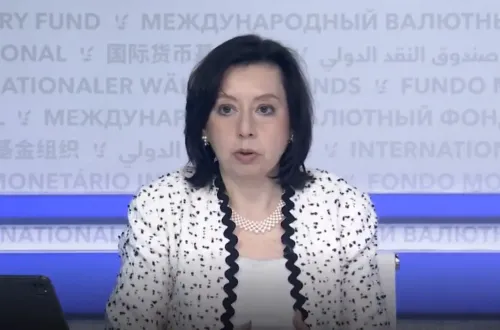
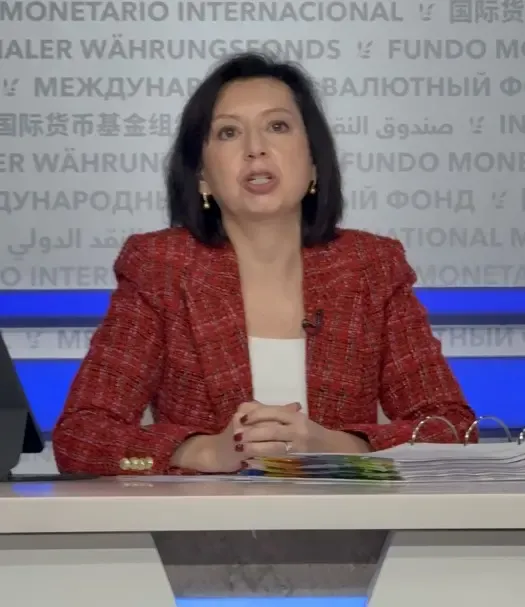
In response to inquiries about India’s growth predictions for 2025, IMF Communications Department Director Julie Kozack stated that India remains a cornerstone of global progress, despite uncertainties surrounding the international economic landscape.
“What we have observed in India is that it serves as a primary growth engine for the world,” Kozack mentioned during a press briefing.
According to the IMF's latest evaluation, part of its Article IV Staff Report, India’s growth for the fiscal year 2025–26 is projected at 6.6 percent, driven by robust domestic consumption.
“Regarding your question about growth in 2025,” Kozack stated. “During our Article IV Staff Report, we estimated a growth rate of 6.6 percent for the fiscal year 2025–26, based on strong consumption growth.”
Kozack emphasized that recent economic statistics have bolstered the IMF’s confidence in India’s performance, particularly noting the unexpected strength of third-quarter data.
“The third-quarter growth in India has exceeded expectations,” she remarked.
This positive development, she noted, increases the chances of an upward adjustment in the IMF’s forthcoming forecast update.
“This indicates that we will likely be revising our forecast upward,” Kozack said.
The IMF plans to unveil its January update of the World Economic Outlook (WEO) shortly, which will feature revised projections for India and other significant economies.
“We have our January WEO update coming soon,” Kozack confirmed. “At that time, we will present a revised growth figure for India.”
While she did not reveal the new figure before the update, Kozack underscored the IMF’s consistently positive assessment of India.
“To summarize, India has been a pivotal driver of global growth, and its growth remains robust,” she stated.
Economists consider the IMF’s indication noteworthy given the delicate global economic backdrop. Anit Mukherjee, Senior Fellow at ORF America, pointed out that the Fund’s comments underscore India’s resilience amid uncertainties affecting many economies.
“This is excellent news for the Indian economy and global growth, as India is currently one of the largest contributors to worldwide growth,” Mukherjee told IANS.
He highlighted the challenging external environment, including policy and trade-related risks. “Given the difficult external circumstances, the uncertainties surrounding tariffs, and issues regarding central bank independence,” he noted, adding that these factors contribute to “global economic uncertainty.”
Despite these challenges, Mukherjee stated that India has maintained strong performance. “Even with the tariff shock experienced in April and again in June, the resilience of the economy, coupled with the IMF projecting higher growth, is quite remarkable,” he stated.
Mukherjee remarked that upward revisions by the IMF are infrequent in the current economic climate. “While it occasionally happens, it is rare and surprising, given the state of the global economy,” he noted. “This is why this news is both surprising and pleasantly welcomed from an Indian perspective.”
He attributed India’s notable performance to domestic factors, especially consumption. “A key driver of this growth is domestic consumption,” Mukherjee explained, linking it to policy changes made ahead of the festive season.
“This was influenced by the reduction in GST right before the holiday season,” he observed, emphasizing that “this resulted in significantly improved third-quarter GDP figures.”
Mukherjee also pointed to macroeconomic discipline. “Another factor is the moderate inflation in the Indian economy and fiscal consolidation,” he stated, adding that the government has refrained from making large investments without ensuring fiscal stability.
Point of View
It's essential to recognize India's growing role in the global economy. The IMF's positive outlook is a testament to the nation's economic resilience and strategic policies. As India navigates uncertainties, maintaining this momentum will be crucial for sustaining its position as a key driver of global growth.
NationPress
2 Oct 2026
Frequently Asked Questions
What is the IMF's growth forecast for India?
The IMF projects India's growth for the fiscal year 2025–26 at 6.6%, driven by strong domestic consumption.
Why is the IMF upgrading India's growth forecast?
The upgrade signals stronger-than-expected economic performance in recent quarters, reaffirming India's role in global growth.
What factors contribute to India's economic resilience?
India's economic resilience is attributed to robust domestic consumption and effective fiscal policies amid global uncertainties.
When will the IMF release its updated economic outlook?
The IMF is scheduled to release its January update of the World Economic Outlook in the coming days.
How does India's growth impact the global economy?
India is a significant contributor to global growth, and its economic performance can influence worldwide economic trends.