India-Armenia defence MoU signed in Yerevan on joint R&D, production
Synopsis
India and Armenia have moved beyond buyer-seller defence ties with a sweeping MoU covering joint R&D, innovation, and shared production — signed in Yerevan on 17 August 2026. For India, it is a test of its ambition to become a defence co-producer; for Armenia, a critical step in diversifying away from Russian military dependence.
Key Takeaways
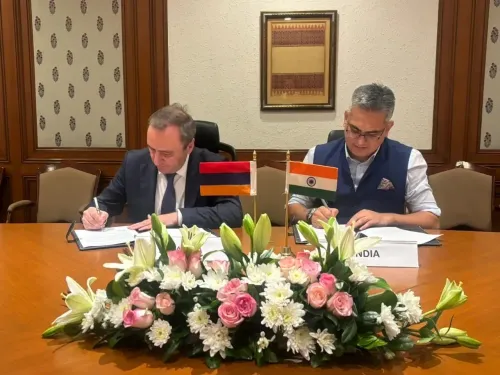
India and Armenia signed a defence MoU in Yerevan on 17 August 2026 covering research, development, innovation, and shared production.
Defence Secretary Rajesh Kumar Singh met Armenian Defence Minister Suren Papikyan , High Tech Industry Minister Davit Tadevosyan , and Chief of General Staff Lt Gen Edvard Asryan during the visit.
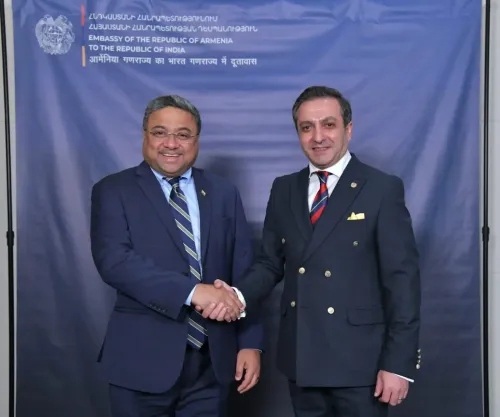
Ambassador Nilakshi Saha Sinha participated in the high-level meetings in Yerevan.
The visit follows Lt Gen Asryan's trip to New Delhi in April 2026 , where talks covered operational cooperation and air power ties.
Armenia has been actively diversifying its defence partnerships following reduced reliance on Russian military equipment.
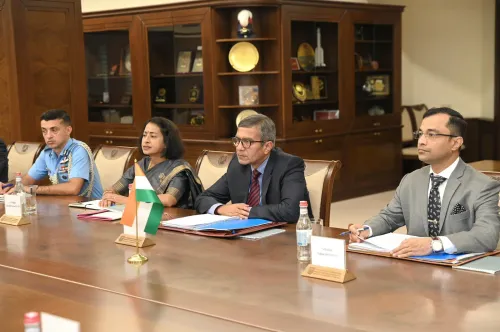
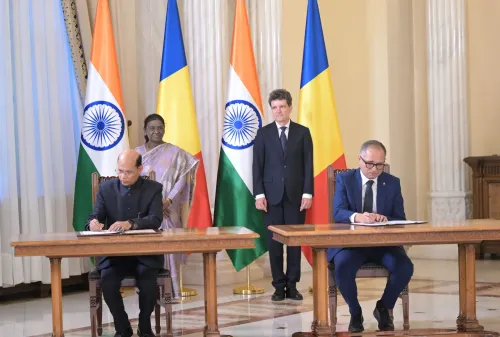
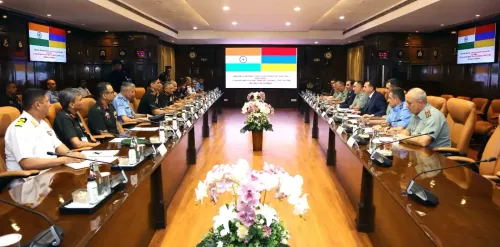
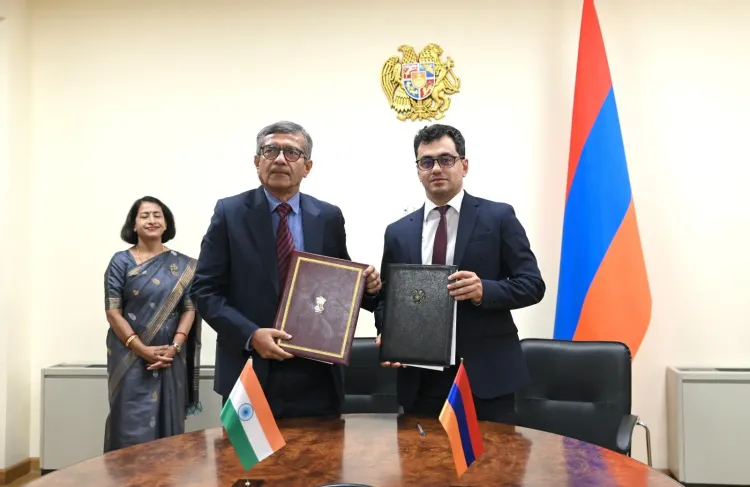
India and Armenia on 17 August 2026 signed a Memorandum of Understanding (MoU) on cooperation in research, development, innovation, and shared production in the defence industry, formalising a deepening bilateral partnership at a meeting in Yerevan. The agreement was concluded during a two-day visit by Defence Secretary Rajesh Kumar Singh, marking one of the most substantive engagements between the two countries on defence industrial collaboration.
Key Developments in Yerevan
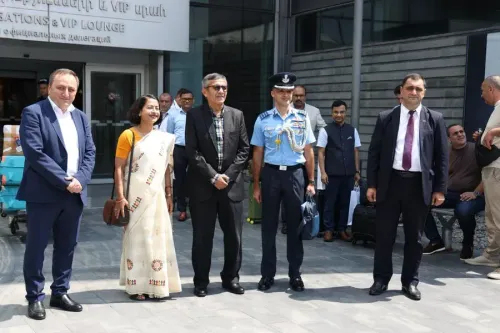
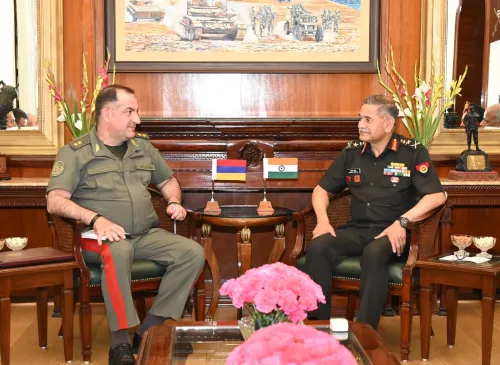
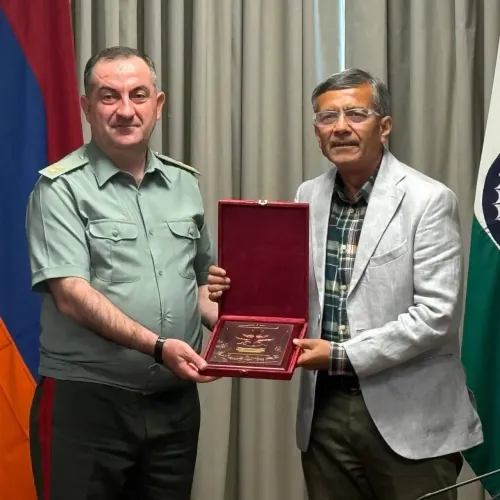
Defence Secretary Rajesh Kumar Singh held back-to-back meetings with senior Armenian officials, beginning with Armenian Defence Minister Suren Papikyan, where both sides explored new avenues to strengthen bilateral defence cooperation. He subsequently met Armenia's Minister of High Tech Industry, Davit Tadevosyan, with whom the MoU was formally signed. Ambassador of India to Armenia, Nilakshi Saha Sinha, participated in both meetings. Secretary Singh also called on Chief of General Staff of Armenia, Lieutenant General Edvard Asryan, reaffirming the shared commitment to bilateral defence industrial cooperation and defence research and development.
What the MoU Covers
The agreement spans cooperation in research, development, innovation, and shared production in the defence sector — a notably broad framework that goes beyond arms sales into co-development and manufacturing. This positions Armenia as a potential partner in India's broader push to internationalise its defence industrial base, aligned with the 'Make in India' and 'iDEX' initiatives. The Ministry of Defence described the signing as a reaffirmation of the two countries' commitment to expanding bilateral defence industrial cooperation in areas of mutual interest.
Background and Growing Engagement
The visit builds on a pattern of accelerating defence ties. In April 2026, Lieutenant General Asryan visited New Delhi, holding talks with Secretary Singh and with Chief of Air Staff Air Chief Marshal A P Singh. Those discussions, according to the Indian Air Force, focused on enhancing operational cooperation, interoperability, and strengthening bilateral air power ties. A high-level Armenian military delegation had also visited New Delhi earlier this year, signalling sustained momentum on both sides.
Notably, Armenia has been diversifying its defence partnerships following its long-standing reliance on Russian military equipment — a shift that has accelerated since the 2020 Nagorno-Karabakh conflict and subsequent regional tensions. India, which has itself been a significant arms buyer from Russia, is now increasingly positioning itself as a defence exporter and co-producer, making the Armenia engagement strategically significant for both nations.
What Comes Next
The MoU provides the institutional framework for joint projects, but specific programmes under its umbrella are yet to be publicly announced. Industry observers will watch whether the agreement translates into concrete co-production deals — particularly in areas such as artillery, drones, and electronics, where India has been building export capability. The trajectory of India-Armenia ties will also be shaped by the broader geopolitical context in the South Caucasus, where multiple powers are actively competing for influence.
Point of View
Development, innovation, shared production — is notably ambitious for a bilateral that is still relatively nascent. The real question is whether it produces concrete co-development programmes or remains a framework agreement on paper. Armenia's accelerating pivot away from Russian defence dependence creates a genuine opening for Indian exporters and co-producers, but India has historically been slow to convert such MoUs into signed contracts. With several other European and Israeli players also courting Yerevan, New Delhi will need to move faster than its diplomatic habit suggests.
NationPress
17 Aug 2026
Frequently Asked Questions
What did India and Armenia sign in Yerevan on 17 August 2026?
India and Armenia signed a Memorandum of Understanding on cooperation in research, development, innovation, and shared production in the defence industry. The agreement was concluded during a two-day visit to Yerevan by Indian Defence Secretary Rajesh Kumar Singh.
Who represented India at the Yerevan defence talks?
Defence Secretary Rajesh Kumar Singh led the Indian side, accompanied by Ambassador of India to Armenia Nilakshi Saha Sinha. Secretary Singh held separate meetings with Armenian Defence Minister Suren Papikyan, High Tech Industry Minister Davit Tadevosyan, and Chief of General Staff Lieutenant General Edvard Asryan.
Why is the India-Armenia defence partnership significant?
Armenia has been diversifying its defence partnerships away from Russia, particularly after the 2020 Nagorno-Karabakh conflict, making it an emerging market for Indian defence exports and co-production. For India, the MoU aligns with its broader push to internationalise its defence industrial base under initiatives such as Make in India.
What was discussed during Armenia's Chief of General Staff's visit to New Delhi in April 2026?
Lieutenant General Edvard Asryan met Defence Secretary Rajesh Kumar Singh and Chief of Air Staff Air Chief Marshal A P Singh in New Delhi in April 2026. Discussions focused on defence cooperation, enhancing operational interoperability, and strengthening bilateral air power ties.
What are the next steps following the MoU signing?
The MoU establishes a framework for joint defence projects, but specific programmes have not yet been publicly announced. Observers will watch for concrete co-production agreements, particularly in areas such as artillery, drones, and defence electronics where India has growing export capability.