Has India Welcomed the UK Government's Sanctions on Khalistani Terror Groups?
Click to start listening
Synopsis
India has expressed its support for the UK's recent sanctions against Khalistani extremist groups, emphasizing the need for robust counter-terrorism collaboration. As both nations strive to combat terrorism, this development may lead to enhanced security cooperation and shared efforts to address radicalism on a global scale.
Key Takeaways
- India welcomes UK sanctions against Khalistani extremists.
- Collaboration on counter-terrorism is crucial.
- Sanctions aim to curb illicit financial activities.
- PM Modi emphasizes the importance of democracy.
- Global fight against terrorism requires united efforts.
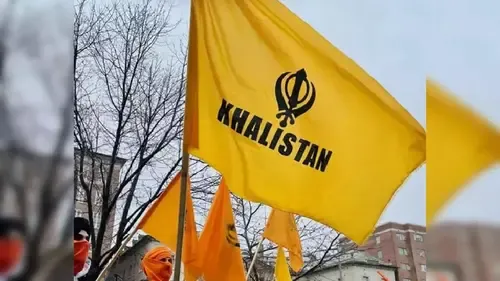
New Delhi, Dec 8 (NationPress) On Monday, India expressed its approval of the measures implemented by the government of the United Kingdom (UK) against Khalistani extremist factions that pose a threat to India. The hope is that both nations will persist in their collaboration to enhance counter-terrorism and security cooperation.
During a routine press briefing on Monday, the spokesperson for the Ministry of External Affairs (MEA), Randhir Jaiswal, articulated that the actions taken by the UK government bolster the global battle against terrorism and assist in dismantling illicit financial channels and transnational crime networks.
In response to queries regarding the UK government's sanctions targeting Babbar Khalsa's Gurpreet Singh Rehal and the Babbar Akali Lehar group, Jaiswal remarked, "We commend the measures enacted by the UK government to impose sanctions on anti-India extremist entities. These actions reinforce the global endeavor against terrorism and extremism while aiding in the prevention of illegal financial transactions and international crime syndicates. Such individuals and organizations present a risk not only to India and the UK but to global populations. We anticipate ongoing close cooperation with the UK to further enhance our counter-terrorism and security collaboration."
On December 4, the UK Treasury revealed an asset freeze and disqualification from directorship against Gurpreet Singh Rehal, who is believed to have affiliations with organizations implicated in terrorism within India. The Treasury also announced a freeze on assets belonging to the Babbar Akali Lehar group for their role in promoting and supporting the same terrorist agenda.
According to the UK government's statement, "HM Treasury assesses that Rehal engages in activities linked to the Babbar Khalsa and Babbar Akali Lehar, such as promoting, encouraging, and recruiting for these groups, alongside providing financial services and assisting in the procurement of weapons and military supplies. The assessment further indicates that Babbar Akali Lehar is intertwined with Babbar Khalsa’s terrorist operations by engaging in recruitment and promotional activities for the organization."
The Treasury's statement confirmed that any assets controlled by Rehal or Babbar Akali Lehar in the UK are subject to the asset freeze. These sanctions will prevent UK individuals and entities from engaging with any funds or economic resources owned or controlled by Rehal or Babbar Akali Lehar, or from providing financial services for their benefit.
Earlier in October, Prime Minister Narendra Modi and UK Prime Minister Keir Starmer discussed the issue of Khalistani extremism during Starmer's visit to India, held in Mumbai.
During a dedicated press briefing regarding Starmer's visit, Foreign Secretary Vikram Misri stated that PM Modi underscored the fact that radicalism and violent extremism have no place in democratic societies and that there is a pressing need for legal action against such ideologies.
When questioned about whether the Khalistani extremist issue was raised during the discussions between PM Modi and Starmer, Misri affirmed, "Yes, it is a topic that was addressed in previous discussions in July and was brought up again in today's dialogue. The Prime Minister emphasized that radicalism and violent extremism must not find a foothold in democratic societies, particularly as it pertains to the misuse of freedoms provided by these societies. We must act against such threats within the existing legal frameworks available to both nations."
India has previously expressed concerns over the presence of Khalistani extremists within the UK.
During his visit to the UK in July, PM Modi asserted that extremist ideologies should not be allowed to exploit democratic freedoms.
"We extend our gratitude to Prime Minister Starmer and his government for their firm condemnation of the Pahalgam terror attack. We share a unified belief that double standards have no place in the fight against terrorism. It is crucial that those who misuse democratic freedoms to undermine democracy itself are held accountable," remarked PM Modi in a press conference alongside PM Starmer.
This statement from PM Modi follows increasing anxiety regarding Khalistani extremists in the UK, who have previously caused disturbances at the Indian High Commission in London.
Point of View
It is crucial to recognize that India's stance on Khalistani extremism is not just a national concern but a global one. The collaboration with the UK government signifies a shared commitment to combat terrorism, which poses a threat to democratic values worldwide. Upholding the principles of democracy while addressing extremist ideologies is essential for maintaining security and peace in society.
NationPress
09/12/2025
Frequently Asked Questions
What actions did the UK government take against Khalistani extremists?
The UK government imposed sanctions, including an asset freeze and disqualification of Gurpreet Singh Rehal, linked to Babbar Khalsa and Babbar Akali Lehar, for their involvement in terrorism.
Why is this significant for India?
These actions are significant as they strengthen the global fight against terrorism and indicate a collaborative effort between India and the UK to combat extremist ideologies.
How does this impact counter-terrorism efforts?
This move is expected to enhance cooperation between India and the UK in counter-terrorism efforts, helping to curb illegal financial flows and transnational crime networks.
What did PM Modi say about this issue?
PM Modi expressed gratitude to PM Starmer for condemning terrorism and emphasized that radicalism should have no place in democratic societies.
What are the broader implications of these sanctions?
The sanctions reflect a broader commitment to address extremist threats globally and ensure that democratic freedoms are not misused to undermine social order.