Will the US View India as a Key AI Partner Amidst the Rising Challenge from China?
Synopsis
As the race for artificial intelligence intensifies globally, India's pivotal role as a strategic ally for the US becomes evident. With experts warning of China's rapid advancements, the need for collaboration among democratic nations, including India, is more crucial than ever. Discover how this partnership could redefine the future of AI governance.
Key Takeaways
India's role as a strategic technology partner for the US is becoming increasingly vital.
The global AI race is entering a decisive phase due to China's rapid advancements.
Collaboration among democratic nations is essential to shape AI governance standards.
India's upcoming AI summit in 2026 presents significant opportunities for international cooperation.
Maintaining a technological edge in AI is crucial for national security.
Washington, Dec 5 (NationPress) The significance of India as a vital technology and strategic ally was underscored this week as prominent US lawmakers and experts cautioned that the global competition for artificial intelligence is entering a crucial stage, characterized by China's swift military and industrial integration of AI, alongside tightening US-led semiconductor regulations aimed at maintaining a technological advantage.
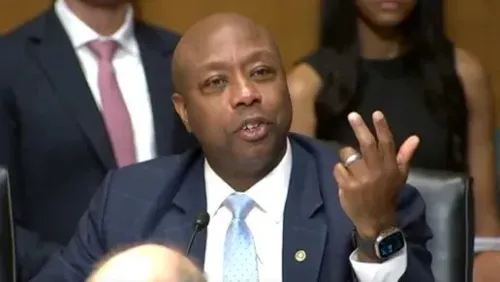
During a Senate hearing on Tuesday (December 2), testimony highlighted that the upcoming year necessitates enhanced collaboration among democratic partners — including India — to establish global AI standards, protect semiconductor supply chains, and counter Beijing's aspirations.
The Senate Foreign Relations Subcommittee on East Asia, the Pacific, and International Cybersecurity Policy organized the meeting to evaluate geopolitical threats arising from China's AI advancements. Although much of the dialogue centered on export restrictions and military consequences, India emerged early as a critical nation in the evolving governance framework.
Tarun Chhabra, a former White House national security official now affiliated with Anthropic, made a direct connection to India, asserting that developing trustworthy AI frameworks will require close collaboration with like-minded democracies.
He stated, "The closest thing we have right now is the AI summits that are happening," and continued, "There's one coming up in India, and that's an opportunity for us to construct the kind of trusted AI framework that I mentioned earlier."
India is set to host a significant AI summit in February 2026.
Chhabra emphasized that dominance in AI will significantly influence economic prosperity and national security, describing the next two to three years as a "critical window" for both advanced AI development and global AI dissemination.
He cautioned that China cannot produce competitive AI chips unless the US squanders its advantage, urging stricter regulations to prevent "CCP-controlled companies" from filling their data centers with American technology.
Senators Pete Ricketts and Chris Coons framed the AI race in terms that resonate strongly with India's own strategic considerations. Ricketts compared the challenge to the "sputnik" and Cold War-era space race, asserting that the US is now engaged in "a similar contest, this time with Communist China and even greater stakes."
He remarked that artificial intelligence will transform daily life, and its military applications will influence the global power balance. "Beijing is racing to integrate civilian AI with its military to capture the next revolution in military affairs. However, unlike the moon landing, the finish line in the AI race is far less clear," he noted.
Coons echoed the sentiment that American and allied leadership in AI is vital to ensure that global adoption relies on "our chips, our cloud infrastructure, and our models." He highlighted that China has "invested heavily in research, development, and deployment," and pointed out Beijing's articulated goal "to be the world's preeminent AI power by 2030." He asserted that maintaining AI superiority must be "a central national imperative," directly linking it to the broader geostrategic landscape.
Experts cautioned that China's military integration of AI is progressing swiftly. Chris Miller of AEI stated that both Russia and Ukraine already utilize AI to "analyze intelligence data and discern what is signal and what is noise," arguing that the same technologies are rapidly becoming essential for defense planning.
While US leadership in computing power remains significant, he stressed that the nation must retain an edge in "electrical power," "computing power," and "brain power" — the three components he labeled as essential for sustained AI dominance.
Gregory Allen of CSIS asserted that AI is following a path similar to the early years of computing, evolving into a foundational technology across military, intelligence, and economic sectors. He warned that "the notion that the United States can forfeit its advantage in AI and still maintain its military superiority is simply irrational." He praised US chip export restrictions as the most impactful action taken in recent years, arguing that without them, "the largest data centers today would already reside in China."
Allen also opposed granting Chinese companies remote access to US cloud computing, stating such access would enable them to "construct their own platforms" before "they will eliminate American firms."
James Mulvenon, a prominent Chinese military analyst, cautioned that the PLA is integrating large language models "at every tier of its system," developing an AI-driven decision architecture it deems "superior to human cognition."
He claimed Beijing is confident it can procure Western chips through "smuggling and a global scale of technology espionage."
All four witnesses dismissed any proposal to export NVIDIA's advanced H-200 or Blackwell chips to China. Allen stated that Blackwells "achieve what Chinese chips cannot" and cautioned that selling them would provide Beijing "a bridge to the future" it is currently incapable of constructing.
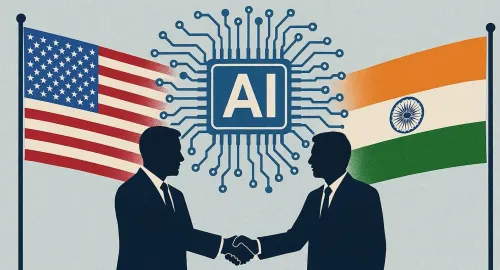
For India, the hearing spotlighted emerging prospects — and responsibilities — to influence global AI regulations and secure access to reliable semiconductor ecosystems. India's growing collaboration with the United States on critical and emerging technologies aligns with Washington's initiative for a "democratic tech stack" to counter China's AI expansion.
The forthcoming AI summit in India, referenced by Chhabra, highlights New Delhi's increasing role in the governance of advanced technologies at a time when standards, safety protocols, and supply-chain security are undergoing transformation.
India, which endures ongoing Chinese military pressure along the border and rising PLA deployment of AI-enabled surveillance and unmanned systems, has a direct interest in the outcomes of US-China technological rivalry.
Both nations are intensifying cooperation across semiconductors, cloud infrastructure, cybersecurity, and dual-use AI applications — a trajectory likely to accelerate as Washington formalizes new AI regulations and India broadens its semiconductor and digital governance influence.
Point of View
It is vital for India to leverage its position as a trusted partner in the global AI landscape. With the growing competition from China, India must act decisively to develop and implement AI standards that align with democratic principles, ensuring both its own national security and the stability of global technology governance.
NationPress
25 Sept 2026
Frequently Asked Questions
Why is India important in the AI race?
India's strategic partnership with the US positions it as a key player in shaping global AI regulations and standards, essential for countering China's advancements.
What is the significance of the upcoming AI summit in India?
The AI summit in February 2026 will serve as a platform for fostering collaboration among democratic nations to establish trusted AI frameworks and standards.
How does AI impact national security?
AI advancements can significantly influence military capabilities and national security strategies, making it crucial for nations to maintain a technological edge.
What are US semiconductor controls?
US semiconductor controls aim to prevent adversaries, particularly China, from accessing advanced technology that could enhance their military and industrial capabilities.
Why should countries collaborate on AI governance?
Collaborating on AI governance helps ensure that technology is developed and deployed in ways that align with democratic values and global security interests.