Jaishankar meets Azerbaijan FM Bayramov in Baku, pushes North–South corridor ties
Synopsis
EAM Jaishankar's Baku visit packed in a presidential call on Aliyev and detailed talks with FM Bayramov — centred on North–South corridors, the Port of Baku, and the Alat Free Economic Zone. With three senior Indian officials visiting Azerbaijan in a single week, New Delhi is making a pointed strategic bet on the South Caucasus as a key node in its alternative trade route to Europe and Central Asia.
Key Takeaways
Jaishankar met Azerbaijani FM Jeyhun Bayramov in Baku on 23 October 2026 , covering trade, energy, transport, and cultural ties.
Both sides discussed the North–South and East–West transport corridors , the Baku–Tbilisi–Kars railway , Port of Baku , and the Alat Free Economic Zone .
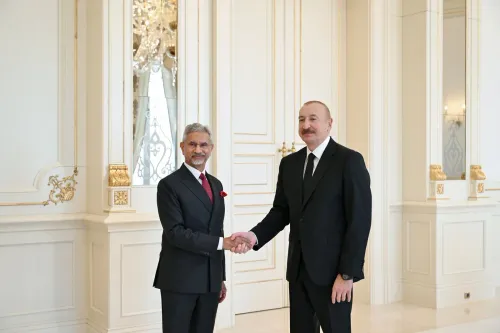
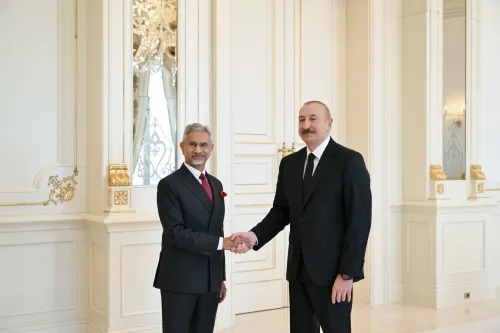
Jaishankar earlier called on President Ilham Aliyev , conveying greetings from President Droupadi Murmu and PM Narendra Modi .
Multilateral cooperation within the UN , SCO , and CICA was also on the agenda, along with the Azerbaijan–Armenia normalisation process .
India's Ambassador Abhay Kumar presented credentials to President Aliyev on 16 October ; MoS Kirti Vardhan Singh also visited Baku last week for the Seventh CICA Summit .
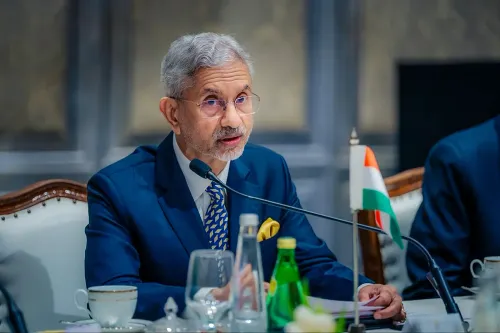
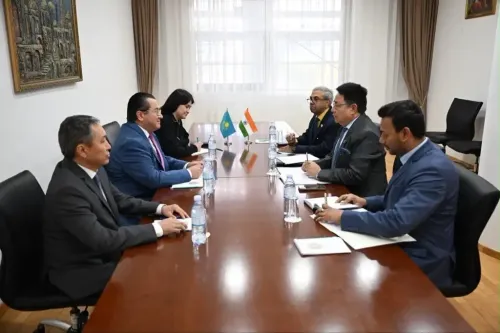
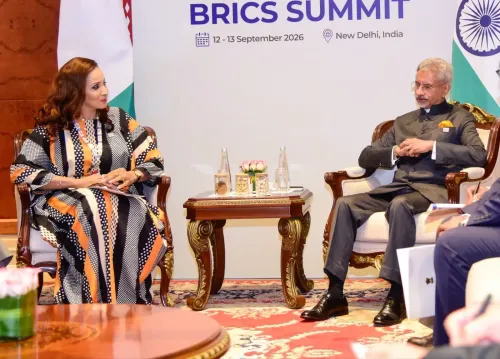
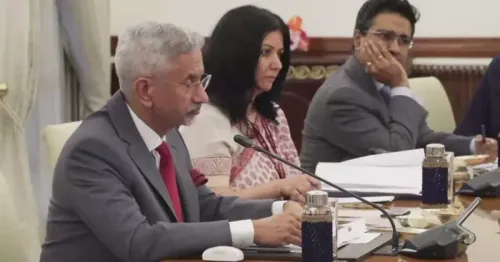
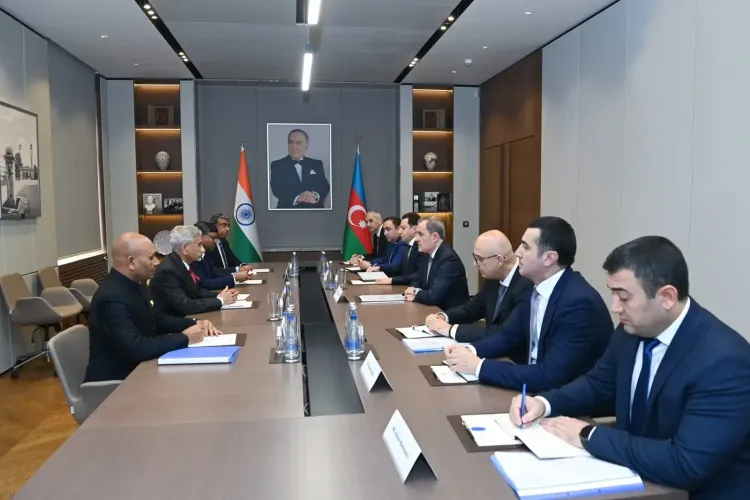
External Affairs Minister S. Jaishankar met with Azerbaijani Foreign Minister Jeyhun Bayramov in Baku on Friday, 23 October, covering the full breadth of bilateral relations — from energy and trade to transport connectivity, tourism, science, and cultural cooperation. The talks, confirmed by Azerbaijan's Ministry of Foreign Affairs, underscored New Delhi's growing interest in routing strategic freight and energy flows through the South Caucasus.
Connectivity and Transport Corridors in Focus
A central thrust of the meeting was Azerbaijan's dual-corridor infrastructure. Both ministers discussed the opportunities presented by Azerbaijan's East–West and North–South transport corridors, the Baku–Tbilisi–Kars railway, the Port of Baku, and the Alat Free Economic Zone. For India, these corridors represent a critical link in the broader International North–South Transport Corridor (INSTC) — an alternative trade route to Europe and Central Asia that bypasses traditional chokepoints. This is not a standalone conversation; India has been systematically engaging Caucasus and Central Asian nations to diversify its connectivity architecture.
Regional and Multilateral Agenda
Discussions also extended to regional geopolitics and multilateral cooperation. The two ministers exchanged views on developments within the United Nations (UN), the Shanghai Cooperation Organisation (SCO), and the Conference on Interaction and Confidence Building Measures in Asia (CICA). Minister Bayramov briefed Jaishankar on the South Caucasus situation, including the ongoing Azerbaijan–Armenia normalisation process and confidence-building measures. Reconstruction efforts in Azerbaijan's liberated territories and the continuing landmine threat were also raised, according to the Azerbaijani foreign ministry's statement.
Jaishankar Calls on President Aliyev
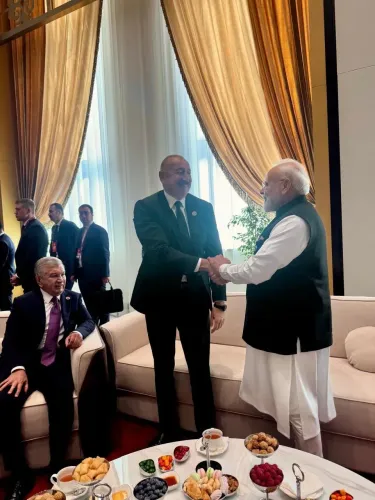
Earlier on the same day, EAM Jaishankar called on Azerbaijani President Ilham Aliyev in Baku. During the meeting, Jaishankar conveyed the greetings of President Droupadi Murmu and Prime Minister Narendra Modi. 'Pleased to call on President Ilham Aliyev of Azerbaijan in Baku this morning. Conveyed the greetings of President Droupadi Murmu and PM Modi. Discussed strengthening the relationship between our two countries. Appreciate his positive sentiments for this shared endeavour,' Jaishankar posted on X. The Aliyev meeting builds on an earlier interaction between Prime Minister Modi and President Aliyev in Bishkek, reflecting a deliberate diplomatic cadence.
Diplomatic Groundwork Already Laid
The Jaishankar visit comes on the heels of several preparatory steps. On 16 October, India's newly appointed Ambassador to Azerbaijan, Abhay Kumar, presented his credentials to President Aliyev, pledging to deepen bilateral ties and promote closer cooperation. Separately, Union Minister of State for External Affairs Kirti Vardhan Singh visited Baku last week to attend the Seventh Summit of CICA, signalling consistent high-level Indian engagement with Azerbaijan across multiple diplomatic tracks. The frequency and seniority of these visits reflect a structured effort by New Delhi to elevate its Baku relationship beyond ceremonial ties.
What This Signals for India's Foreign Policy
India's deepening engagement with Azerbaijan fits squarely into a broader pivot toward diversifying trade routes and reducing dependence on any single corridor or partner. The Alat Free Economic Zone and Port of Baku are particularly relevant as India seeks overland access to markets in Russia, Central Asia, and Europe through INSTC. Notably, this engagement also comes amid evolving dynamics within the SCO, where India and Azerbaijan are both active stakeholders. How the two nations formalise corridor access and investment frameworks in the months ahead will determine whether Friday's talks translate into binding commitments.
Point of View
Especially as sanctions, conflict, and chokepoint risks reshape global logistics. What mainstream coverage underplays is that Azerbaijan is not just a transit state for India; it is also a critical interlocutor between India and Armenia at a delicate moment in South Caucasus peace talks. New Delhi's careful neutrality on the Azerbaijan–Armenia normalisation process gives it diplomatic leverage that pure corridor-access talks do not. The real test will be whether these meetings produce signed frameworks on preferential port access or investment in the Alat Free Economic Zone — or remain, as many such visits do, at the level of intent.
NationPress
23 Oct 2026
Frequently Asked Questions
What did EAM Jaishankar discuss with Azerbaijan FM Bayramov in Baku?
EAM Jaishankar and FM Bayramov discussed the full agenda of India–Azerbaijan bilateral relations on 23 October in Baku, including trade, investment, energy, transport, tourism, education, and cultural cooperation. Key focus areas were Azerbaijan's North–South and East–West transport corridors, the Baku–Tbilisi–Kars railway, the Port of Baku, and the Alat Free Economic Zone.
Why is India interested in Azerbaijan's North–South transport corridor?
The North–South Transport Corridor offers India an overland and maritime route to Russia, Central Asia, and Europe that bypasses traditional sea routes through Suez. Azerbaijan's Port of Baku and the Alat Free Economic Zone serve as critical nodes in this corridor, making Baku strategically important for India's connectivity ambitions.
Did Jaishankar meet Azerbaijan's President Aliyev during his Baku visit?
Yes, EAM Jaishankar called on President Ilham Aliyev in Baku on the same day, conveying the greetings of President Droupadi Murmu and PM Narendra Modi. Jaishankar described the meeting on X as focused on strengthening the bilateral relationship.
What multilateral issues were raised during the India–Azerbaijan talks?
The ministers discussed cooperation within the United Nations, the Shanghai Cooperation Organisation (SCO), and the Conference on Interaction and Confidence Building Measures in Asia (CICA). FM Bayramov also briefed Jaishankar on the Azerbaijan–Armenia normalisation process and reconstruction in Azerbaijan's liberated territories.
How active has India's diplomatic engagement with Azerbaijan been recently?
India's engagement with Azerbaijan has been notably intensive in October 2026. Ambassador Abhay Kumar presented credentials to President Aliyev on 16 October, MoS Kirti Vardhan Singh attended the Seventh CICA Summit in Baku last week, and EAM Jaishankar's visit on 23 October marks the third senior-level Indian diplomatic interaction with Azerbaijan in a single week.