Lebanese President Joseph Aoun Announces New Phase of Permanent Agreement Negotiations Post-Ceasefire
Synopsis
Lebanon is shifting gears as President Joseph Aoun announces a new phase focused on securing permanent agreements to protect citizens' rights, territory, and state sovereignty. This comes after a ceasefire, amid ongoing tensions with Israel and Hezbollah.
Key Takeaways
Lebanon is entering a new phase focused on permanent agreements.
The ceasefire is a result of collective sacrifices by the Lebanese people.
Aoun emphasizes negotiations as a sovereign decision, not weakness.
Key goals include stopping Israeli attacks and restoring state authority.
Hezbollah's disarmament remains a contentious issue.
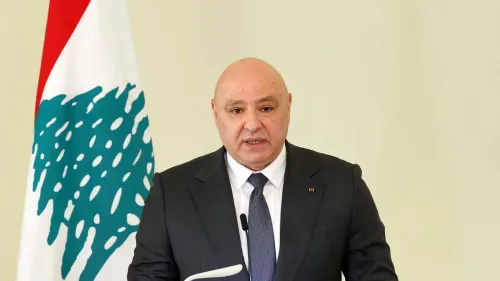
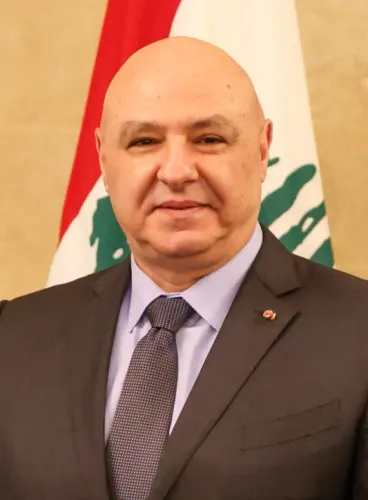
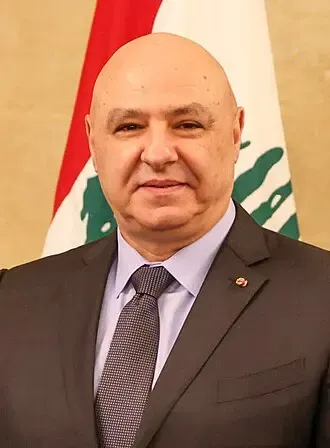
Beirut, April 18 (NationPress) Lebanese President Joseph Aoun has announced that Lebanon is entering a transformative phase aimed at negotiating enduring agreements that will protect the rights of its citizens, maintain territorial unity, and uphold state sovereignty.
During his address to the nation, Aoun emphasized that Lebanon is transitioning from the implementation of a ceasefire to a broader agenda that focuses on achieving long-term stability. He expressed his belief that, similar to the previous phase, these new efforts will contribute to the objective of "saving Lebanon."
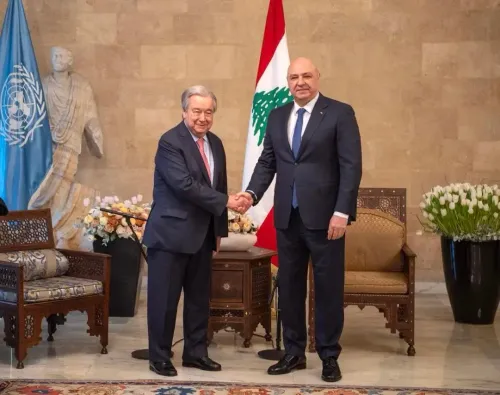
Aoun credited the ceasefire to the collective endeavors and sacrifices made by the Lebanese populace, including those in frontline regions, along with persistent diplomatic efforts with both international and regional allies, as reported by Xinhua news agency.
He clarified that engaging in negotiations is not indicative of weakness or retreat, but rather a sovereign decision intended to safeguard Lebanon's interests, avert further casualties, and bring an end to displacement.
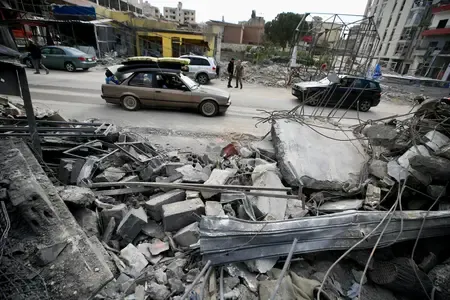
Highlighting the severe impact of the conflict, Aoun stated that thousands of Lebanese lives have been lost, asserting that no additional lives should be sacrificed for external interests or political strategies.
"I am prepared to take full responsibility for these decisions," he declared.
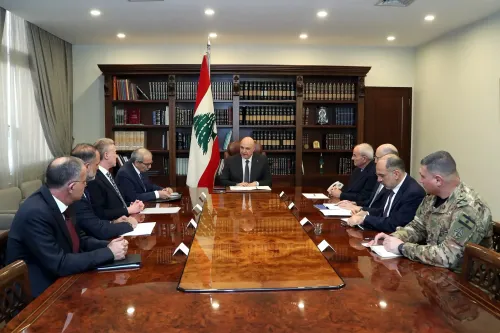
Aoun laid out key goals for the forthcoming phase, which include ceasing Israeli assaults on Lebanese soil, ensuring the withdrawal of Israeli troops, facilitating the return of prisoners, enabling the safe return of displaced individuals, and reinstating the state's authority throughout all Lebanese territories.
He also urged for national unity under a singular state authority, constitution, and military force, cautioning against internal discord and external influences.
In parallel, Wafiq Safa, a senior member of Hezbollah's political council, informed BBC Arabic in Beirut that the group's arsenal is non-negotiable at this juncture.
"Hezbollah will categorically not disarm. We cannot discuss Hezbollah's weapons until there is a cessation of assaults, the withdrawal of Israel, the release of prisoners, the return of displaced individuals to their homes, and reconstruction," Safa remarked, indicating that Hezbollah will oppose any ceasefire resembling the one established since November 2024.
The 2024 ceasefire between Israel and Hezbollah was marred by frequent Israeli strikes in Lebanon. This fragile truce unraveled on March 2, when Hezbollah fired rockets at Israel in support of Iran, leading to intensified Israeli airstrikes throughout Lebanon.
A 10-day ceasefire between Israel and Lebanon commenced at midnight between Thursday and Friday local time (2100 GMT), aiming to halt the lethal escalation between Israel and Hezbollah, which Lebanon's Public Health Ministry reported has resulted in 2,294 deaths in Lebanon, including 100 paramedics and healthcare personnel.
Earlier on Friday, Hezbollah's Loyalty to the Resistance bloc conveyed to Al Jadeed TV that it is cautiously committed to the new ceasefire, emphasizing that its adherence depends on the truce encompassing all Lebanese territories.
Meanwhile, Israeli Prime Minister Benjamin Netanyahu stated on Friday that although Israel is willing to create an opportunity for a comprehensive diplomatic and military resolution with the Lebanese government, Israel has not completed its mission against Hezbollah.
Despite the newly established ceasefire, Lebanon's Al-Manar TV reported that Israel conducted a drone strike in southern Lebanon on Friday, resulting in one fatality.
Point of View
President Joseph Aoun's announcement marks a crucial transition for Lebanon, emphasizing the need for national unity and long-term stability. The government's commitment to negotiate permanent agreements reflects a proactive approach to safeguarding the nation's interests amid regional tensions.
NationPress
19 Sept 2026
Frequently Asked Questions
What is the main objective of the new phase announced by President Aoun?
The main objective is to negotiate permanent agreements that protect the rights of Lebanese citizens, maintain territorial unity, and uphold state sovereignty.
What triggered this new phase in Lebanon?
The transition follows a ceasefire and aims to ensure long-term stability and prevent further loss of life.
What are some key goals outlined by President Aoun?
Key goals include halting Israeli attacks, securing the withdrawal of Israeli forces, enabling the return of prisoners, and restoring state authority across Lebanon.
How has Hezbollah responded to the ceasefire?
Hezbollah has stated that its arsenal is non-negotiable and will not disarm until key conditions are met, including the cessation of Israeli attacks.
What has been the toll of the recent conflict in Lebanon?
The ongoing conflict has resulted in 2,294 deaths in Lebanon, including casualties among paramedics and healthcare workers.