South Korea reshuffle: Lee names foreign minister, spy chief
Synopsis
South Korean President Lee Jae Myung has picked a security adviser as foreign minister and former justice minister Kang Kum-sil as intelligence chief. His office says the country’s foreign policy principles, including its US alliance and peace on the Korean Peninsula, remain unchanged.
Key Takeaways
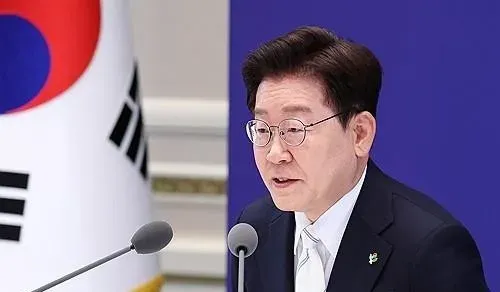
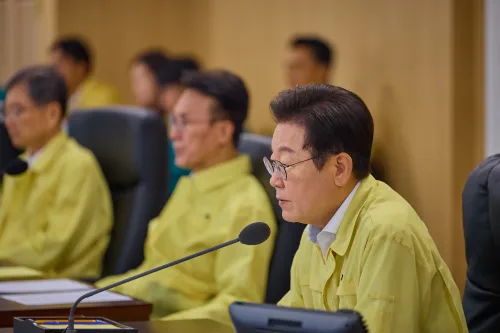
President Lee Jae Myung announced the reshuffle on Monday, 23 November .
Lim Woong-soon , the second deputy national security advisor, was tapped to lead the foreign ministry.
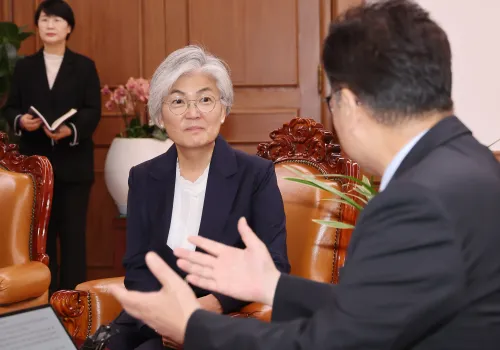
Kang Kum-sil , a former justice minister, was nominated to head the National Intelligence Service .
Hong Ihk-pyo , Han Jun-ho and Kang Yu-jung were named for the unification, interior and culture portfolios, respectively.
Chief of Staff Lim Kwang-hyun said the government’s principles on the South Korea-US alliance and peace on the Korean Peninsula would remain unchanged.
South Korea President Lee Jae Myung named a new foreign minister, intelligence chief and three other ministerial nominees on Monday, 23 November, in a reshuffle announced in Seoul. The president’s chief of staff said the changes were intended to bring fresh leadership and improve the execution of government affairs.
Second Deputy National Security Advisor Lim Woong-soon was tapped to lead the foreign ministry, while former Justice Minister Kang Kum-sil was nominated to head the National Intelligence Service (NIS). The announcement did not specify when the nominees would take office.
Foreign ministry and intelligence appointments
Lim Woong-soon is a former career diplomat who served as a minister at the South Korean Embassy in Washington. He has helped develop the Lee administration’s approach of pragmatic diplomacy.
Chief of Staff Lim Kwang-hyun said the foreign minister nominee was suited to strengthening cooperation with the United States and broadening diplomacy across security, trade, industry and advanced technology.
Kang Kum-sil, the nominee to lead the intelligence agency, was South Korea’s first female justice minister and previously served as a judge. The chief of staff cited her work on prosecution reforms as relevant to strengthening democratic oversight of the NIS and addressing emerging security threats.
Three other ministerial nominees
Lee also tapped former lawmaker Hong Ihk-pyo as unification minister, Democratic Party Representative Han Jun-ho as interior minister and senior presidential spokesperson Kang Yu-jung as culture minister.
Lim Kwang-hyun described Hong Ihk-pyo as a veteran politician who had served on the parliamentary foreign affairs committee and as senior presidential secretary for political affairs. His nominated portfolio covers unification affairs, at a time when the administration says peace on the Korean Peninsula remains a guiding principle.
The chief of staff said Han Jun-ho, a former news anchor and second-term lawmaker, brought legislative experience covering fields including transportation and artificial intelligence. He credited Kang Yu-jung with nearly 20 years of experience as a culture and arts critic and university professor, as well as administrative expertise from her presidential spokesperson role.
Government says foreign policy principles remain
The changes to national security-related posts prompted questions about whether the administration would alter its foreign policy or its approach to North Korea. Lim Kwang-hyun said the government’s principles would remain unchanged, including its commitment to the “solid South Korea-US alliance and peace on the Korean Peninsula.”
He said the reshuffle was centred on “injecting vitality into state affairs through new and fresh leadership for the future” and improving the speed and execution of government affairs.
The chief of staff also said the government would pursue results through pragmatic diplomacy, seek peaceful coexistence on the peninsula and advance changes including region-led growth and cultural development. The next step will be the appointments process for the nominees; the announcement did not provide a timetable.
Point of View
Unification and intelligence invites scrutiny of how the administration will put its stated continuity into practice. The government’s reassurance on the US alliance and peace on the Korean Peninsula matters, but personnel choices will also be judged by their actions. Democratic oversight of the intelligence agency deserves particular attention alongside the response to security threats.
NationPress
23 Nov 2026
Frequently Asked Questions
Who is South Korea’s new foreign minister nominee?
President Lee Jae Myung tapped Lim Woong-soon, the second deputy national security advisor, to lead the foreign ministry. Lim is a former career diplomat who served at the South Korean Embassy in Washington.
Who has been nominated to lead South Korea’s spy agency?
Former justice minister Kang Kum-sil was nominated to head the National Intelligence Service. A former judge, she was South Korea’s first female justice minister.
Which other ministers were named in the reshuffle?
Hong Ihk-pyo was tapped as unification minister, Han Jun-ho as interior minister and Kang Yu-jung as culture minister.
Will South Korea change its policy towards the US or North Korea?
The president’s chief of staff said the government’s foreign policy principles would remain unchanged. He specifically referred to the South Korea-US alliance and peace on the Korean Peninsula.
When will the South Korean ministerial nominees take office?
The announcement did not specify when the nominees would take office. It also did not provide a timetable for the appointments process.