Meta's $18 billion teen safety deal: Instagram, Facebook to get daily time limits

Synopsis
Meta has agreed to pay nearly $18 billion and cap teen screen time at two hours a day on Instagram and Facebook — the largest social-media child-safety settlement on record. But $5.3 billion of that sum is contingent on TikTok and YouTube joining the framework, turning a legal settlement into a calculated pressure campaign on Meta's biggest rivals.
Key Takeaways
Meta agreed to a nearly $18 billion settlement with 52 US Attorneys General , announced on 26 August 2026 .
Teenagers under 18 would face a default two-hour daily limit across Instagram and Facebook , removable only with parental consent.
App access would be blocked between midnight and 6 a.m. ; notifications muted during school hours ( 8 a.m.–3 p.m. ).
Participating states would share approximately $12.7 billion ; a further $5.3 billion is contingent on TikTok and YouTube adopting similar restrictions.
Meta expects to record a nearly $10 billion legal charge in Q3 2026 , not previously flagged in earnings guidance.
The agreement is subject to judicial approval and would remain in force for 10 years .
Meta Platforms has agreed to pay nearly $18 billion and introduce sweeping usage restrictions for teenagers on Instagram and Facebook, following a settlement with a bipartisan coalition of 52 US Attorneys General. Announced on Wednesday, 26 August 2026, the agreement — pending judicial approval — would remain in force for 10 years across participating US states and territories.
Key Restrictions on Teen Usage
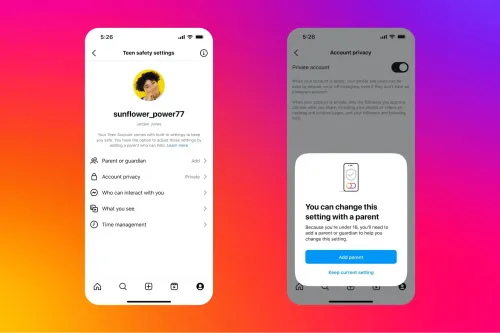
Under the settlement, users aged under 18 would face a default two-hour daily limit across Instagram and Facebook combined. Teenagers could override this cap only with explicit parental permission, and time spent across multiple accounts would count toward the shared limit.
Access to both apps would be blocked between midnight and 6 a.m. Notifications would be muted from 8 a.m. to 3 p.m. — roughly school hours — except for direct messages and account security alerts. Teenagers would receive usage prompts after every 15 minutes of continuous use, and further alerts once daily usage crosses 60 and 90 minutes.
Feed, Filters, and Parental Controls
The deal would also give teenagers the option to switch to a non-algorithmic feed and disable autoplay. Like and reaction counts would be hidden by default. Meta would block cosmetic surgery and extreme makeup filters for teenage users — a direct response to longstanding criticism about the platforms' effect on body image among young people.
Parents would be notified when a teenager links a secondary account or interacts with a potentially suspicious account. They would also receive periodic usage reports and alerts about any attempted changes to protective settings.
The Financial Settlement
The nearly $18 billion payment is structured over 10 years. Participating states would receive approximately $12.7 billion, which could fund youth online safety programmes and other state priorities. The remaining $5.3 billion is contingent: it would be released only if TikTok and YouTube each introduce a one-hour daily limit, overnight restrictions, and age-assurance measures — and make matching payments.
Meta said it expected to record a nearly $10 billion legal expense in the third quarter of 2026 — a charge not included in the guidance issued during its second-quarter earnings call.
Meta Calls on TikTok and YouTube to Follow
Meta used the announcement to pressure rivals into adopting the same framework. Meta Chief Legal Officer C.J. Mahoney said: 'Because teens move fluidly across dozens of apps, we need an industry-wide solution. We therefore call on our industry peers, TikTok and YouTube, to implement this new framework, right away.'
If TikTok and YouTube join, Meta's own daily limit would tighten further — dropping to one hour per app — and the overnight block would expand from 10 p.m. to 7 a.m. The time-limit and night-mode commitments would also extend from five years to the full 10-year term.
What Comes Next
The agreement is subject to court approval before any provisions take effect. With the contingent $5.3 billion tranche hinging on TikTok's and YouTube's participation, the settlement effectively creates a financial incentive for industry-wide adoption. Whether rival platforms comply — or face their own regulatory pressure — will determine both the scope of the reforms and Meta's ultimate financial exposure.
Point of View
If adopted, tighten Meta's own limits further but level the competitive playing field. The $5.3 billion contingent tranche is less a penalty than a policy lever — Meta is effectively outsourcing regulatory pressure to state attorneys general. What the deal does not resolve is the underlying question of whether algorithmic design, not just screen time, is the primary driver of harm to young users. Time caps are measurable; algorithmic manipulation is not, and this settlement does not touch it.
NationPress
27 Aug 2026
Frequently Asked Questions
What is Meta's $18 billion teen safety settlement?
It is a legal agreement between Meta and a bipartisan group of 52 US Attorneys General, announced on 26 August 2026, that would impose daily time limits, overnight access bans, and other protective measures on Instagram and Facebook for users under 18. The deal is worth nearly $18 billion over 10 years and is subject to judicial approval.
What restrictions will teenagers face on Instagram and Facebook?
Under the settlement, teenagers would face a default two-hour daily limit across both platforms, an overnight access block from midnight to 6 a.m., and muted notifications during school hours. They would also receive usage prompts every 15 minutes and after hitting 60 and 90 minutes of daily use.
Why does $5.3 billion of the settlement depend on TikTok and YouTube?
That portion of the funds would be released only if TikTok and YouTube each introduce a one-hour daily limit, overnight restrictions, and age-assurance measures, and make matching payments. Meta argues that teen safety requires an industry-wide approach because teenagers move between platforms.
How much will Meta record as a financial charge?
Meta said it expects to record a nearly $10 billion legal expense in the third quarter of 2026. This charge was not included in the guidance Meta issued during its second-quarter earnings call.
When will these teen safety rules take effect?
The agreement is still subject to judicial approval before any provisions take effect. Once approved, most commitments would remain in force for 10 years across participating US states and territories.