Did Saudi Arabia’s Mediation in Pak-Afghan Truce Talks Fail Again in Riyadh?

Synopsis
In a recent round of negotiations mediated by Saudi Arabia, talks aimed at achieving a ceasefire between Pakistan and Afghanistan have once again ended in failure. With ongoing tensions and accusations between the two nations, the path to peace remains fraught with challenges. What lies ahead for both countries as they navigate this complex situation?
Key Takeaways
Saudi Arabia attempted to mediate a ceasefire between Pakistan and Afghanistan .
Recent talks in Riyadh were unsuccessful.
Tensions at the Durand Line remain high, affecting trade.
Kabul denies sheltering hostile groups.
Economic repercussions are significant due to border closures.
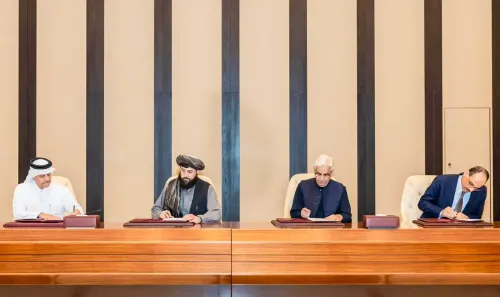
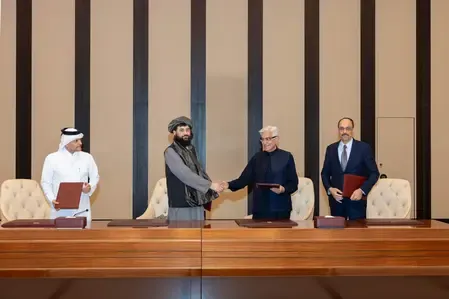
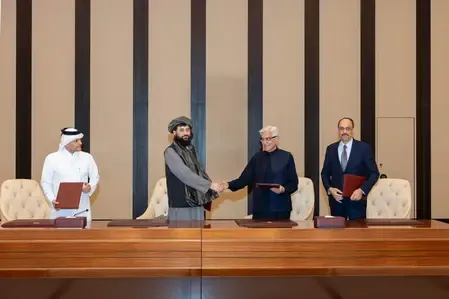
New Delhi, Dec 1 (NationPress) In the midst of ongoing efforts by Saudi Arabia to facilitate a ceasefire between Kabul and Islamabad, a media outlet focusing on Afghanistan reported on Monday that the negotiations held in Riyadh have once again proven unsuccessful.
According to sources cited by Afghanistan International, a Taliban delegation made its way to Saudi Arabia for discussions with Pakistani officials. However, these discussions did not produce any fruitful outcomes and have failed once more,” the website, which specializes in news surrounding Afghanistan, reported.
As of now, there has been no official confirmation regarding the results of this latest mediation effort by Saudi Arabia.
Previously, teams from Afghanistan and Pakistan attempted to resolve the situation through talks facilitated by Turkey and Qatar, but they were unable to agree on the terms for a lasting ceasefire.
The two nations are grappling with a tense border situation, marked by intense confrontations over the past month, during which Islamabad has allegedly conducted multiple airstrikes within Afghanistan.
Islamabad has accused the Afghan Taliban government of harboring elements that pose a threat to its security and reportedly carrying out lethal strikes on its territory.
Meanwhile, Kabul denies any involvement in supporting such groups and has accused Islamabad of forcibly expelling Afghan refugees, forcing thousands back into a country already struggling with financial and infrastructure challenges.
The initial meeting in Doha on October 18-19 resulted in a temporary ceasefire agreement between Afghanistan and Pakistan, but subsequent meetings in Istanbul failed to establish a consensus on the necessary procedures.
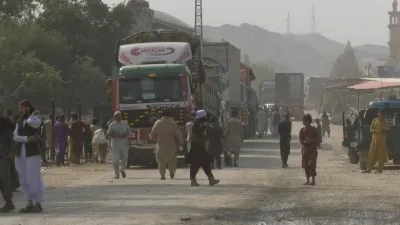
Additionally, Afghanistan's Tolo News reported on November 30 that the disputed Durand Line border has been closed for “47 days” for trade with Pakistan.
The report stated, “Due to the ongoing tensions between the two nations, there is no indication of the routes reopening or the unblocking of goods.”
Afghanistan's Ministry of Economy has once again called on neighboring nations to keep political matters separate from economic relations with Afghanistan, emphasizing that the closure of border crossings could lead to significant economic repercussions for both countries.
According to the Pakistan-Afghanistan Joint Chamber of Commerce and Industry, the halt in trade has resulted in considerable losses for businesses in both nations.
Despite the ongoing conflict, even with the Pakistan-Saudi Strategic Mutual Defence Agreement, which Islamabad has touted as a significant accomplishment in its foreign policy, Riyadh has not intervened either militarily or diplomatically.
Nevertheless, it has been urging both nations to exercise restraint and reduce the current tensions.
Interestingly, Islamabad has stated that the defence agreement with Saudi Arabia includes a commitment for mutual support if either party is attacked by any external force.
Moreover, an official announcement on November 9 indicated that President Recep Tayyip Erdogan planned to send Turkey's Foreign and Defence Ministers, along with the Intelligence Chief, to Pakistan to discuss the ongoing unresolved ceasefire talks with Afghanistan. However, reports indicate that this visit did not take place.
Point of View
It is crucial to observe that the failure of the latest Pak-Afghan ceasefire talks underscores the volatile nature of regional diplomacy. The persistent tensions between these nations not only hinder their bilateral relations but also impact the broader stability in the region. A concerted effort is necessary to address these issues and foster a more peaceful coexistence.
NationPress
29 Sept 2026
Frequently Asked Questions
What were the recent ceasefire talks about?
The recent ceasefire talks aimed to mediate peace between Pakistan and Afghanistan, focusing on reducing hostilities and establishing a long-term agreement.
Who mediated the ceasefire discussions?
The discussions were mediated by Saudi Arabia, which has been involved in facilitating dialogue between the two nations.
What was the outcome of the talks?
Unfortunately, the talks held in Riyadh have once again failed to produce any results.
Why is the Durand Line border significant?
The Durand Line border is a contentious area that has been the source of disputes, affecting trade and the movement of people between Pakistan and Afghanistan.
What impact could the closure of the border have?
The closure of the border could lead to significant economic damage for both Pakistan and Afghanistan, hindering trade and essential supplies.