Pakistan Reinstates Deportation of Undocumented Afghan Refugees at Torkham Border
Synopsis
The deportation of undocumented Afghan refugees from Pakistan has resumed at the Torkham border following its reopening. This movement comes amid rising tensions between Afghanistan and Pakistan, prompting significant security measures and operations targeting illegal residents.
Key Takeaways
Deportation Resumed: Pakistan has restarted deportation of undocumented Afghan refugees.
Increased Tensions: Rising conflicts between Afghanistan and Pakistan have influenced this decision.
Security Measures: Curfews and clearance processes are being enforced at the Torkham border.
Significant Population: Approximately 30,000 Afghan refugees remain in Swabi.
Ongoing Crackdown: Continued operations against illegal Afghan residents are planned.
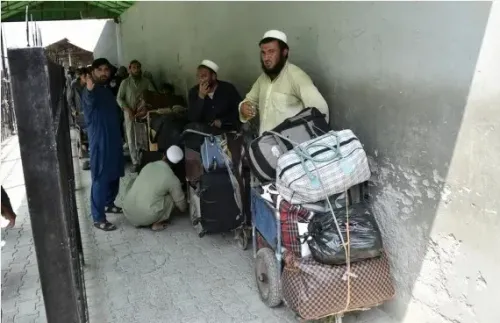
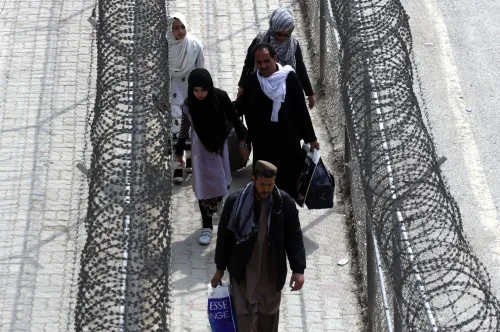
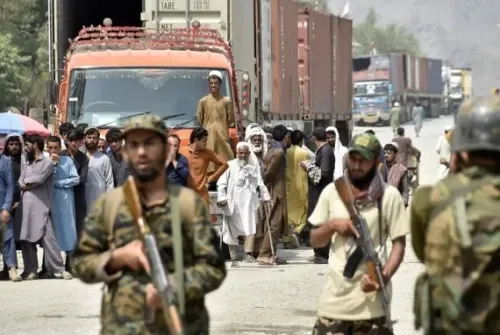
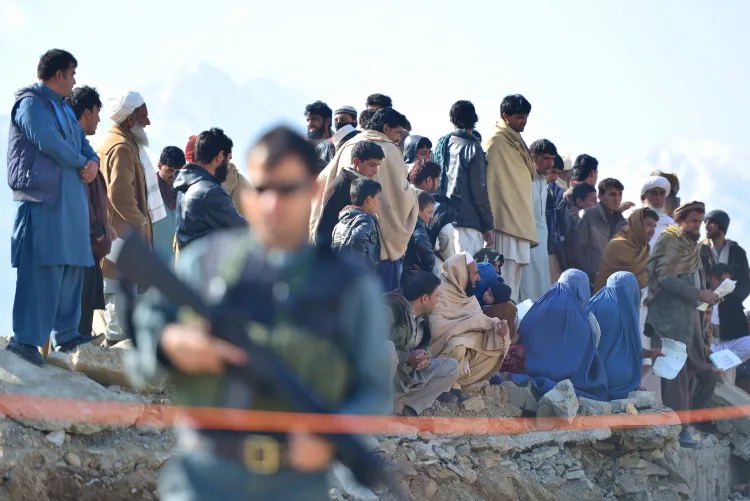
Islamabad, March 27 (NationPress) Pakistan has initiated the deportation process of undocumented Afghan refugees via the Torkham border following its reopening for one-way pedestrian traffic after a month-long hiatus caused by conflicts between Kabul and Islamabad, local media reported on Friday.
Recently, tensions have heightened between Afghanistan and Pakistan, marked by airstrikes, artillery exchanges, and mutual accusations.
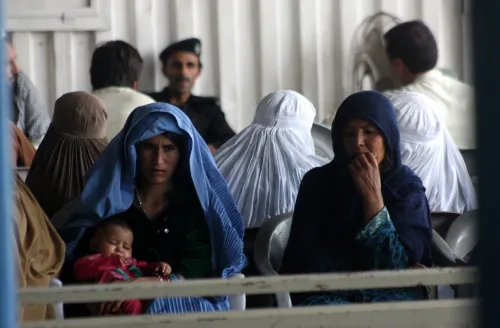
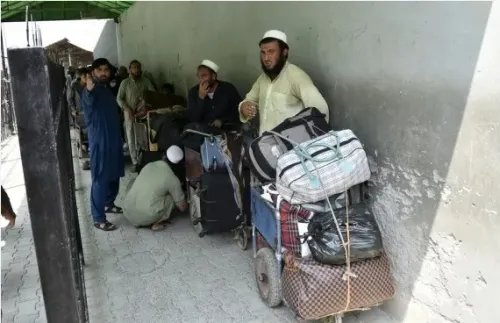
Officials at a temporary transit facility established near the Hamza Baba mausoleum in Landi Kotal confirmed that 50 Afghan nationals, previously detained for residing in Pakistan without proper documentation, were taken to the transit site and subsequently repatriated to Afghanistan after undergoing a clearance procedure on Thursday, as reported by Pakistan's prominent daily, Dawn. The clearance process involved police, intelligence agencies, the National Database and Registration Authority (Nadra), and immigration departments.
Prior to commencing the deportation process at 9:30 am (local time) on Thursday, authorities distributed the deportation and repatriation schedule at the Torkham border. Key government departments, including the National Logistics Corporation (NLC), Federal Investigation Agency (FIA), Customs, and Nadra, were instructed to activate their computerized systems and communicate their 'ready status' to security personnel stationed at the border ahead of time.
Moreover, a curfew was enforced at Torkham, restricting the movement of individuals around the terminal, Bacha Maina, Machni, and adjacent areas.
On March 15, police apprehended over 300 illegal Afghan refugees during operations conducted across various locations in Swabi district, Khyber Pakhtunkhwa.
This crackdown was initiated following directives from district administration and police officials aiming to deport illegal Afghan nationals, as reported by daily Dawn, citing sources. Police instructed Station House Officers (SHOs) to maintain records of all undocumented Afghans within their jurisdictions.
According to sources, 341 Afghan refugees were arrested during raids executed in Topi, Razaar, Chota Lahor tehsils, and other areas of Swabi on March 15. The reports indicated that operations will persist, targeting all Afghan refugees unlawfully residing in Swabi for detention and repatriation to Afghanistan.
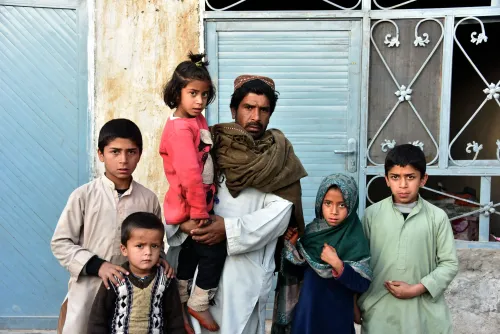
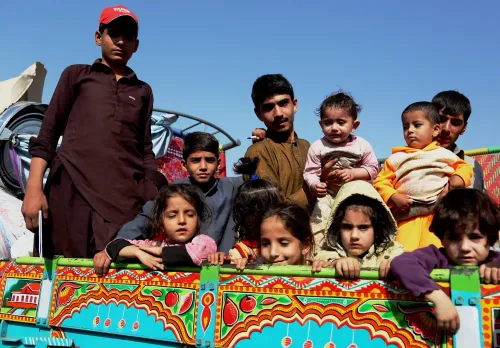
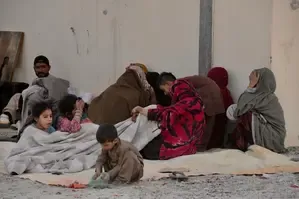
Approximately 30,000 Afghan refugees continue to reside in various regions of Swabi, with many possessing valid documentation, while others remain without legal status. Sources disclosed that these refugees are living in Gandaf Refugees Camp and Gohati Refugees Camp, and a significant number are settled in farming fields and urban locales.
Point of View
It is crucial to present the situation surrounding the deportation of Afghan refugees as a complex issue influenced by geopolitical tensions. Pakistan's decision reflects ongoing security concerns and the delicate relationship with Afghanistan, emphasizing the need for a balanced approach to humanitarian issues and national security.
NationPress
24 Sept 2026
Frequently Asked Questions
What led to the resumption of deportations at Torkham border?
The deportations resumed after the Torkham border was reopened for one-way pedestrian movement following a month-long closure due to rising tensions and conflicts between Afghanistan and Pakistan.
How many Afghan refugees have been affected by these deportations?
Approximately 50 Afghan refugees were repatriated during the initial deportation process, with ongoing operations targeting a larger population of undocumented refugees.
What measures are being taken to manage the deportation process?
Authorities have implemented a clearance process involving police, intelligence agencies, and immigration departments, while also enforcing curfews around the border area.
Are there still Afghan refugees residing in Pakistan?
Yes, around 30,000 Afghan refugees are reported to be living in various regions of Swabi, with a mix of those holding valid documentation and others without legal status.
What actions have been taken against illegal Afghan refugees recently?
Recent police operations in Swabi district resulted in the detention of over 300 illegal Afghan refugees, with plans for continued enforcement against undocumented individuals.