Political Apathy Exacerbates Pakistan's Ongoing Polio Crisis
Synopsis
A troubling report reveals that political negligence is at the heart of Pakistan's ongoing polio epidemic, with millions of children missing vaccinations and communities rife with misinformation about vaccine safety.
Key Takeaways
Political negligence is a key factor in Pakistan's polio crisis.
Over a million children missed vaccinations recently.
Extensive misinformation persists regarding vaccine safety.
Karachi has the highest rate of vaccination refusals in the country.
Systemic failures in public health must be addressed urgently.
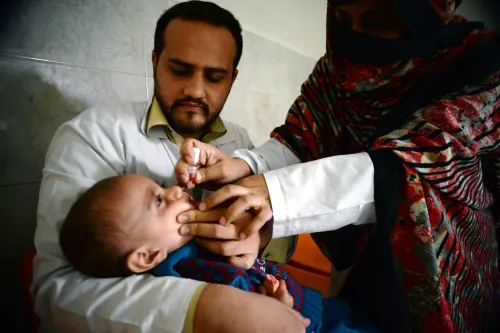
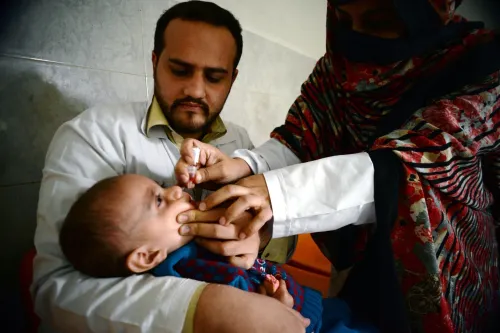
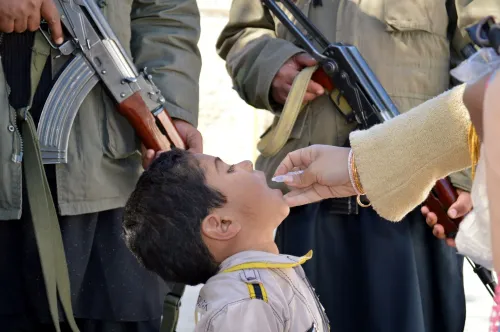
Islamabad, March 7 (NationPress) The ongoing polio epidemic in Pakistan underscores a significant lack of political commitment, as successive administrations have failed to create a unified, pro-vaccination message while neglecting to counter extremist narratives.
The current government has been preoccupied with political and legal battles, largely overlooking pressing public health issues, as detailed in a recent report.
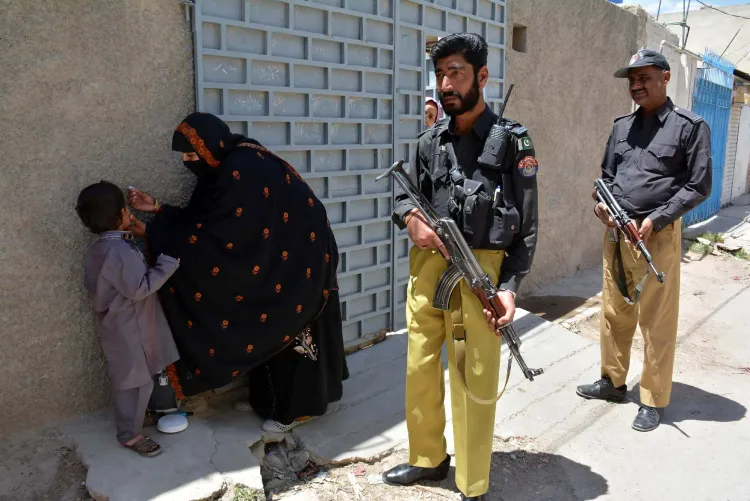
According to the leading Pakistani newspaper, Dawn, approximately one million children missed out on vaccination, and nearly 53,000 families declined the vaccine during the country’s recent nationwide polio initiative.
“Pakistan remains one of the few nations where the polio virus still circulates, and even minor gaps in vaccination can expose thousands of children to danger. Polio primarily affects those under five, leading to lifelong paralysis or death. The fact that 670,000 children were marked as 'not available at home' challenges operational logic,” reports 'Pakistan Observer'.
“A child absent from one home is not absent from the community; they could be in schools, parks, or with family. However, vaccination teams still depend solely on door-to-door outreach, allowing vast numbers of children to fall through the gaps. Missing children should not be just statistics in official reports; they signify a broader systemic failure,” it further elaborates.
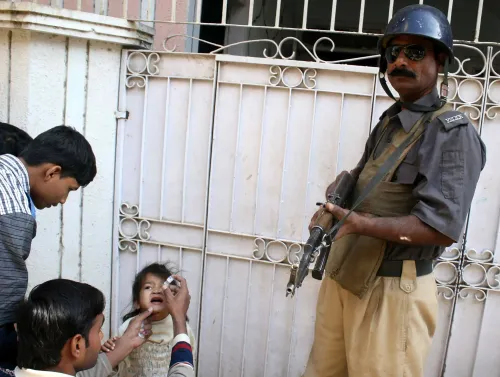
The situation is particularly dire in Karachi, which recorded 31,000 refusals—accounting for 58% of all refusals nationwide. This raises urgent questions regarding why Pakistan’s largest and most resource-rich city remains at the forefront of vaccine hesitancy.
“Whether caused by misinformation, inadequate planning, ineffective local governance, or political neglect, the crisis in Karachi needs targeted, neighborhood-level strategies and greater collaboration with community leaders. Various factors have contributed to the enduring polio issue in Pakistan, despite substantial international funding,” it notes.
The report emphasizes that misinformation and mistrust are prevalent in certain communities about the safety and efficacy of the polio vaccine. Many believe that the vaccine contains harmful components or is part of a conspiracy.
“This situation largely stems from the government's failure to confront extremist ideologies, which have perpetuated a narrative that discourages vaccination among the populace,” it states.
Furthermore, the report references the U.S. Centers for Disease Control and Prevention, which points to evidence of significant virus transmission in Karachi, Peshawar, Quetta, and Central Pakistan, even with relatively low reported polio cases.
“Limited healthcare access in remote regions, underreporting, and challenges in surveillance suggest that the actual burden of polio may be greater than what official statistics indicate,” it concludes.
Point of View
I observe that the ongoing polio crisis in Pakistan highlights a severe systemic failure in public health governance. It's imperative that authorities prioritize vaccination efforts and address community concerns to safeguard the future of our children.
NationPress
22 Sept 2026
Frequently Asked Questions
What are the primary reasons for the polio crisis in Pakistan?
The polio crisis in Pakistan is largely due to political neglect, misinformation about vaccines, and community resistance, especially in key cities like Karachi.
How many children are affected by polio in Pakistan?
Pakistan has one of the highest numbers of polio cases, with significant portions of its population—especially children under five—at risk due to vaccination gaps.
What measures can be taken to combat vaccine refusal in Pakistan?
Implementing targeted awareness campaigns, engaging community leaders, and enhancing local healthcare access can help address vaccine refusal.
What role does misinformation play in vaccine hesitancy?
Misinformation creates distrust in vaccine safety and efficacy, leading many to refuse vaccinations based on false beliefs.
How can the government improve vaccination rates?
The government must establish a coherent pro-vaccination narrative and actively counter extremist propaganda to regain public trust.