Is Pakistan Heading Towards a Quagmire by Deploying Troops to Gaza?
Synopsis
As Pakistan weighs the decision to deploy troops to Gaza under the International Stabilisation Force, doubts are mounting among analysts. Noted diplomat Maleeha Lodhi highlights potential risks and policy contradictions, urging a cautious approach to protect national interests. Will Islamabad risk its soldiers in a controversial peace plan?
Key Takeaways
Deployment could contradict Pakistan's foreign policy.
Cooperation with Israel raises significant concerns.
The ISF lacks clear UN mandate and supervision.
National interests must be prioritized in decision-making.
Other nations are waiting for clarity before committing troops.
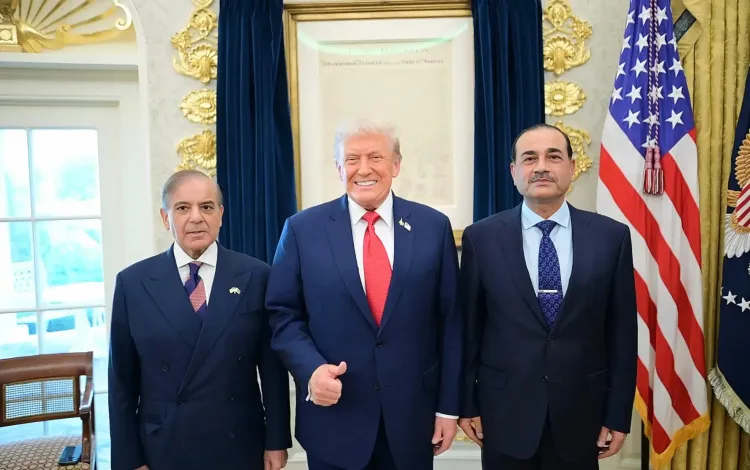
Islamabad, Dec 29 (NationPress) — Renowned author and former diplomat Maleeha Lodhi recently added her voice to the chorus of Pakistani analysts raising concerns about the wisdom of Islamabad sending troops to participate in the International Stabilisation Force (ISF) as proposed by US President Donald Trump in his Gaza peace initiative.
In an article published in the prominent Pakistani daily Dawn, Lodhi, who has served as Pakistan's ambassador to the US, UK, and UN, articulated that joining the ISF would contradict Pakistan's longstanding foreign policy.
“From what is understood, ISF is neither a traditional UN peacekeeping force nor does it operate under UN supervision. While it has an ambiguous UN mandate, its role leans more towards peace enforcement, which sets it apart operationally. The force would need to collaborate closely with Israeli authorities, requiring Israeli approval for participating countries,” Lodhi wrote.
“Deployment would demand significant cooperation with Israel, which has a history of untrustworthiness, as evidenced by its attacks on UN peacekeepers in Lebanon. What would occur if Israeli troops began targeting ISF’s Pakistani unit? Additionally, such collaboration with Israel could imply tacit recognition and lead towards formal acknowledgment, edging closer to joining the Abraham Accords, all while there are no advancements towards establishing a Palestinian state,” she emphasized.
She noted that it is crucial to evaluate the situation in Gaza and the unfolding of the second phase of Trump’s plan before making a decision about Pakistan's involvement in the ISF.
“This action would contradict Pakistan’s longstanding policy. Ultimately, Pakistan must weigh the evident challenges in enforcing a poorly defined Gaza peace plan and consider whether it is worth risking our soldiers in a potential quagmire. The welfare of Pakistan’s national interests must be paramount in a decision that requires complete transparency,” Lodhi remarked.
The government of Pakistan has indicated to the US administration that it is contemplating joining the force, although a final decision remains pending. In November, Deputy Prime Minister Ishaq Dar stated that Pakistan was “definitely prepared” to contribute to the ISF, though disarming Hamas was not within their responsibilities.
Over recent months, Pakistan has been engaged in discussions with the US to gain clarity on the mandate and structure of the Gaza force. Other Muslim nations that previously expressed interest in joining the ISF have since retracted, with no country currently committing troops as they await further clarity on significant matters.
On December 16, the US Central Command hosted a conference in Doha, which included representatives from Pakistan, to discuss the subsequent phases of Trump’s plan, including ISF deployment and agreement on its mandate. However, attendees did not reach a consensus on the mandate.
The second phase involves establishing governance structures for Gaza, further withdrawal of Israeli forces, disarming Hamas, and ISF deployment. Announcements regarding the Board of Peace, led by Trump as the overseeing body for transitional governance in Gaza, are still pending, and the members of the Palestinian technocratic committee responsible for Gaza’s daily operations have yet to be disclosed.
Point of View
It is imperative to evaluate the broader implications of Pakistan’s possible involvement in the ISF. While the intention may be to contribute to stability, the risks associated with cooperation with Israel and the uncertainties surrounding the peace plan call for a thorough and transparent assessment. The nation's interests must remain the priority in any decision-making process.
NationPress
2 Oct 2026
Frequently Asked Questions
What is the International Stabilisation Force?
The International Stabilisation Force (ISF) is a proposed military coalition under the US-led initiative aimed at restoring peace in Gaza, although its structure and mandate remain unclear.
Why are analysts concerned about Pakistan's potential involvement?
Analysts, including Maleeha Lodhi, express concerns that joining the ISF contradicts Pakistan's longstanding foreign policy and could involve cooperation with Israel, which may compromise national interests.
What is the status of the peace plan proposed by Trump?
The peace plan's second phase includes governance arrangements for Gaza, further Israeli troop withdrawal, disarmament of Hamas, and deployment of the ISF, although many aspects remain unresolved.
Have other countries committed to joining the ISF?
Several other Muslim nations that initially showed interest in joining the ISF have since hesitated, opting to wait for clarity on key issues before making any commitments.
What are the potential risks involved in this deployment?
Deploying troops could expose Pakistani soldiers to conflict zones and involve cooperation with an untrustworthy ally, which could lead to severe diplomatic and operational challenges.