PLA corruption exposed: China's military a 'hollow giant', report says
Synopsis
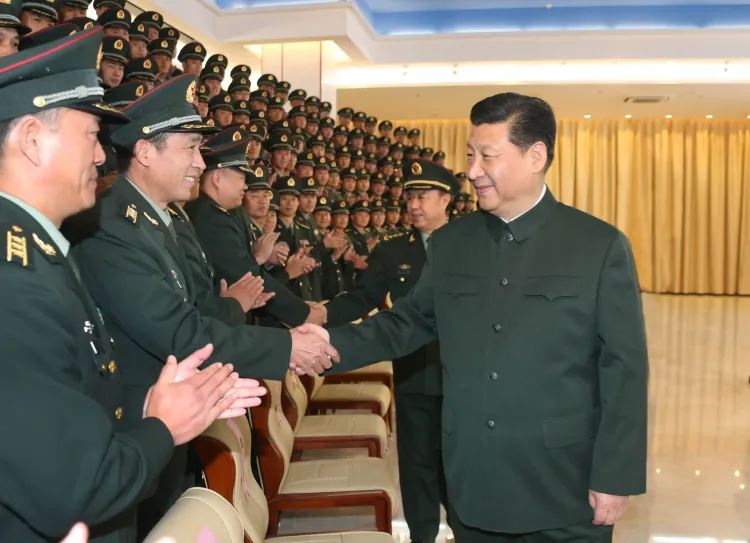
A report by Uganda-based PML Daily alleges China's People's Liberation Army is riddled with systemic corruption — from stolen food rations and siphoned fuel to the sale of promotions and abuse of recruits. The findings, if accurate, suggest Beijing's much-touted military modernisation may be built on deeply compromised foundations.
Key Takeaways
A report by PML Daily describes China's People's Liberation Army (PLA) as a 'hollow giant' undermined by corruption and abuse.
Soldiers reportedly receive drastically reduced food rations — chicken necks and fish tails — while officers divert full portions for personal use.
Military fuel is allegedly siphoned from vehicle fleets and sold for profit, reportedly leaving entire convoys immobilised during emergency assemblies.
New recruits reportedly face bullying, beatings, and forced punishments , with some attempting desertion.
The report links military corruption to a broader CCP political culture where promotions are sold and loyalty is purchased.
Beijing has conducted high-profile anti-corruption purges within the PLA in recent years, including the removal of senior Rocket Force commanders.
China's People's Liberation Army (PLA), long projected as the backbone of Beijing's global ambitions, is being described as a structurally compromised force — with ordinary soldiers enduring deprivation while officers exploit their positions for personal gain, according to a report published this week by Uganda-based media outlet PML Daily.
The report, citing accounts from within the ranks, argues that behind the PLA's polished public image lies a reality of rampant corruption, abuse of recruits, and systemic misappropriation of resources that has allegedly hollowed out both its credibility and combat readiness.
Soldiers Starved, Officers Fed
Among the most striking allegations in the report is the systematic diversion of food rations. According to PML Daily, soldiers' meal allowances are routinely siphoned by officers, leaving recruits with drastically reduced portions — chicken necks, fish tails, and cabbage in place of the whole chickens and fish mandated by military regulation.
"The best cuts are syphoned off for officers and leaders, a grotesque metaphor for how the hierarchy feeds itself at the expense of the rank and file," the report stated. The outlet argued that a military unable to adequately provide for its own personnel risks losing credibility both internally and beyond its borders.
Fuel Theft and Logistics Corruption
The report alleges that corruption extends well beyond food supply chains. In what it describes as a widespread norm rather than an isolated aberration, military fuel is reportedly siphoned from vehicle fleets and sold for personal profit by officers within logistics units.
The outlet cited accounts of emergency assemblies where entire convoys were rendered immobile because fuel tanks had been emptied for resale. "Logistics units, rather than serving operational needs, become 'gold mines' for officers who have paid bribes to secure their positions and now seek to recoup their investments," the report noted. It further alleged that the falsification of equipment records and the sale of military supplies are systemic practices — corruption described as "the rule, not the exception."
Abuse of Recruits and Military Culture
The report also details what it characterises as a culture of fear within the PLA's recruit training system. According to PML Daily, bullying, beatings, and forced punishments are described as everyday occurrences for new entrants.
"Some recruits are driven insane; others attempt escape, only to be imprisoned on charges of desertion," the report stated. It argued that such conditions reveal a military culture built on intimidation rather than discipline — a distinction it says matters enormously for operational effectiveness in a real conflict scenario.
Systemic Rot Linked to Broader Political Culture
The report draws a direct line between military corruption and the broader political ecosystem of the Chinese Communist Party (CCP). It contends that loyalty within the system is purchased, promotions are sold, and advancement at every level — from Party membership to securing a strategic posting — carries a monetary price.
"The corruption within the military is symptomatic of a broader political system where loyalty is bought, promotions are sold, and survival depends on bribes," the report noted. While the CCP has publicly touted military modernisation and combat readiness under President Xi Jinping's leadership, critics argue that entrenched graft and incompetence undermine those claims at the structural level.
This comes amid a series of high-profile anti-corruption purges within the PLA in recent years, including the removal of senior rocket force commanders — moves that analysts have interpreted as evidence of the very systemic problems the report describes. Whether Beijing's internal crackdowns are sufficient to reverse institutional decay remains, according to independent observers, an open question with significant implications for regional security.
Point of View
And that attribution matters — it limits independent verification. That said, its core allegations align with a pattern that Beijing itself has implicitly acknowledged: the anti-corruption purges of PLA Rocket Force commanders in 2023 were not the actions of a confident institution but of one firefighting internal rot. The more significant question mainstream coverage misses is operational: if fuel tanks are empty during emergency assemblies in peacetime, what does that mean for readiness in a Taiwan Strait scenario? Xi Jinping's modernisation narrative depends on the world believing the PLA is a transformed force. Reports like this — even when sourced through secondary outlets — chip away at that credibility precisely because they echo what Beijing's own purges have already conceded.
NationPress
19 Sept 2026
Frequently Asked Questions
What does the report say about corruption in China's PLA?
The report by Uganda-based PML Daily alleges that China's People's Liberation Army is plagued by systemic corruption including the diversion of food rations, theft and resale of military fuel, falsification of equipment records, and the buying and selling of promotions. It describes corruption as "the rule, not the exception" within the force.
How are PLA soldiers allegedly mistreated?
According to the report, ordinary soldiers receive reduced food rations — scraps like chicken necks and fish tails instead of full meals mandated by regulation. New recruits reportedly face bullying, beatings, and forced punishments, with some driven to attempt desertion, which then results in imprisonment.
Has China acknowledged corruption within the PLA?
Beijing has not directly responded to this report, but in recent years the Chinese Communist Party conducted high-profile anti-corruption purges within the PLA, most notably removing senior Rocket Force commanders. Analysts have interpreted these moves as evidence of deep institutional problems within the military.
Why does PLA corruption matter beyond China's borders?
If the allegations are accurate, systemic corruption could significantly undermine the PLA's actual combat readiness, despite its projected strength. Immobilised convoys, siphoned fuel, and abused recruits point to operational vulnerabilities that could affect China's military posture in regional flashpoints such as the Taiwan Strait.
Who published the report on PLA corruption?
The report was published by PML Daily, a Uganda-based media outlet. It is based on accounts described as coming from within the PLA's ranks, though independent verification of the specific claims has not been established.