Ramaswamy: American Dream and Socialism Can't Coexist in Ohio
Synopsis
Entrepreneur Vivek Ramaswamy has declared the American Dream and socialism 'fundamentally incompatible,' framing Ohio's 2026 elections as a binary ideological choice. The post signals his continued influence in Republican electoral politics following his 2024 presidential campaign and DOGE advisory role.
Key Takeaways
Vivek Ramaswamy posted on June 27, 2026 , calling the American Dream and socialism 'fundamentally incompatible.' He framed the 2026 Ohio elections as a direct choice between the two ideologies.
The capitalism-versus-socialism binary was a central theme of his 2024 Republican presidential campaign .
Ramaswamy is the founder of Strive Asset Management and former co-lead of the DOGE advisory effort.
Ohio is a competitive battleground state in the 2026 midterm cycle, making it a key target for ideological messaging.
No specific Ohio ballot items or candidates were named in the post.
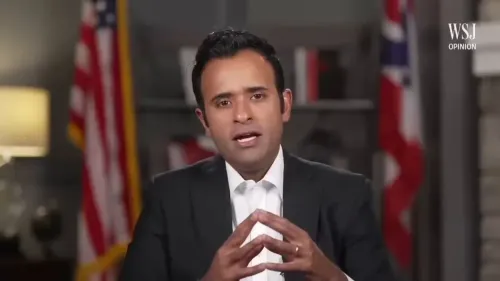
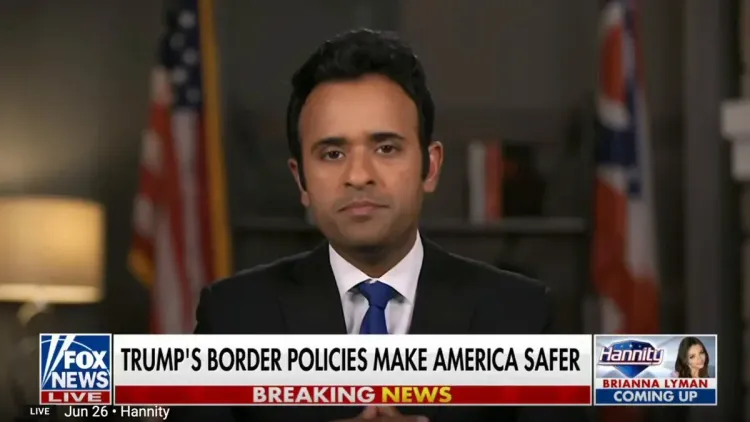
Entrepreneur and former Republican presidential candidate Vivek Ramaswamy on Saturday, June 27, 2026, declared that the American Dream and socialism are 'fundamentally incompatible,' framing the 2026 Ohio elections as a binary choice between the two ideologies. The statement, posted on X, signals Ramaswamy's continued engagement in electoral politics following his high-profile 2024 presidential run and his role co-leading the Department of Government Efficiency (DOGE) advisory effort.
Context
Ramaswamy wrote: 'The American Dream and socialism are fundamentally incompatible. It's one or the other. That's the choice on the ballot in Ohio this year.' The post, which included a video, frames the upcoming Ohio electoral contest as an ideological referendum rather than a conventional candidate-versus-candidate race. Ohio has emerged as a competitive battleground state where both parties are investing heavily in messaging ahead of the 2026 midterm cycle.
Ramaswamy, who founded Strive Asset Management and built his national profile around anti-ESG investing and free-market advocacy, has consistently used binary ideological contrasts as a political communication tool. His 2024 presidential campaign made the capitalism-versus-socialism frame a central pillar, and Saturday's post suggests that framing is being carried into state-level electoral contests.
Policy Backdrop
The capitalism-versus-socialism binary has been a recurring feature of American conservative messaging since the 2010s, appearing in national platforms, gubernatorial races, and ballot-measure campaigns. Critics of the framing argue it conflates mainstream Democratic policy proposals — such as expanded healthcare access or student debt relief — with full state-ownership socialism. Proponents, including Ramaswamy, contend that incremental expansions of government programs represent a directional shift away from individual enterprise and self-reliance.
Ramaswamy's post arrives as Ohio prepares for a slate of 2026 elections that could include competitive races for federal and state offices. The state has trended Republican in recent presidential cycles but remains contested at the legislative and statewide levels, making it a prime target for ideological mobilisation efforts from both parties.
Stakeholders and Impact
Ohio voters are the immediate audience for this kind of messaging, particularly those in suburban and exurban counties that have shifted between parties in recent election cycles. Republican candidates in the state are likely to amplify or respond to Ramaswamy's framing as they define their own platforms ahead of primaries and general elections.
For Strive Asset Management and Ramaswamy's broader brand, the post reinforces his positioning as a free-market ideological voice outside formal government — a role he has occupied since stepping back from the DOGE advisory effort. His continued public commentary on electoral politics keeps him relevant to the Republican donor and activist base without requiring a declared candidacy.
What's Next
Observers will watch whether Ramaswamy translates this social-media positioning into formal campaign endorsements, fundraising activity, or public appearances in Ohio ahead of the 2026 elections. The degree to which Republican candidates in the state adopt or distance themselves from his capitalism-versus-socialism framing will be a signal of how the party's ideological centre of gravity is settling after the turbulence of the 2024 cycle. Any ballot measures in Ohio touching on government spending, labour rights, or healthcare access could become focal points for this debate in the months ahead.
Point of View
Where such framing can shape primary dynamics. By anchoring his message to Ohio specifically, he signals an intent to remain a kingmaker-adjacent figure in Republican politics without holding office. The capitalism-versus-socialism frame has historically energised conservative base voters while drawing accusations of oversimplification from the centre and left. Whether Ohio's 2026 contests become a genuine test of that framing's electoral potency will depend on which specific races and ballot measures emerge as flashpoints.
NationPress
25 Sept 2026
Frequently Asked Questions
What did Vivek Ramaswamy say about Ohio elections?
Ramaswamy said the American Dream and socialism are 'fundamentally incompatible' and that the 2026 Ohio elections represent a choice between the two.
Is Vivek Ramaswamy running for office in Ohio?
Ramaswamy has not announced a candidacy for any Ohio office. His post is a political commentary, not a declaration of candidacy.
What is Vivek Ramaswamy's connection to DOGE?
Ramaswamy co-led the Department of Government Efficiency (DOGE) advisory effort alongside Elon Musk before stepping back from that role.
Why is Ohio important in the 2026 elections?
Ohio is a competitive battleground state that has trended Republican in presidential races but remains contested at state and federal levels, making it a high-stakes arena for both parties in the 2026 midterm cycle.
What is Strive Asset Management?
Strive Asset Management is an investment firm founded by Vivek Ramaswamy that advocates for returns-focused, anti-ESG investing strategies.