Russia eyes railway route to Indian Ocean via India, says Deputy PM
Synopsis
Russia's Deputy Prime Minister has floated a sweeping railway corridor — cutting through Turkmenistan, Iran, Afghanistan, and Pakistan — to give Moscow its first overland route to the Indian Ocean and a direct land link to India. The proposal is exploratory and faces enormous diplomatic and infrastructure obstacles, but it signals Russia's accelerating pivot away from Western-controlled maritime chokepoints.
Key Takeaways
Russian Deputy Prime Minister Marat Khusnullin announced on 9 August that Russia is exploring a railway route to the Indian Ocean to connect with India .
One proposed alignment runs through Turkmenistan , Iran , Afghanistan , and Pakistan before reaching India.
The driver is reducing Russia's dependence on maritime chokepoints, particularly the Bosphorus and the Strait of Hormuz , through which roughly 25% of global oil trade passes.
The proposal is at an exploratory stage — no confirmed route, timeline, ticket pricing, or launch date exists.
For India, the corridor could expand overland access to Russia and Central Asia , complementing existing initiatives like the INSTC .
Significant hurdles remain, including transit agreements, security coordination across multiple nations, and India-Pakistan diplomatic complexity.
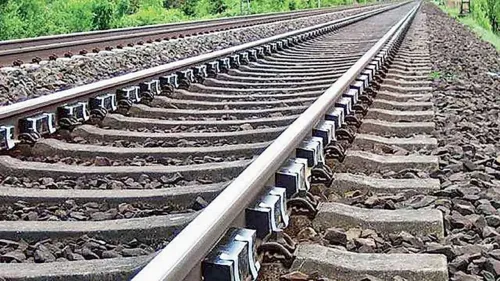
Russian Deputy Prime Minister Marat Khusnullin has said Russia is exploring the development of a railway corridor that could give the country overland access to the Indian Ocean and direct connectivity with India. The proposal, disclosed on 9 August, remains at an early exploratory stage with no confirmed route, timeline, or infrastructure plan in place.
The Proposed Corridor
According to Khusnullin, one possible alignment for the corridor would run from Russia southward through Turkmenistan, Iran, Afghanistan, and Pakistan before reaching India. He indicated that Moscow would evaluate any viable route that could deliver land-based access to the Indian subcontinent. The Deputy Prime Minister stressed that Russia is not committed to a single alignment and would consider alternatives.
Khusnullin made the remarks in an interview with Russian news agency TASS, framing the proposal as part of a broader strategic review of transport options.
Why Russia Is Exploring This Now
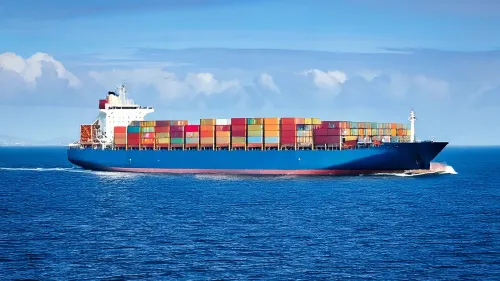
The push for alternative land corridors is driven, in part, by Russia's concerns over its dependence on key maritime chokepoints. The Bosphorus Strait — the narrow waterway linking the Black Sea to the Mediterranean — and the Strait of Hormuz in the Persian Gulf are both critical to Russian trade flows. The Strait of Hormuz alone handles roughly 25 per cent of global oil trade and nearly 20 per cent of global LNG shipments, making any disruption there consequential for energy exporters including Russia.
This comes amid broader geopolitical shifts that have prompted Moscow to accelerate its search for trade routes that bypass Western-influenced maritime passages. A functional overland corridor to the Indian Ocean would reduce that exposure significantly.
What It Could Mean for India
For India, a railway link of this nature could open new overland connectivity with Russia and the Central Asian republics — markets that India has long sought to access more efficiently. If realised, the corridor could facilitate movement of goods, energy resources, and potentially people, including tourist travel between the regions.
Notably, India has separately been developing the International North-South Transport Corridor (INSTC) — a multimodal route linking Mumbai to Moscow via Iran — which shares strategic logic with the proposed railway plan, though the two are distinct initiatives.
Challenges Ahead
The proposal faces formidable practical hurdles. A corridor passing through Turkmenistan, Iran, Afghanistan, and Pakistan would require coordinated agreements on transit rights, security arrangements, customs frameworks, and substantial infrastructure investment across multiple sovereign territories. Afghanistan's ongoing instability and the complex state of India-Pakistan relations add further layers of uncertainty to any route that transits Pakistani territory.
As of now, there is no confirmed railway route, passenger service, ticket pricing, or launch date associated with the proposal. The plan is at the ideation stage and would require years of diplomatic and engineering groundwork before it could take shape.
What Comes Next
Russia has not announced a formal feasibility study or multilateral framework for the corridor. Observers will watch whether the proposal advances to inter-governmental discussions involving the transit countries, or remains a stated aspiration. The broader context — including India-Russia trade growth and Moscow's pivot toward Asia — suggests the strategic interest is genuine, even if execution remains distant.
Point of View
But a corridor threading through Afghanistan and Pakistan is, at present, more aspiration than architecture. What the announcement does signal clearly is Moscow's intent to deepen its Asia pivot — and India's centrality to that pivot. New Delhi will likely welcome the strategic signal while remaining cautious about a route that runs through Pakistani territory, given the state of bilateral relations. The real question is whether this accelerates momentum for the already-existing INSTC, which is a more viable near-term option and does not require Pakistani cooperation.
NationPress
24 Sept 2026
Frequently Asked Questions
What railway route is Russia proposing to reach India?
Russia is exploring a railway corridor that would run from Russia through Turkmenistan, Iran, Afghanistan, and Pakistan before connecting to India, according to Deputy Prime Minister Marat Khusnullin. The proposal aims to give Russia overland access to the Indian Ocean and direct land connectivity with India.
Why does Russia want an alternative land route to the Indian Ocean?
Russia wants to reduce its dependence on major maritime chokepoints, particularly the Bosphorus Strait and the Strait of Hormuz. The Strait of Hormuz handles approximately 25 per cent of global oil trade and nearly 20 per cent of LNG shipments, making it a critical and potentially vulnerable passage for Russian trade.
Is the Russia-India railway corridor confirmed?
No. The proposal is at an exploratory stage with no confirmed route, passenger service, ticket pricing, or launch date. Khusnullin described it as one possible option that Russia would consider, not a finalised plan.
What does this mean for India?
If realised, the corridor could open new overland connectivity between India, Russia, and Central Asian nations, facilitating trade, energy flows, and potentially people-to-people movement. However, a route through Pakistan adds diplomatic complexity given the current state of India-Pakistan relations.
How does this relate to the International North-South Transport Corridor (INSTC)?
The INSTC is a separate, more advanced multimodal initiative linking Mumbai to Moscow via Iran, which shares the strategic goal of improving India-Russia overland connectivity. The proposed railway corridor is a distinct and earlier-stage concept, but both reflect the same underlying logic of reducing dependence on traditional maritime routes.