South Korea, Japan vice ministers to meet on North Korea, bilateral ties
Synopsis
South Korea and Japan's vice foreign ministers are meeting for the 17th time in their bilateral strategic dialogue, with North Korea's nuclear threat, SMR cooperation, and scheduling of the next presidential summit all on the table. The session follows a G20 sidelines meeting where Seoul, Washington, and Tokyo jointly reaffirmed their push for North Korea's complete denuclearisation — signalling deepening trilateral coordination.
Key Takeaways
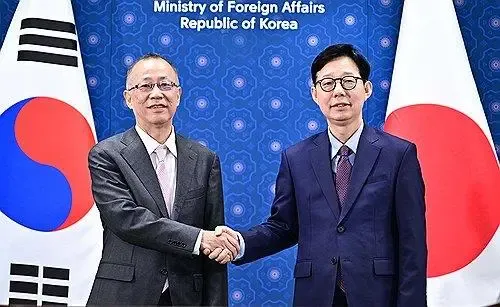
First Vice Foreign Minister Park Yoon-joo of South Korea met Japanese counterpart Takehiro Funakoshi in Japan on 2 November 2026 for the 17th bilateral strategic dialogue .
Talks were expected to cover North Korea's nuclear and missile programmes and ways to strengthen trilateral cooperation with the United States .
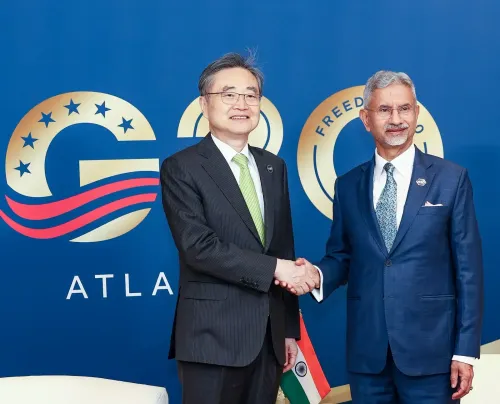
At a G20 sidelines meeting in Atlanta last week, the foreign ministers of South Korea, the US, and Japan reaffirmed commitment to North Korea's 'complete denuclearisation' and full implementation of UN Security Council resolutions.
Economic security topics including small modular reactors (SMRs) , supply chains, and Arctic issues were also on the agenda.
The vice ministers were expected to coordinate the timing and venue of the next summit between President Lee Jae Myung and Prime Minister Sanae Takaichi , following their earlier meeting in Andong in May .
South Korea and Japan were set to hold vice foreign ministerial talks on 2 November 2026 in Japan, with the agenda centred on North Korea's evolving nuclear and missile programmes, economic security cooperation, and the two nations' broader bilateral relations. The meeting marks the 17th bilateral strategic dialogue between the two neighbours.
Who Is Meeting and What Is on the Table
First Vice Foreign Minister Park Yoon-joo of South Korea was scheduled to sit down with his Japanese counterpart, Takehiro Funakoshi, in Japan for the session. According to South Korean foreign ministry officials, the dialogue is expected to cover bilateral relations as well as regional and global affairs. A ministry official noted: 'The meeting is expected to cover a range of issues, including bilateral relations, as well as regional and global affairs.'
North Korea and Trilateral Cooperation
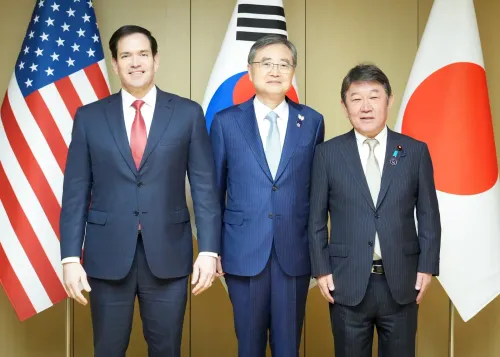
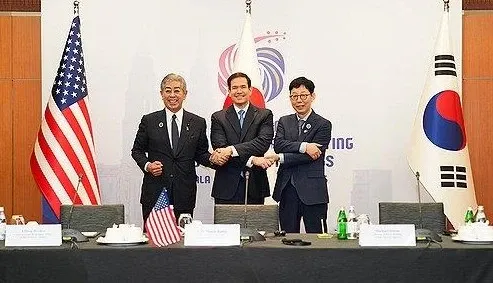
The two sides are expected to exchange views on North Korea's nuclear and missile programmes and ways to deepen cooperation within the trilateral framework involving the United States. This comes days after South Korean Foreign Minister Cho Hyun, US Secretary of State Marco Rubio, and Japanese Foreign Minister Toshimitsu Motegi met on the sidelines of a Group of 20 (G20) foreign ministers' meeting in Atlanta last week. The three ministers reportedly 'reaffirmed their resolute commitment to the complete denuclearisation' of North Korea and to the full implementation of UN Security Council resolutions, according to the US State Department. They also agreed to maintain a robust deterrence posture and pursue peace through dialogue and diplomacy.
Economic Security and Emerging Tech
Beyond North Korea, the vice ministers are also expected to discuss strengthening cooperation on economic security, including small modular reactors (SMRs), supply chains, and Arctic-related issues. These are areas where Seoul and Tokyo have been deepening alignment in recent years, reflecting a broader effort to hedge against geopolitical supply chain vulnerabilities.
Summit Coordination and Shuttle Diplomacy
The upcoming dialogue will also focus on coordinating the timing and venue of the next leaders' summit between South Korean President Lee Jae Myung and Japanese Prime Minister Sanae Takaichi. Following a summit held in the southeastern South Korean city of Andong in May, Takaichi reportedly mentioned a regional hot spring town in Japan as a possible venue for their next meeting. Both governments have since been working to align on the timing and location. Seoul and Tokyo have reaffirmed their commitment to maintaining momentum in bilateral ties through regular summits under their shuttle diplomacy initiative, which has emerged as a cornerstone of the relationship's post-2023 reset.
The outcome of Tuesday's vice ministerial talks is expected to shape the agenda and timeline for the next bilateral summit between the two leaders.
Point of View
And the Atlanta G20 meeting underscores how institutionalised that coordination has become. What is worth watching is the SMR and supply chain agenda: this is where geopolitics is quietly becoming industrial policy, and both South Korea and Japan are manoeuvring for advantage. The summit timing question is also telling — shuttle diplomacy at this pace signals political will from both Lee and Takaichi to lock in bilateral gains before any domestic political turbulence disrupts the momentum.
NationPress
2 Nov 2026
Frequently Asked Questions
What is the South Korea-Japan bilateral strategic dialogue?
It is a structured diplomatic channel between the two countries' vice foreign ministers to discuss bilateral relations, regional security, and global affairs. The meeting on 2 November 2026 is the 17th edition of this dialogue.
What is the main focus of the talks on North Korea?
The vice ministers are expected to discuss North Korea's evolving nuclear and missile programmes and how to strengthen trilateral cooperation with the United States. This follows a joint G20 sidelines meeting in Atlanta where all three countries reaffirmed their commitment to North Korea's complete denuclearisation.
What economic security topics are on the agenda?
The talks are expected to cover cooperation on small modular reactors (SMRs), supply chains, and Arctic-related issues — areas where Seoul and Tokyo are deepening alignment to reduce geopolitical vulnerabilities.
When did South Korea and Japan last hold a leaders' summit?
President Lee Jae Myung and Prime Minister Sanae Takaichi last met in a summit in Andong, a city in southeastern South Korea, in May. The two governments are now coordinating the timing and venue for their next meeting, with Takaichi reportedly suggesting a Japanese hot spring town as a possible location.
Why does the Seoul-Tokyo relationship matter for regional stability?
South Korea and Japan are two of the United States' key treaty allies in the Indo-Pacific. Their cooperation is central to the trilateral deterrence framework against North Korea and increasingly extends to economic security areas such as semiconductor supply chains and clean energy technologies like SMRs.