South Africa rejects Ghana's xenophobic killing claim in Cape Town protest row
Synopsis
South Africa and Ghana are locked in a diplomatic dispute over the death of a Ghanaian national in Cape Town — with SAPS calling it an extortion murder and Accra calling it a xenophobic killing. The conflicting accounts, mismatched victim details, and a second unverified Khayelitsha case reveal how quickly migrant deaths can become flashpoints between African governments.
Key Takeaways
SAPS Western Cape identified the victim as 35-year-old Kwabena Boagen , shot at Nyanga Terminus at approximately 15:45 on Monday, 30 June .
Police said preliminary findings point to extortion as the motive, not xenophobic violence linked to the 30 June protests.
Ghana's Ministry of Foreign Affairs identified the victim as 40-year-old Bashiru Isak and attributed the death to anti-immigrant demonstrations.
SAPS said it has no record of a separate murder in Khayelitsha referenced by Ghana, and has requested details from Ghanaian authorities.
Ghana has called for a 'full, transparent, and expedited investigation' and said arrangements are underway to repatriate the body .
South African Police Service (SAPS) on Thursday, 3 July 2025 formally rejected claims by Ghana's Ministry of Foreign Affairs that the killing of a Ghanaian national in Cape Town was connected to anti-immigrant protests that swept across South Africa on 30 June, stating the death was being investigated as an extortion-related murder. The dispute has escalated diplomatic tensions between the two countries at a moment when xenophobic violence against African migrants remains a deeply sensitive fault line in South Africa.
What the Police Said
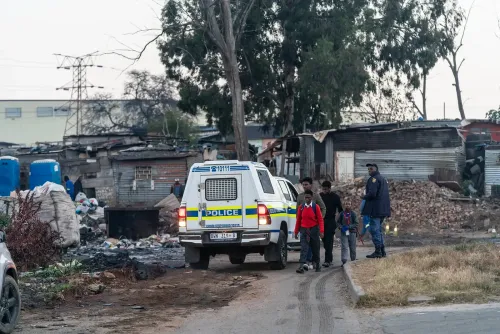
According to the SAPS Western Cape provincial statement, the victim — identified as 35-year-old Kwabena Boagen — was shot at approximately 15:45 on Monday at the Nyanga Terminus, in front of a hair salon and shoe repair shop. 'Official crime scene reports indicate that the deceased male person, later identified as 35-year-old Mr. Kwabena Boagen, was shot at the Nyanga Terminus in front of NTG hair salon and shoe repairs at approximately 15:45 on Monday in circumstances that point to the crime of extortion by yet-to-be-arrested gunmen,' the statement read.
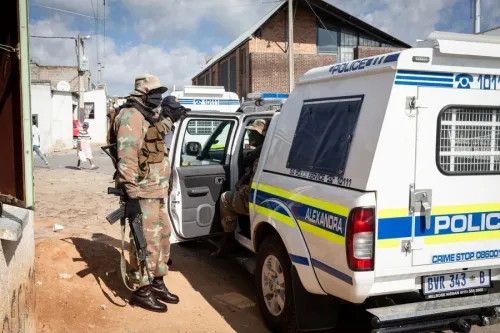
He was declared dead at the scene. A murder docket was subsequently opened and assigned to Nyanga detectives. Police confirmed they had contacted the victim's relatives and offered condolences, adding that 'Nyanga detectives are hard at work investigating the murder with a view to apprehending the perpetrators.'
Ghana's Claim and the Diplomatic Flashpoint
Ghana's Ministry of Foreign Affairs had earlier on Thursday stated that a 40-year-old Ghanaian national, identified as Bashiru Isak, was killed during anti-immigrant demonstrations linked to xenophobic attacks on 30 June. The ministry called for a full investigation and stronger protection for Ghanaian nationals in South Africa.
'The government of Ghana condemns, in the strongest terms, this senseless act of violence and the rising tide of xenophobia targeting African nationals, including Ghanaians, in South Africa,' the ministry said in its statement. Ghana also said arrangements were underway to repatriate the body and urged authorities to ensure a 'full, transparent, and expedited investigation.'
Key Contradictions in the Competing Accounts
South African police maintained that the Nyanga killing occurred a day before the reported protests and in a separate location, making a direct link to the demonstrations implausible based on available evidence. Notably, SAPS also said it had no record of a separate murder in Khayelitsha — a distinct area referenced in Ghana's statement — and formally requested that Ghanaian authorities provide details so the matter could be investigated.
The discrepancies in victim identity, location, and timing between the two accounts suggest either a conflation of separate incidents or a gap in information sharing between the two governments. This is not the first time diplomatic friction has emerged between African nations over treatment of migrants in South Africa; similar disputes have arisen with Nigeria, Zimbabwe, and Mozambique in recent years.
Context: Anti-Immigrant Protests on 30 June
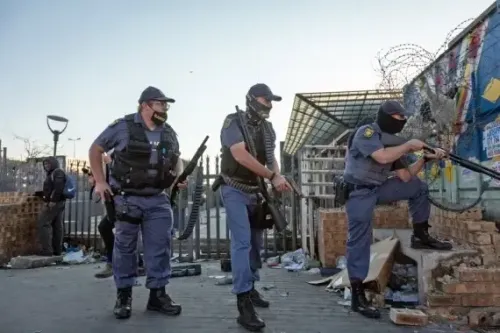
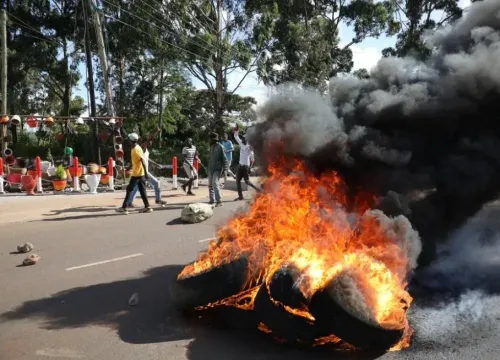
The 30 June demonstrations were part of a wave of anti-immigrant protests that spread across several South African cities, raising alarm among foreign governments and human rights groups. South Africa has faced recurring cycles of xenophobic violence since at least 2008, often targeting migrants from other African countries who are blamed — frequently without evidence — for unemployment and crime. The SAPS has not confirmed any deaths directly attributable to the 30 June protests as of Thursday.
What Happens Next
Both governments are expected to engage through diplomatic channels. Ghana's foreign ministry has called for direct communication with South African authorities, while SAPS has requested that Accra share specifics of the Khayelitsha case to allow for parallel investigation. The outcome of the Nyanga murder probe and any potential extradition or repatriation process will be closely watched by the Ghanaian diaspora in South Africa.
Point of View
Different ages, different locations — point to a breakdown in information-sharing rather than bad faith on either side. But that distinction matters less in the court of public opinion: for Ghana and much of West Africa, the framing is already xenophobia, and South Africa's credibility on migrant protection is too frayed to absorb the ambiguity. SAPS may be factually correct about the Nyanga killing, but the absence of any confirmed record of the Khayelitsha incident it disputes is itself a red flag. South Africa's cyclical xenophobic violence — documented since 2008 — means the burden of proof now sits squarely with Pretoria, not Accra.
NationPress
1 Oct 2026
Frequently Asked Questions
What happened to the Ghanaian national killed in Cape Town?
South African police say 35-year-old Kwabena Boagen was shot at the Nyanga Terminus on 30 June in circumstances pointing to extortion, not xenophobic violence. A murder docket has been opened and Nyanga detectives are investigating.
Why is Ghana disputing South Africa's account?
Ghana's Ministry of Foreign Affairs identified the victim as 40-year-old Bashiru Isak and said he was killed during anti-immigrant protests on 30 June linked to xenophobic attacks. The discrepancy in names, ages, and locations suggests the two governments may be referring to different incidents.
Did the 30 June anti-immigrant protests cause deaths in South Africa?
South African police have not confirmed any deaths directly linked to the 30 June demonstrations as of Thursday. SAPS maintains the Nyanga killing preceded the protests and was unrelated to them.
What is the Khayelitsha case mentioned in Ghana's statement?
Ghana's foreign ministry referenced a murder in Khayelitsha, a separate area of Cape Town, but SAPS said it has no record of such a case. Police have formally asked Ghanaian authorities to provide details so the matter can be investigated.
What is South Africa's history with xenophobic violence?
South Africa has experienced recurring cycles of xenophobic violence since at least 2008, frequently targeting migrants from other African countries including Nigeria, Zimbabwe, Mozambique, and Ghana. The 30 June 2025 protests were the latest in this pattern, drawing condemnation from multiple foreign governments.