What Actions Should the Global Community Take Against Pakistan Following the Terror Attack in Sydney?
Click to start listening
Synopsis
In the wake of a tragic terror attack in Sydney that claimed 15 lives, Sindhi leader Shafi Burfat calls for international accountability for Pakistan. He emphasizes the need for a unified global response against the extremist ideologies stemming from the nation.
Key Takeaways
- Shafi Burfat calls for global accountability for Pakistan.
- The recent terror attack in Sydney claimed 15 lives.
- Burfat emphasizes the need for a united international response against extremism.
- He warns of the dangers of complacency regarding Pakistan's role in fostering violence.
- Immediate action is urged to cease support for Pakistan's military establishment.
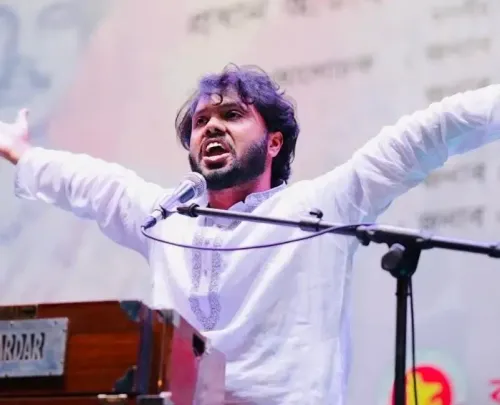
Berlin, Dec 15 (NationPress) Shafi Burfat, the leader of the Jeay Sindh Muttahida Mahaz (JSMM), has called on the international community to take decisive measures to hold Pakistan accountable under international law, advocating for the nation to be brought before the International Court of Justice for its ongoing role in promoting extremist ideology and militant violence.
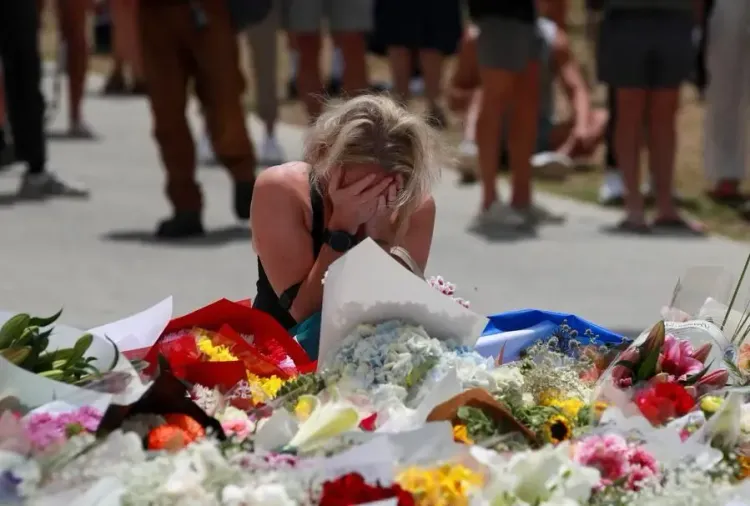
This plea follows a tragic terrorist incident executed by a father-son duo of Pakistani origin during a Jewish festival held at Bondi Beach in Australia, which resulted in the deaths of 15 innocent individuals.
Australian investigative authorities revealed that 50-year-old Sajid Akram and 24-year-old Naveed Akram opened fire during the 'Chanukah by the Sea' celebration, marking the first day of the Jewish festival on a Sunday.
The attack tragically led to 16 fatalities, including the shooter Sajid. Reports indicate that the youngest victim was merely 10 years old and succumbed to injuries at a children's hospital, while the oldest was 87 years old.
In his condemnation of the incident, Burfat stated, "This heinous act is a crime against humanity and represents a serious moral infraction against innocent lives. This attack is not an isolated event; it reflects a deeply rooted and perilous global conspiracy that endangers international peace, human security, and communal harmony. Such acts aim to instill fear, hatred, and division among diverse peoples and cultures, necessitating a unified response from the global community."
Burfat emphasized that the terrorist act in Australia bears the "fingerprints" of the extremist mentality and ideological framework that Pakistan has nurtured, safeguarded, and propagated for decades.
He remarked, "Since Pakistan endorsed religious extremism and the training of militant factions as a state policy, utilizing them against neighboring regions and beyond, the political leadership of the Sindhudesh national liberation movement, rooted in the historic Sufi, secular, and humanitarian traditions of the Sindhi people, has consistently warned about the inevitable repercussions."
Burfat asserted that merely condemning religious extremism and terrorism is inadequate; he urged the international community to confront the source states that endorse, sponsor, and protect extremist networks, such as Pakistan.
He called for an immediate halt to military, political, diplomatic, and covert financial support to Pakistan, alongside a complete cessation of international support to the Pakistani military establishment, which he claims has long served as a protector and facilitator of extremist and terrorist entities.
Moreover, he urged for a global acknowledgment of Pakistan's role in quelling and dominating "non-Punjabi nations" internally while exporting instability, extremism, and terror beyond its borders.
"Nations around the globe must carry out a comprehensive and independent investigation into this act of terrorism. Such an inquiry will undoubtedly trace its psychological, ideological, and operational origins back to a brutal terrorist state like Pakistan and its rogue military apparatus, which has been deeply involved in nurturing, safeguarding, and exporting extremist violence," the Sindhi leader stressed.
Point of View
It is essential to understand the gravity of this situation. The recent terror attack in Sydney is not just a local incident; it reflects a broader issue concerning global security and the need for collective action against the ideologies that promote violence. The Sindhi leader's call for accountability from Pakistan highlights the urgent need for international cooperation to combat terrorism and ensure peace.
NationPress
15/12/2025
Frequently Asked Questions
What prompted Shafi Burfat's call for action against Pakistan?
Shafi Burfat's plea was prompted by a horrific terror attack in Sydney, carried out by individuals of Pakistani origin, which resulted in the tragic loss of 15 lives.
What does Burfat suggest should happen to Pakistan?
Burfat suggests that Pakistan should be held accountable under international law, including being brought before the International Court of Justice for its role in promoting extremist ideologies.
How does Burfat view the relationship between Pakistan and terrorism?
Burfat believes that the terrorist attack reflects a deeply rooted connection between extremist ideologies nurtured by Pakistan and the violence seen globally.
What actions does Burfat recommend for the international community?
He calls for a halt to military and financial support to Pakistan and demands a thorough investigation into the sources of terrorism linked to the nation.
What historical context does Burfat provide regarding Pakistan's policies?
Burfat highlights that Pakistan has adopted religious extremism as state policy, warning the world about the consequences of such actions for decades.