Is Military Reform Essential for South Korea's Security Amid Demographic Challenges?
Synopsis
As South Korea faces critical security and demographic challenges, Defence Minister Ahn Gyu-back calls for urgent military reforms. With rising nuclear threats from North Korea and a shrinking population, the path forward for national security is uncertain. Discover how these reforms could shape the future of South Korea in this compelling report.
Key Takeaways
Urgent military reform is necessary to address North Korea's nuclear threats.
Demographic challenges pose a risk to troop numbers.
A transition of wartime command to South Korea is targeted by 2030.
Innovative strategies are needed for a strong military .
Public trust in military operations must be restored.
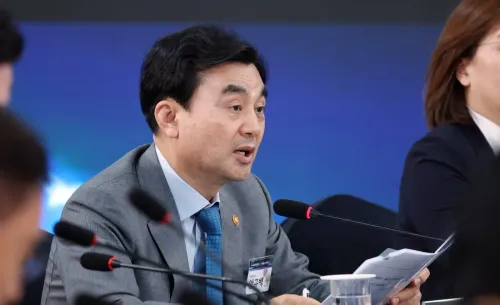
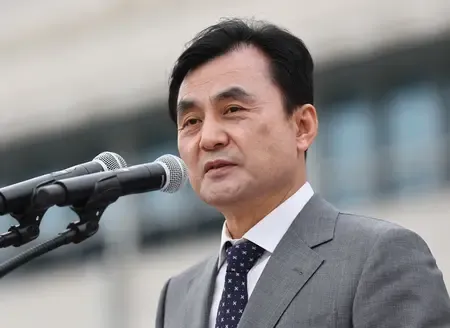
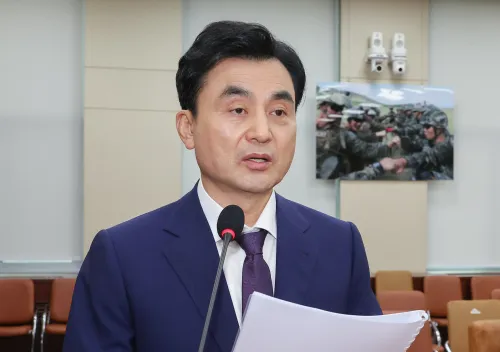
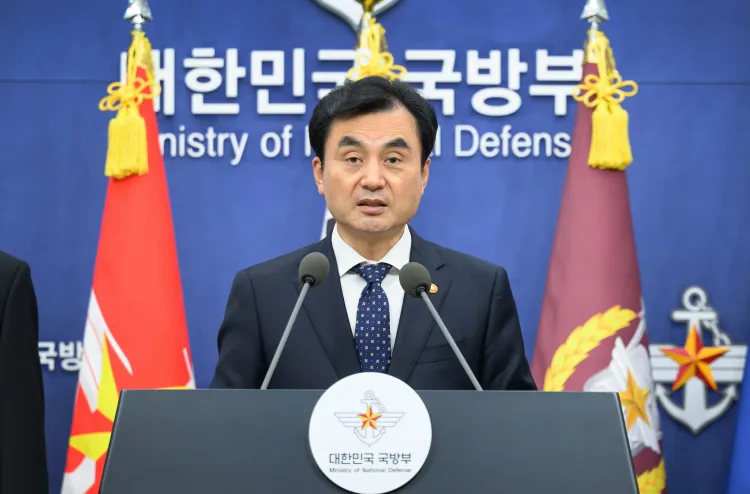
Seoul, Feb 4 (NationPress) South Korea's Defence Minister Ahn Gyu-back emphasized the necessity for military reform to address pressing security and demographic issues, notably the nuclear threats from North Korea and the nation's declining population.
Ahn articulated these concerns during a seminar focused on defence innovation, aimed at exploring strategies to cultivate a “robust and intelligent military” in response to the evolving security landscape and reduction in troop numbers, as reported by Yonhap News Agency.
“Our capacity to confront challenges, such as North Korea's nuclear advancements, transitioning wartime command from the United States, leveraging artificial intelligence technology, and managing a dwindling population, will shape South Korea's fate moving forward,” Ahn stated.
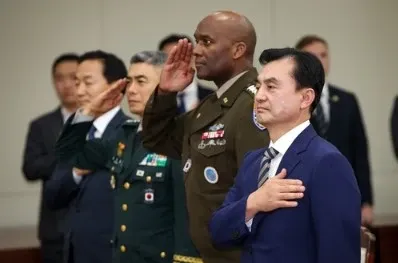
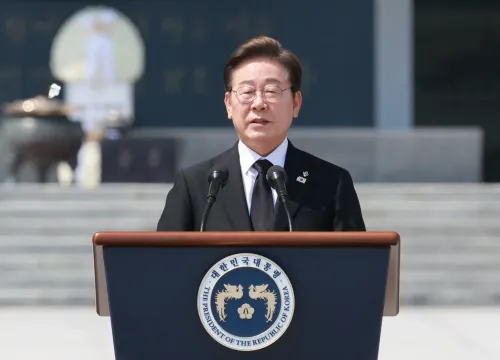
The defence minister underscored the goal of completing the transfer of wartime operational control from Washington to Seoul before the end of President Lee Jae Myung's term in 2030, aiming to take the reins in determining the future of the Korean Peninsula.
The ministry is set to refine its foundational plan for defence innovation, expected to be finalized by 2026, based on insights from the seminar.
Earlier this week, Ahn Gyu-back conducted a visit to the Capital Defence Command in southern Seoul to evaluate military preparedness for air defense, counterterrorism, and other potential emergencies, as stated by the defence ministry.
During his visit, he urged the command to concentrate on its “fundamental mission” to rebuild public trust, as per the ministry's announcement.
“It is time to rise above the aftermath of the December 3 uprising and, with a spirit of self-reliance, commit to our essential duty of safeguarding the capital,” he remarked.
Ahn also assessed the air defense readiness at the Joint Air Defence Operations Center following the recent relocation of the presidential office and visited an anti-terrorism unit, encouraging it to maintain a vigilant stance against terror threats.
Point of View
It's essential to recognize the urgency of Defence Minister Ahn's call for reform. The evolving threats necessitate a proactive approach to ensure South Korea's security. As the nation grapples with demographic shifts and external pressures, a strong, adaptive military is crucial for safeguarding national interests.
NationPress
19 Sept 2026
Frequently Asked Questions
What prompted Defence Minister Ahn Gyu-back's call for military reform?
Ahn's call for military reform was prompted by significant security challenges, particularly the nuclear threats from North Korea, coupled with a declining population that affects troop levels.
How does Ahn Gyu-back propose to address these challenges?
Ahn proposes to push forward defence innovation and aims to transition wartime operational control from the United States to South Korea by 2030, enhancing the nation's military autonomy.
What are the expected outcomes of the proposed defence reforms?
The expected outcomes include a more robust military capable of addressing contemporary threats, improved public trust in the military, and a strategic shift in operational command.
When is the basic plan for defence innovation expected to be completed?
The basic plan for defence innovation is anticipated to be completed by 2026, building on discussions held during the recent seminar.
What role does artificial intelligence play in South Korea's military strategy?
Artificial intelligence is seen as a key component in enhancing military capabilities, enabling smarter and more efficient responses to security threats.