Is Pakistan Trapped in the Illusion of Growth?
Click to start listening
Synopsis
A recent report reveals that despite being viewed as a mid-tier state, Pakistan is trapped in an illusion of growth, with alarming statistics revealing a deep-rooted crisis in human development.
Key Takeaways
- Pakistan's HDI: 0.544, 168th globally.
- Gender inequality: Significant gaps in education and healthcare.
- Urban challenges: Infrastructure decay in major cities.
- Climate impact: Natural disasters compound social issues.
- Need for reform: Urgent call for human-centric growth policies.
Islamabad, Dec 1 (NationPress) Once recognized as a potentially thriving mid-tier nation in South Asia, Pakistan currently finds itself within the low human development tier, ensnared in a facade of progress while its population remains deprived, as highlighted in a recent report.
As per the latest UNDP Human Development Report 2025, Pakistan's Human Development Index (HDI) is at 0.544, ranking it 168th among 193 countries, only slightly above nations recovering from conflict, as reported by Pakistan Today. The HDI adjusted for inequality is even lower at 0.364, indicating the profound inequality and exclusion inherent in Pakistan's growth model.
"The irony is tragic: while the state celebrates economic recovery, its citizens experience a decline in dignity. These are not just numbers. They represent the quiet arithmetic of neglect. Behind every statistic lies a child dropping out of school, a mother dying in childbirth, a graduate unable to find employment, or a citizen who cannot afford medication," noted the report.
The average life expectancy stands at 67.6 years, with expected years of schooling at 7.9, and mean years of schooling at 4.3—each figure underscores a systemic failure to convert potential into meaningful progress. Furthermore, the Gross National Income per capita is a mere USD 5,501, signaling that Pakistan’s economy is not fostering opportunities but merely sustaining survival.
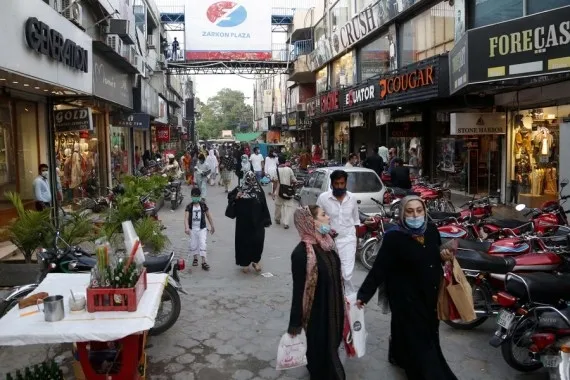
The World Bank’s recent diagnostics echo this despair. Cities that were once envisioned as innovation hubs are grappling with deteriorating infrastructure, housing shortages, and high pollution levels, as stressed by Pakistan Today. Karachi and Lahore are facing water shortages and remain overcrowded and poorly governed, with ineffective urban management exacerbating inequality and deepening the divide between the privileged and the marginalized.
The International Monetary Fund (IMF) 2025 review presents a grim scenario. From 2000 to 2022, Pakistan's per-capita GDP growth averaged just 1.9 percent annually. The IMF pointed out that stagnation stems from "weak contributions from human and physical capital and declining productivity." The report stated, "In essence, Pakistan has constructed an economy without nurturing its people. Productivity has diminished, governance has deteriorated, and fiscal cycles perpetuate a dismal pattern of rescue and collapse."
This economic fragility continues to plunge Pakistan into social despair. According to the World Bank’s 2025 Human Capital Review, Pakistan ranks among the bottom 10 globally in terms of public investment efficiency. The impacts of climate disasters further worsen the situation: the 2022 floods devastated livelihoods, infrastructure, and years of social advancement.
"The HDR’s assertion that 'climate injustice and inequality now intersect' is starkly evident here—where the most vulnerable bear the brunt of the powerful's failures. The common thread binding these failures is a mentality that confuses statistics with strategy. Pakistan continues to define success through GDP while neglecting the erosion of its human foundations," it concluded.
Point of View
I believe it is crucial to recognize the disparity between reported economic growth and the lived experiences of our citizens. Pakistan stands at a crossroads, and it is our collective responsibility to push for a model of growth that prioritizes human development and equality.
NationPress
01/12/2025
Frequently Asked Questions
What is Pakistan's current Human Development Index?
Pakistan's current Human Development Index stands at 0.544, ranking it 168th out of 193 countries.
What are the main issues affecting human development in Pakistan?
Key issues include systemic inequality, inadequate education, poor healthcare access, and environmental challenges.
How does climate change impact Pakistan's development?
Climate change exacerbates existing vulnerabilities, as seen during the 2022 floods that devastated infrastructure and livelihoods.
What role does the government play in addressing these issues?
The government must adopt comprehensive policies that prioritize human capital investment, governance reform, and sustainable development.
What can citizens do to contribute to positive change?
Citizens can advocate for accountability, support community initiatives, and engage in dialogues about sustainable development.