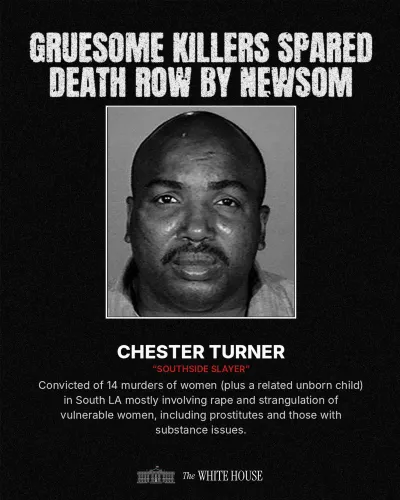
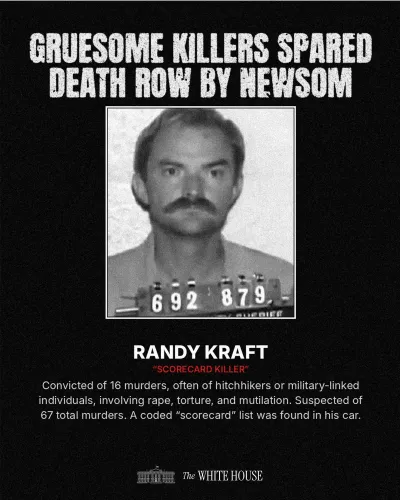
Trump directs wider federal death penalty use, attacks Newsom
Synopsis
Donald Trump has directed wider use of the federal death penalty while attacking Gavin Newsom's plan to commute California's 548 death sentences. The federal memorandum cannot itself change those state sentences, and Newsom's proposed commutations still require legal steps.
Key Takeaways
Donald Trump directed federal prosecutors to seek death sentences in additional murder categories where existing law permits.
Gavin Newsom intends to commute 548 California death sentences to life imprisonment without parole, subject to legal steps.
Todd Blanche said federal prosecutors had sought the death penalty 49 times since Trump returned to office.
California last carried out an execution in January 2006 ; Newsom imposed a moratorium in 2019 .
Trump said nearly $150 million in public-safety grants would help hire more than 1,000 additional sworn officers and improve responses to domestic violence and sexual assault.
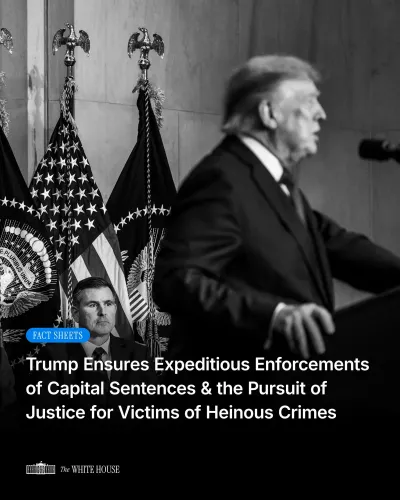
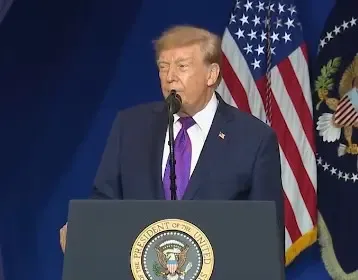
US President Donald Trump directed federal prosecutors on 24 November to seek the death penalty in additional categories of murder cases where existing law permits it, while criticising California Governor Gavin Newsom's plan to commute the state's death sentences. Speaking at the Justice Department in Washington alongside families of murder victims, Trump also called for legislation to broaden capital punishment and faster action on federal death sentences.
The directive does not create new death-eligible offences or change sentences imposed by California courts. Federal prosecutors must establish jurisdiction and satisfy the requirements of existing capital-punishment law.
What the federal directive covers
The presidential memorandum tells the attorney general, “when appropriate and consistent with applicable law,” to pursue federal jurisdiction and seek death sentences for the first-degree murder of a minor and murders committed during specified sexual offences, kidnapping or human trafficking.
The listed sexual offences include rape, sexual abuse, sexual exploitation of a child and sex trafficking. The memorandum also directs the Justice Department to prioritise litigation involving federal death sentences, seek expedited judicial consideration and eliminate unnecessary administrative delays.
“My order also directs the Attorney General to expedite the execution of federal death sentences. Once juries have spoken, capital punishment will be swift and certain,” Trump said.
Attorney General Todd Blanche said the department had sought the death penalty 49 times since Trump returned to office, compared with once during the previous administration. Those figures describe prosecutors seeking capital punishment, not sentences imposed or executions carried out.
Newsom's California clemency plan
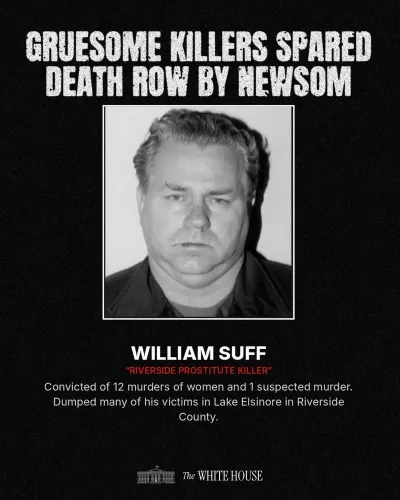
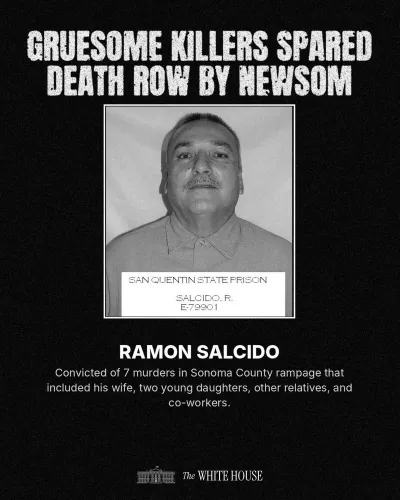
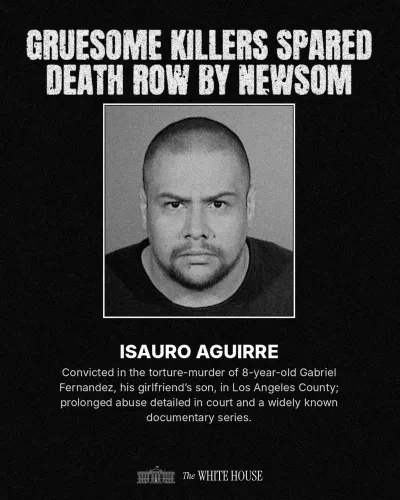
Newsom announced on 5 November that he intended to commute California's 548 death sentences to life imprisonment without parole. His office said the changes would take effect only after required legal steps and would not release anyone from prison or erase their convictions.
The governor's office said those steps include California Supreme Court review for prisoners twice convicted of a felony. California last carried out an execution in January 2006, and Newsom imposed a moratorium in 2019.
Trump called the clemency announcement “one of the most shocking acts of injustice our country has ever seen”. Newsom defended his decision, saying in a statement: “I will not pretend that our broken execution system works, or that killing someone in the name of justice makes us more safe.”
Victims' relatives express differing views
The White House highlighted objections from victims' relatives, including Marc Klaas, whose 12-year-old daughter Polly was abducted and killed in 1993. “For three decades, our family lived with the understanding that the justice system’s decision would stand,” Klaas said, according to the White House account.
Newsom's office circulated statements from relatives who support the move, including Jess Nichol, Polly Klaas's sister. “I used to think the man who killed my sister deserved execution. But over time I’ve realized that whether he’s executed has absolutely nothing to do with my recovery or with real public safety,” she said.
Legislation and other measures
Trump urged Congress to pass the Just Punishment for Murder Act. Republican Representative Brandon Gill of Texas said he had introduced the measure with the president's support.
Trump said the proposal would put aspects of his directives into law and broaden the policy to cover murders committed by immigrants unlawfully in the country. Those are the president's descriptions of the proposal, which would require congressional approval before becoming law.
Beyond capital punishment, Trump said he was directing the Department of Housing and Urban Development to strengthen public-housing tenant screening and make it easier to remove problematic tenants. He also said the Justice Department would award nearly $150 million in public-safety grants to help hire more than 1,000 additional sworn law-enforcement officers and improve responses to domestic violence and sexual assault.
The federal directive and California's clemency process remain separate. The proposed state commutations still require legal steps, while the federal legislation awaits congressional approval.
Point of View
Who do not speak with one voice.
NationPress
24 Nov 2026
Frequently Asked Questions
What does Trump's federal death penalty directive do?
It directs the attorney general to pursue federal jurisdiction and seek death sentences in specified murder cases when appropriate and consistent with existing law. It does not itself create new death-eligible offences.
What is Gavin Newsom's plan for California death sentences?
Newsom intends to commute California's 548 death sentences to life imprisonment without parole. His office says the changes require legal steps and will not release prisoners or erase their convictions.
Can Trump's directive stop California's commutations?
The federal memorandum does not itself reverse California's clemency process or alter sentences imposed by state courts. The federal prosecution directive and state commutations operate separately.
What legal steps remain for Newsom's commutations?
The proposed commutations require further legal steps before they take effect. According to the governor's office, these include California Supreme Court review for prisoners twice convicted of a felony.
How many federal death sentences have prosecutors sought under Trump?
Attorney General Todd Blanche said the Justice Department had sought the death penalty 49 times since Trump returned to office. His figure refers to prosecution requests, not sentences imposed or executions carried out.