Trump says he's 'given up' on traditional press at White House Correspondents' Dinner
Synopsis
At the White House Correspondents’ Dinner, Trump didn’t just roast the press — he declared them obsolete without him. His claim of being ‘number one on TikTok’ while warning journalists they’ll ‘go broke’ after he leaves office captures a president who has fundamentally rewritten the rules of political communication, and isn’t shy about saying so to their faces.
Key Takeaways
Donald Trump declared he had ‘given up’ on traditional press at the White House Correspondents’ Dinner on 25 July .
Trump claimed he is ‘number one on TikTok’ and said his social media strategy outperforms conventional media coverage.
He warned journalists they would ‘go broke’ without him, arguing news organisations depend on him for ratings and readership.
Trump revealed he shared his personal mobile number with reporters, calling it ‘the stupidest thing I ever did,’ and claimed he now gets a call every 3.7 minutes .
Outgoing White House Correspondents’ Association President Weijia Jiang defended the First Amendment , warning against efforts to undermine press freedom.
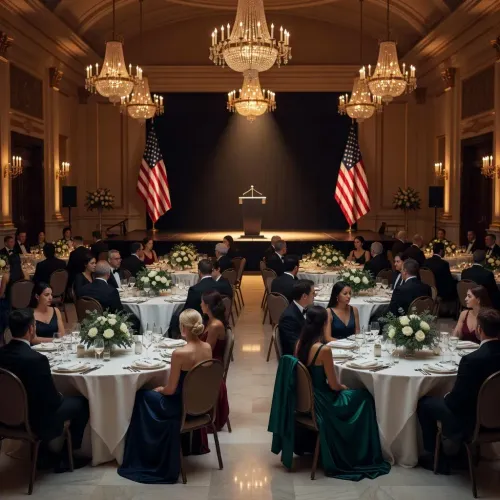
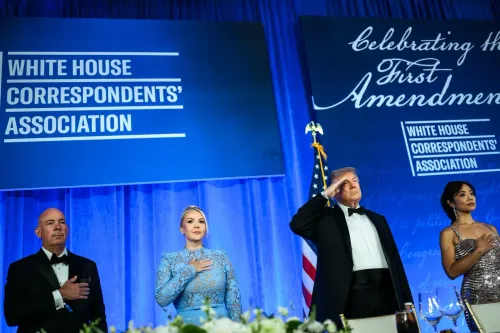
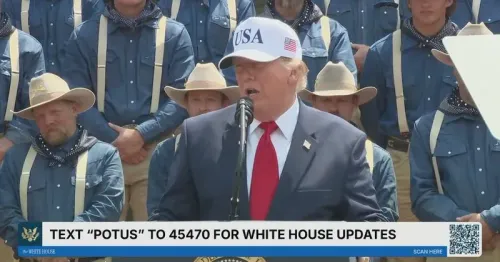
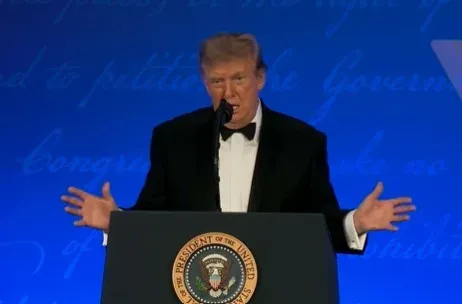
US President Donald Trump declared on 25 July that he had “given up” on traditional news organisations in favour of social media, telling journalists at the White House Correspondents’ Dinner that they would struggle to hold audiences once he leaves office. The remarks, delivered before hundreds of reporters and media executives at the White House, blended sharp criticism of mainstream outlets with self-congratulatory praise for his digital reach.
Trump on Social Media and Press Dependence
“I gave up on traditional press,” Trump told the assembled press corps, before adding, “I’m number one on TikTok.” He argued that his social media strategy had proved more effective than relying on conventional media coverage, claiming enormous online engagement across platforms.
Trump also contended that news organisations depended heavily on him for readership and television ratings. “You people have no idea how lucky you are,” he said. “When I’m gone, you’re all going to be broke.” He added, “There’s not going to be anybody to report on. Nobody gives a damn about anybody else.”
The Phone Number Anecdote
Trump offered an unusual account of how he now manages press access, saying he had noticed reporters were no longer reaching out to him after he returned to the White House. His solution, he said, was to personally distribute his mobile number to journalists.
“I said, ‘You know what? I’m going to give the press my phone number.’” He quickly followed that with a punchline: “That was the stupidest thing I ever did.” According to Trump, reporters now contact him constantly — “every 3.7 minutes,” he claimed. He encouraged journalists to identify themselves when calling, saying anonymous calls were ones he could not act on.
On Press Freedom and Fair Coverage
Despite his repeated criticisms throughout the evening, Trump insisted he was a supporter of press freedom. “I hope all of you know that I believe in the free press more than anyone in this room does,” he said, before immediately adding, “Maybe not.”
He described himself as “the most open and transparent president in history,” contrasting his approach with that of former President Joe Biden, whom he claimed had rarely answered reporters’ questions. Trump acknowledged that direct engagement with the press, even when adversarial, improved coverage outcomes. “I always find that when you don’t speak to the press, you always get a bad story,” he said. “When you do speak to the press, you have a shot at getting a good story.”
He also struck a conciliatory note at moments, saying he had “tremendous respect” for journalists in the room, even as he maintained that coverage of him was often unfair. “Sometimes I don’t feel you treat me fair. But sometimes you treat me very fairly… And I have a lot of respect for your profession.”
Other Highlights from the Evening
Earlier in the evening, Trump joked that he received “93 per cent negative publicity” and took aim at several television personalities. He congratulated CNN’s Caitlin Collins on receiving a journalism award.
In her closing remarks before introducing Trump, outgoing White House Correspondents’ Association President Weijia Jiang defended the First Amendment, saying criticism of the media was legitimate but warning that efforts to undermine press freedom threatened the constitutional foundations of American democracy.
The dinner, a traditionally light-hearted Washington institution, this year carried an undercurrent of tension between the administration and the press corps — a dynamic that has defined much of Trump’s relationship with mainstream media across both his terms.
Point of View
A detail that has received far less scrutiny than it warrants. His warning that journalists will ‘go broke’ without him contains a kernel of uncomfortable truth: cable news ratings and digital traffic do spike around Trump news cycles. But it also obscures the counterfactual — press freedom does not require a single dominant subject, and the institutions Weijia Jiang defended predate Trump by two centuries.
NationPress
25 Jul 2026
Frequently Asked Questions
What did Trump say about traditional media at the White House Correspondents’ Dinner?
Trump declared he had ‘given up’ on traditional press in favour of social media, saying his TikTok presence and direct digital outreach had proved more effective. He also warned journalists that they would struggle for audiences once he leaves office, claiming news organisations depend on him for ratings and readership.
Why did Trump say sharing his phone number was ‘the stupidest thing’ he ever did?
Trump recounted that after returning to the White House he noticed reporters were no longer calling him, so he distributed his personal mobile number to journalists. He said the result was a flood of calls — claiming he now receives one every 3.7 minutes — which he described as overwhelming.
What did Weijia Jiang say at the dinner?
Outgoing White House Correspondents’ Association President Weijia Jiang defended the First Amendment in her closing remarks before introducing Trump. She said criticism of the media was legitimate but warned that attempts to undermine press freedom threatened the constitutional protections underpinning American democracy.
Did Trump say he supports press freedom?
Trump said he believed in the free press ‘more than anyone in this room,’ though he immediately qualified the statement with ‘Maybe not.’ He also described himself as ‘the most open and transparent president in history’ and acknowledged that speaking directly to reporters improved the accuracy of coverage.
Who else was mentioned at the White House Correspondents’ Dinner?
Trump referenced CNN’s Caitlin Collins, congratulating her on receiving a journalism award. He also took aim at several television personalities during the evening and claimed he received 93 per cent negative publicity.