Trump calls ICC a 'rogue institution', urges mass withdrawal at UN
Synopsis
Standing before the UN General Assembly, Trump didn't just criticise the ICC — he called on all 125 member nations to quit it immediately, labelling its officials 'an evil group of people.' Paired with claimed UN budget cuts of 15 per cent and a broadside against the IMO, UNESCO and global carbon taxes, the speech is the most sweeping US assault on multilateral institutions in years.
Key Takeaways
Donald Trump on 22 September urged all 125 ICC member nations to resign from the court at the UN General Assembly in New York .
He called the ICC a 'rogue institution' and its officials 'an evil group of people', vowing the US would never allow its personnel to face its proceedings.
Trump claimed his administration cut the UN budget by 15 per cent in 2026 , eliminating more than 4,000 UN positions.
He accused the International Maritime Organisation of attempting a global carbon tax that could have raised shipping costs by 10–20 per cent or more.
The US is not a party to the Rome Statute and has consistently rejected ICC jurisdiction over American personnel across both Republican and Democratic administrations.
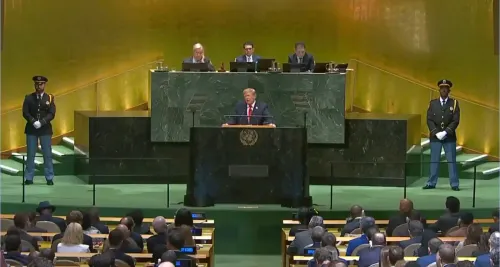
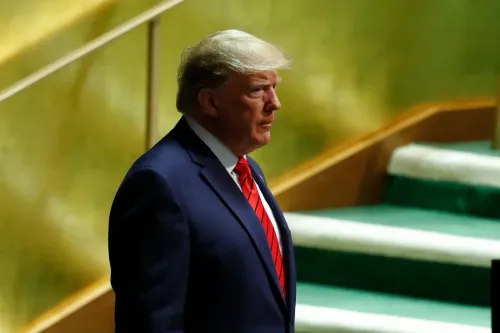
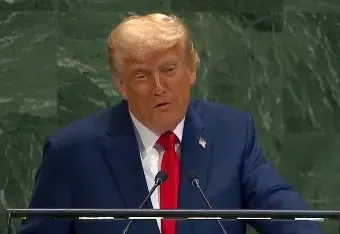
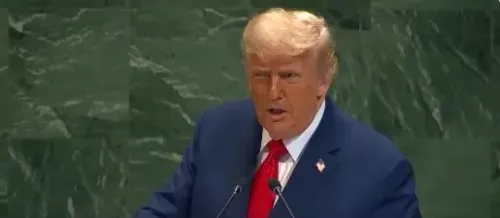
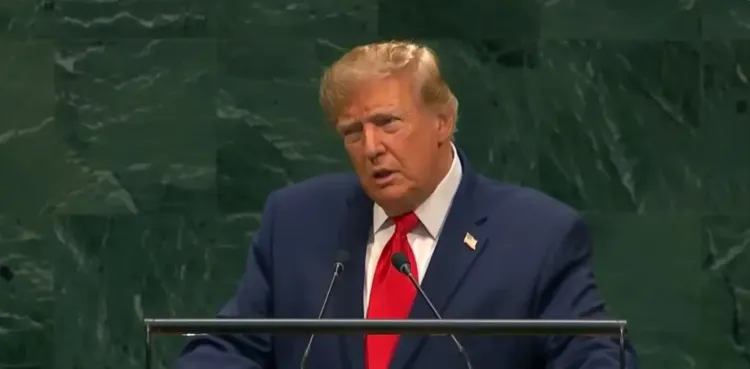
US President Donald Trump on Tuesday, 22 September urged every member nation to resign from the International Criminal Court (ICC), branding it a 'rogue institution' with no authority over the United States or its military personnel. The demand came during Trump's address to the UN General Assembly in New York, where he mounted a sweeping assault on international institutions he argued were eroding national sovereignty.
The Direct Challenge to the ICC
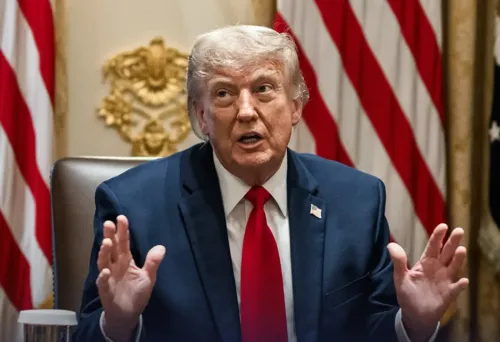
'I call on all nations that are members of the ICC to officially resign from this rogue institution immediately,' Trump told the General Assembly. He was unequivocal that Washington would not submit to the court's processes under any circumstances. 'We will never allow US service members or anyone else to be investigated or given show trials by an anti-American tribunal with no jurisdiction over us,' he said.
Trump went further, describing the court as an 'out-of-control institution' and its officials as 'an evil group of people' — language that marks one of the most aggressive public denunciations of the ICC by a sitting US president. The remarks drew immediate global attention, given that the ICC currently has 125 member countries.
Broader Attack on International Bodies
The ICC broadside was one element of a far wider critique. Trump claimed his administration had 'cut the UN budget for the first time ever, slashing it by 15 per cent in 2026 and eliminating more than 4,000 positions from the UN bureaucracy.' He framed these cuts as the most extensive reforms in UN history, though the characterisation was his own.
He also targeted the International Maritime Organisation (IMO), a UN agency that regulates global shipping, accusing it of attempting to impose what he called the first global carbon tax. Trump claimed that proposal could have raised international shipping costs by between 10 and 20 per cent or more, and said his administration had intervened to block it.
UNESCO also drew criticism, with Trump accusing the body of promoting mass migration while ostensibly protecting cultural heritage. He urged countries to reject any international framework that, in his view, transferred authority from elected national governments to unelected global officials.
'The United Nations has great, great potential, I've said that for many years, but it must stop imposing the far-Left agenda of globalist bureaucrats who nobody ever elected,' Trump said.
The Sovereignty Doctrine at the Core
Underpinning every target was a consistent ideological argument: that global governance structures represent an illegitimate infringement on national sovereignty. 'There is no global government,' Trump declared. 'And while I'm President, there will be no global taxes.'
On immigration, he asserted that 'there is no human right to illegal immigration, but there is a right to remain a sovereign nation' — connecting border policy to the same framework of absolute state authority he applied to the ICC and the UN.
What the ICC Is — and Where the US Stands
The ICC was established through the Rome Statute and began operating in 2002. It prosecutes individuals accused of genocide, crimes against humanity, war crimes, and the crime of aggression when national courts are unable or unwilling to act. The court counts 125 nations among its members.
The United States signed but never ratified the Rome Statute and formally does not accept ICC jurisdiction over American personnel without US consent. Notably, opposition to the ICC has persisted across both Republican and Democratic administrations, though the confrontational register has varied sharply by presidency. Trump's Tuesday speech represents the most publicly combative posture Washington has taken toward the court in recent memory.
Whether any ICC member nations heed Trump's call to withdraw remains to be seen — but the speech has redrawn the terms of the debate over international justice institutions heading into the final months of 2026.
Point of View
But it lands in fertile ground — the court has struggled for years with legitimacy questions, African nations' complaints of selective prosecution, and the absence of major powers including the US, Russia and China. The real question is whether any sitting member nation moves to act on his urging, which would represent a far more concrete blow to the court than Washington's long-standing non-participation. The speech also follows a pattern: Trump uses the UN podium not to engage multilateralism but to delegitimise it, and the cumulative effect of repeated budget cuts, institutional attacks and sovereignty rhetoric is gradually shifting the Overton window on what international cooperation looks like. For India, which maintains its own careful distance from several multilateral mechanisms, the speech reinforces a global environment where transactional bilateralism is rapidly displacing rules-based institutions.
NationPress
23 Sept 2026
Frequently Asked Questions
What did Trump say about the ICC at the UN General Assembly?
Trump called the ICC a 'rogue institution' and urged all 125 member nations to resign from it immediately, saying the US would never allow its service members or citizens to be investigated or tried by the court. He described ICC officials as 'an evil group of people' during his address on 22 September.
Is the United States a member of the ICC?
No. The US signed the Rome Statute but never ratified it and does not accept ICC jurisdiction over American personnel without US consent. Opposition to the ICC has been consistent across both Republican and Democratic administrations, though the intensity of criticism has varied.
What other international institutions did Trump criticise in his UN speech?
Beyond the ICC, Trump targeted the UN itself — claiming a 15 per cent budget cut in 2026 and the elimination of more than 4,000 positions — as well as the International Maritime Organisation, which he accused of pursuing a global carbon tax on shipping, and UNESCO, which he said was promoting mass migration.
What is the ICC and how many countries are members?
The International Criminal Court was established through the Rome Statute and has been operating since 2002. It prosecutes individuals for genocide, crimes against humanity, war crimes, and the crime of aggression when national courts cannot or will not act. As of 2026, it has 125 member countries.
Could Trump's call lead to countries leaving the ICC?
That remains to be seen. While Trump's speech is the most publicly aggressive US denunciation of the ICC in recent memory, withdrawals would depend on individual governments' political calculus. Several nations have previously threatened or initiated withdrawal proceedings, giving the call at least some precedent to build on.