UN chief regrets US visa ban on Palestinian officials for UNGA 2026
Synopsis
For the second year running, Palestinian President Mahmoud Abbas will address the UN General Assembly via video — not in person — after the US extended a visa ban on Palestinian officials. The General Assembly voted 152-3 to allow virtual participation, with India among the majority, while the US simultaneously granted visas to Iran's president. UN chief Guterres is pressing Washington on its 1947 Headquarters Agreement obligations.
Key Takeaways
UN Secretary-General António Guterres publicly expressed 'deep regret' over the US visa denial targeting PLO members and Palestinian Authority officials.
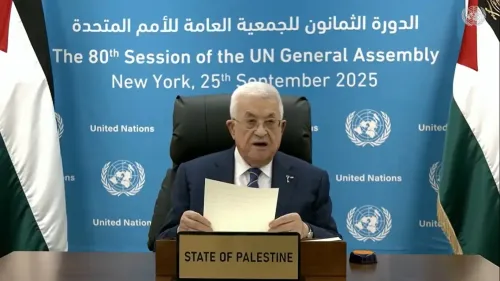
Palestinian President Mahmoud Abbas is barred from attending the UNGA high-level week in person for the second consecutive year .
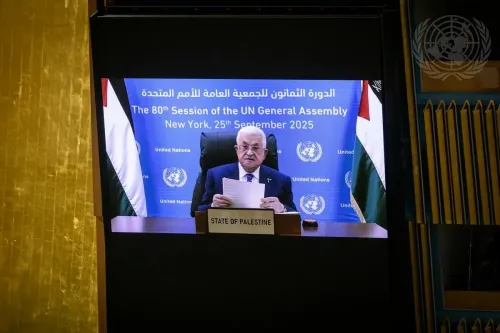
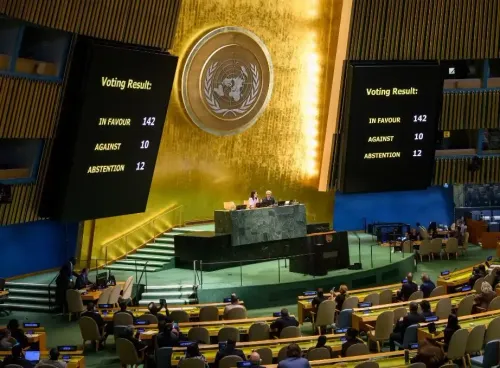
The UN General Assembly passed a resolution allowing Abbas to speak via video link, with 152 votes in favour; only the US , Israel , and Paraguay voted against.
India voted in favour of the resolution permitting Abbas 's virtual participation.
The US granted visas to Iranian President Masoud Pezeshkian and Foreign Minister Abbas Araghchi for the same session, drawing comparisons from critics.
US Deputy Permanent Representative Tammy Bruce defended the refusal, citing the Palestinian Authority's and PLO's failure to 'completely and unequivocally renounce terrorism.'
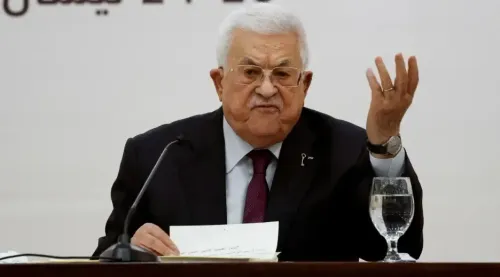
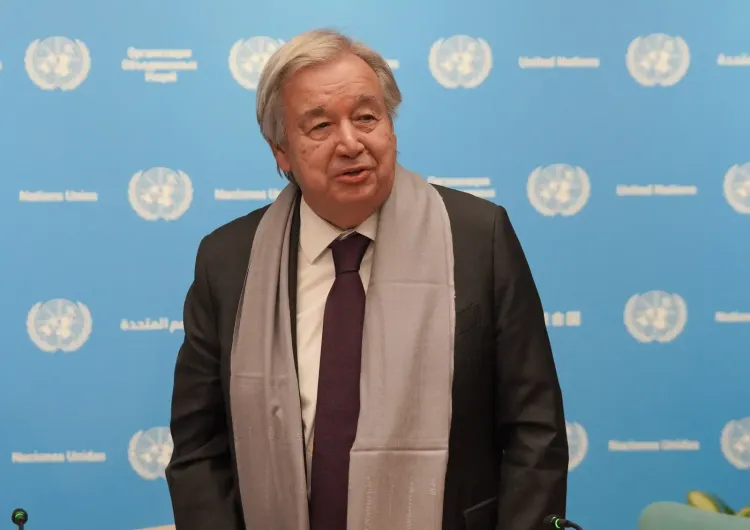
UN Secretary-General António Guterres has expressed deep regret over the United States' decision to extend sanctions that deny visas to members of the Palestine Liberation Organization (PLO) and officials of the Palestinian Authority (PA), effectively barring Palestinian President Mahmoud Abbas from attending the UN General Assembly (UNGA) high-level week in person for the second consecutive year.
What Guterres Said
'The secretary-general deeply regrets the announcement by the United States extending sanctions that would deny visas to members of the Palestine Liberation Organization and officials of the Palestinian Authority to participate in meetings of the United Nations,' said Stéphane Dujarric, chief spokesman for Guterres.
Guterres has urged the United States — in its capacity as host country of the UN headquarters — to fulfil its obligations under the 1947 UN-US Headquarters Agreement and ensure visas are issued to all delegations. The secretary-general is reportedly continuing to engage with US authorities on the matter.
General Assembly Votes to Allow Abbas by Video Link
The UN General Assembly on Thursday adopted a resolution permitting Abbas to address the General Debate via video link — a day after the US Department of State announced it would continue denying visas to Palestinian officials. The resolution passed overwhelmingly with 152 votes in favour, with only the United States, Israel, and Paraguay voting against it, and four nations formally abstaining.
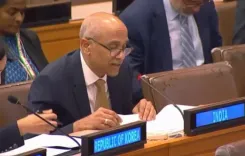
India voted in favour of the resolution, backing Abbas's right to participate virtually in the high-level session.
The US Position
US Deputy Permanent Representative Tammy Bruce defended the visa refusal, stating: 'We will not relent on our insistence that the Palestinian Authority and the PLO completely and unequivocally renounce terrorism. They have not yet done so.'
Notably, Washington has granted visas to Iranian President Masoud Pezeshkian and Foreign Minister Abbas Araghchi to attend the same high-level session, even as the US-Iran conflict reportedly enters its seventh month. Critics have pointed to this contrast as reflecting a selective application of the host-country visa framework.
Second Consecutive Year of Virtual Participation
This marks the second time Abbas has been compelled to address the General Assembly by video rather than in person, following a similar visa refusal last year. The pattern has drawn sharp criticism from a broad coalition of UN member states, who argue it undermines the universality of multilateral diplomacy and the integrity of the UN headquarters arrangement.
What Happens Next
Guterres is expected to continue pressing US authorities before the high-level week formally convenes. The episode is likely to feature prominently in debates over the rights of observer states and the host-country obligations the US holds under international law. The UNGA vote itself, with its lopsided 152-3 margin, signals a near-universal consensus that stands in stark contrast to Washington's position.
Point of View
If not the letter, of its 1947 Headquarters Agreement. What mainstream coverage underplays is the asymmetry: Washington barred Abbas while admitting Iran's president, mid-conflict. That selective access reveals that the visa lever is being deployed as foreign policy pressure, not neutral security screening. Guterres calling it out by name is unusually direct for a secretary-general and reflects how far institutional patience has worn. The real question is whether the US faces any binding mechanism to enforce the Headquarters Agreement — and historically, it does not.
NationPress
19 Sept 2026
Frequently Asked Questions
Why was Palestinian President Mahmoud Abbas denied a US visa for the UN General Assembly?
The US Department of State extended existing sanctions that bar members of the PLO and officials of the Palestinian Authority from receiving visas, citing Washington's position that the PA and PLO have not renounced terrorism. As a result, Abbas cannot attend the UNGA high-level week in New York in person.
How did the UN General Assembly respond to the US visa denial?
The UN General Assembly passed a resolution on Thursday allowing Abbas to address the General Debate via video link. The resolution was adopted with 152 votes in favour, with only the US , Israel , and Paraguay voting against.
What is the 1947 UN-US Headquarters Agreement and why does it matter here?
The 1947 UN-US Headquarters Agreement obligates the United States, as the UN's host country, to grant visas to representatives of member and observer states attending UN meetings. UN Secretary-General Guterres has cited this agreement in urging Washington to issue visas to Palestinian officials.
How did India vote on the Abbas video-link resolution?
India voted in favour of the UN General Assembly resolution permitting Palestinian President Mahmoud Abbas to address the high-level session via video link, aligning with the overwhelming majority of 152 member states.
Is this the first time Abbas has been barred from attending the UNGA in person?
No. This is the second consecutive year that Abbas has been denied a visa by the United States , forcing him to address the General Assembly remotely. He also participated by video link the previous year following a similar refusal.