Vivek Ramaswamy Cites Gratitude, Not Fame, as Driving Force
Synopsis
Entrepreneur Vivek Ramaswamy posted on X on 22 July 2026, saying gratitude to his state and country — not fame or fortune — drives his current work. The Indian-American founder of Strive Asset Management and former DOGE co-lead cited his immigrant background and the opportunities America gave him as his core motivation.
Key Takeaways
Vivek Ramaswamy posted on X on 22 July 2026 stating his motivation is gratitude, not fame or fortune.
He credited 'a state and a country' — widely understood as Ohio and the United States — for enabling opportunities unavailable to a child of his background.
Ramaswamy is the founder of Strive Asset Management , launched in 2022 to counter ESG investing.
He co-led the US Department of Government Efficiency (DOGE) advisory effort and ran for the 2024 Republican presidential nomination .
The statement continues a consistent theme in his public messaging: framing personal success as evidence of American meritocracy and immigrant opportunity .
Observers are watching for potential Ohio political moves, including a possible gubernatorial or Senate campaign.
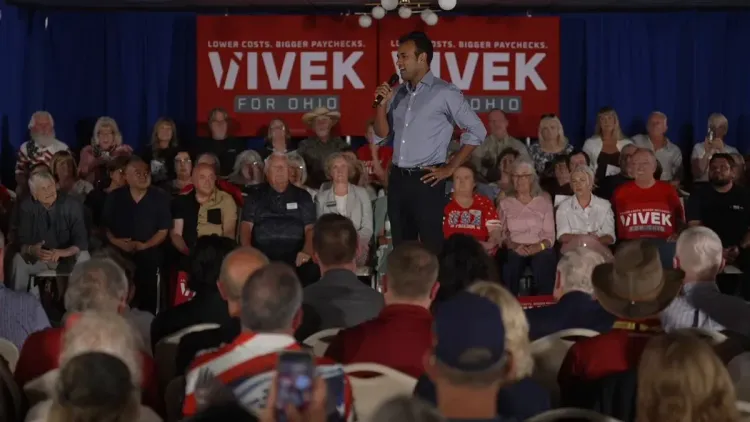
Entrepreneur and former DOGE co-lead Vivek Ramaswamy posted a personal statement on X on Wednesday, 22 July 2026, declaring that gratitude — not fame or fortune — is the motivation behind his current endeavours, crediting a state and a country for giving him opportunities he says a child from his background could never have imagined.
Context
In the post, Ramaswamy wrote: 'Here's why I'm doing it. Not for fame. Not for fortune. It's for gratitude to a state and a country that allowed me to achieve the things a kid like me could've never dreamed of.' The statement is notable for its personal, reflective tone, distinct from his usual policy-heavy commentary on markets, governance, and meritocracy.
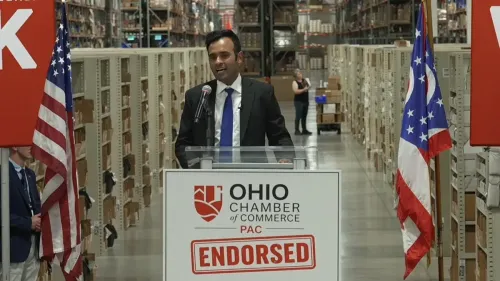
Ramaswamy was born in Cincinnati, Ohio, to Indian immigrant parents. He has repeatedly described Ohio and the broader United States as the foundational pillars of his rise from the son of immigrants to a prominent entrepreneur and national political figure.
Policy Backdrop
Ramaswamy founded Strive Asset Management in 2022 as a direct counter to ESG-focused investing, championing shareholder primacy rooted in conservative economic principles. He subsequently launched a 2024 Republican presidential campaign in February 2023, centred on restoring meritocracy and celebrating the upward mobility that the American system had afforded him personally.
He later co-led the advisory effort for the US Department of Government Efficiency (DOGE), a high-profile initiative aimed at reducing federal expenditure and bureaucratic overhead. Across each of these roles, Ramaswamy has consistently framed his public service as an act of repayment to the country that enabled his success.
Stakeholders and Impact
The statement carries particular resonance for Indian-American communities and first-generation immigrant families across the United States, for whom Ramaswamy has become one of the most visible political voices. His narrative of immigrant gratitude versus grievance has found a receptive audience within post-2020 Republican politics, where assimilation and economic mobility are recurring themes.
Political analysts note that such messaging echoes a broader pattern among first-generation conservative politicians who point to personal success as evidence of systemic openness rather than systemic barriers. The framing distinguishes Ramaswamy from peers who emphasise structural critique, positioning him instead as a standard-bearer for the 'American Dream' argument within the GOP.
What's Next
While Ramaswamy does not specify in the post what 'doing it' refers to, observers of Ohio Republican politics have been watching closely for any signals of a gubernatorial or Senate run in the state he calls home. His continued high profile since departing the DOGE advisory role keeps him firmly in the national conversation.
For the Indian-American diaspora and international observers, the post underscores how immigrant-origin politicians in the United States are increasingly shaping conservative identity politics — a trend with implications for how both countries understand the relationship between immigration, opportunity, and civic obligation.
Point of View
He invites his audience to fill in the frame with Ohio and the United States, reinforcing his origin story ahead of what many expect will be a significant political announcement. The post fits squarely within the post-2020 Republican playbook of immigrant-success narratives that counter progressive critiques of systemic inequality. For Indian-American voters and diaspora observers globally, it signals that Ramaswamy continues to see his ethnic and immigrant identity as a political asset rather than a liability.
NationPress
22 Jul 2026
Frequently Asked Questions
Why did Vivek Ramaswamy say he is not doing it for fame or fortune?
Ramaswamy stated on X on 22 July 2026 that his motivation is gratitude to the state and country that gave him opportunities his immigrant background would otherwise have made impossible, framing his public work as a form of civic repayment.
What is Vivek Ramaswamy doing now in 2026?
As of his July 2026 post, Ramaswamy remains executive chairman of Strive Asset Management and a prominent voice in Republican politics following his tenure as co-lead of the DOGE advisory effort; specific new ventures were not named in the post.
Is Vivek Ramaswamy running for office in Ohio?
No formal announcement has been made, but political observers have flagged a potential Ohio gubernatorial or Senate run as a possibility worth watching, given his continued high profile and strong ties to the state.
What is Vivek Ramaswamy's background and family origin?
Ramaswamy was born in Cincinnati, Ohio , to Indian immigrant parents, and has frequently cited his family's journey as central to his belief in American meritocracy and economic mobility.
What is Strive Asset Management and who founded it?
Strive Asset Management was founded by Vivek Ramaswamy in 2022 as an investment firm that opposes ESG-focused strategies and instead promotes shareholder primacy aligned with conservative economic principles.