Senator Mark Warner Issues Stark Warning on Prolonged Iran Conflict
Synopsis
Senator Mark Warner has raised alarms about the potential for a prolonged conflict with Iran, emphasizing the need for clear strategy amid political divisions in Washington. As military and diplomatic efforts continue, concerns grow over the implications for global energy markets and security.
Key Takeaways
Senator Warner warns of a prolonged conflict with Iran.
Calls for clarity on US military strategy.
Feasibility of securing Iran's uranium is questioned.
Conflict disrupts global energy supplies and raises prices.
Political divisions in Washington hinder resolution.
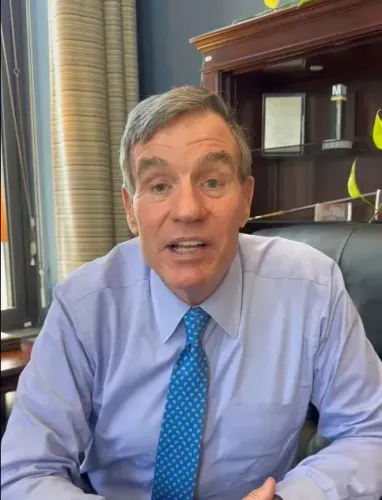
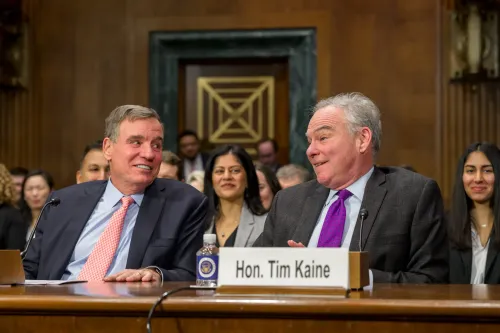
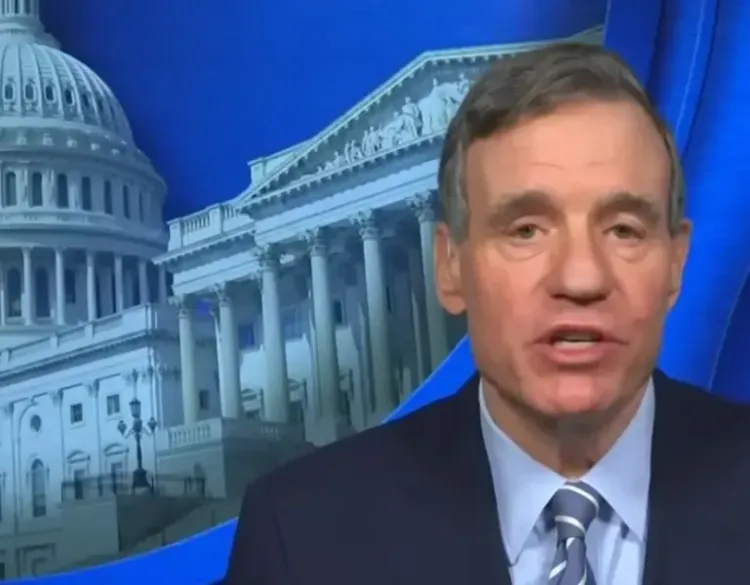
Washington, April 12 (NationPress) - Democratic Senator Mark Warner expressed concerns on Sunday regarding the potential for a drawn-out and unpredictable conflict with Iran, as political divisions intensified in Washington over the future direction of the war following unsuccessful negotiations.
In an interview with CNN, Warner stated, "I don't see how, 40-plus days into this war, that we are safer." He expressed skepticism about claims of progress and emphasized the need for transparency regarding the US administration's strategy.
As the Vice Chairman of the Senate Intelligence Committee, Warner questioned the practicality of securing Iran's enriched uranium, which is a primary goal for the US.
He pointed out that achieving this objective would necessitate "10,000 troops on the ground guarding a perimeter", along with specialized forces.
Warner also highlighted the escalating costs associated with the conflict, noting that US forces were utilizing costly interceptors against low-cost Iranian drones, while significant threats remained unaddressed.
Regarding the suggested blockade of the Strait of Hormuz, Warner conveyed doubt, stating, "I don't understand how blockading the Strait of Hormuz is going to somehow push the Iranians into opening it." He cautioned about potential long-term disruptions to global energy markets.
In contrast, Republicans presented a markedly different perspective. Senator Ron Johnson asserted that the US must ensure Iran never develops a nuclear weapon and insisted that Washington needs to "finish the job," as he spoke on ABC News.
Johnson acknowledged the complexities of the conflict, stating, "It could take a long time", but emphasized that preventing a nuclear-armed Iran is non-negotiable.
Military leaders adopted a more cautious tone, acknowledging tactical advancements while advising against overstating successes. Retired General Joseph Votel, former Head of US Central Command, remarked on ABC News that US forces had achieved "substantial dismantlement of Iran's war-making capability", yet the broader outcome hinges on political and diplomatic measures.
Votel emphasized that "war is a political state... it involves more than just the military," underscoring the necessity for a coordinated strategy that extends beyond military operations.
He cautioned that any mission to seize Iran's nuclear materials would represent a "significant operation," necessitating sustained troop deployments, air cover, and logistical support for an extended duration.
The Strait of Hormuz remains pivotal to the ongoing conflict. US naval forces have commenced mine-clearing operations to reopen this critical shipping route, though officials warn that restoring confidence among commercial vessels will require time.
The conflict, now entering its seventh week, has already disrupted global energy supplies and driven prices higher, triggering concerns about broader economic repercussions.
This confrontation is one of the most severe US-Iran crises in decades. Since the 1979 Iranian Revolution, Washington has endeavored to thwart Tehran's nuclear ambitions through a combination of sanctions, diplomacy, and military pressure.
The recent collapse of negotiations underscores the lack of a clear resolution, with both sides steadfast in their core demands and the potential for escalation remaining alarmingly high.
Point of View
It is essential to recognize the complexities of the current US-Iran situation. Senator Warner's insights reflect a critical viewpoint on military effectiveness and strategic clarity while emphasizing the urgent need for diplomatic solutions.
NationPress
19 Sept 2026
Frequently Asked Questions
What is Senator Mark Warner's stance on the conflict with Iran?
Senator Mark Warner is concerned about a prolonged and uncertain conflict with Iran, emphasizing the need for a clear US strategy and questioning the effectiveness of current military operations.
How does the US plan to secure Iran's enriched uranium?
Warner believes that securing Iran's enriched uranium would require a significant deployment of troops and specialized forces, raising questions about feasibility.
What are the potential impacts of the conflict on global energy markets?
The ongoing conflict has disrupted global energy supplies and raised concerns about price increases, particularly regarding the strategic importance of the Strait of Hormuz.
What contrasting views exist among US lawmakers regarding Iran?
While Senator Warner calls for a clear strategy and questions military effectiveness, Senator Ron Johnson insists on the necessity of preventing Iran from acquiring nuclear weapons.
What historical context is relevant to the US-Iran conflict?
The US has been working to prevent Iran from developing nuclear capabilities since the 1979 Iranian Revolution through sanctions, diplomacy, and military pressure.