124 ex-civil servants defend Election Commission, demand proof of 'rigged' claims
Synopsis
A group of 124 retired IAS, IFS, and IPS officers — including former Foreign Secretary Kanwal Sibal — have published a rare open letter defending the Election Commission's Special Intensive Revision and challenging critics to produce sworn proof of 'rigging'. Their data point is striking: Bihar's 2025 election had zero re-polls and the highest turnout since 1951, even as the SIR found 22 lakh dead voters on its rolls.
Key Takeaways
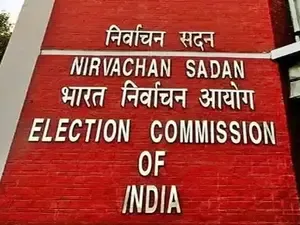
124 former civil servants , including ex-Foreign Secretary Kanwal Sibal , published an open letter on 10 October defending the ECI's Special Intensive Revision (SIR) of voters' rolls.
The letter demands that those alleging the system is 'rigged' provide sworn, court-testable evidence rather than press conference allegations.
Bihar's SIR identified 22 lakh dead electors, 7 lakh duplicate entries, while simultaneously adding 21.5 lakh new voters.
Bihar's 2025 election recorded zero re-polls and the highest turnout since 1951 , cited as evidence of systemic improvement.
The Supreme Court declined to halt the SIR and monitored each step, with signatories citing the Court's 1995 ruling upholding the ECI's multi-member structure.
The letter defends Booth Level Officers (BLOs) , calling sweeping allegations against them 'unfair and unjust'.
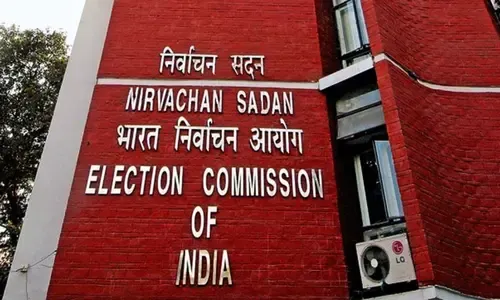
At least 124 former civil servants who were directly or indirectly involved in conducting India's elections published an open letter to the citizens of India on Saturday, 10 October, backing the Election Commission of India (ECI)'s ongoing Special Intensive Revision (SIR) of the voters' list and sharply rejecting allegations that the electoral system is 'rigged' — calling such claims baseless and damaging to democratic trust.
The letter, signed by retired officers spanning decades of public service, opens with a pointed declaration: 'We have conducted or studied India's elections all through our lives. We prepared the rolls, trained polling parties, sealed strong rooms and supervised counts. We belong to no party. We write because one word, 'rigged', is now thrown at our elections without evidence, and every repetition wounds democratic trust that belongs to all of us.'
Who Signed and What They Represent
The signatories include former Foreign Secretary Kanwal Sibal, former Union government secretaries R. D. Kapur, Samirendra Chatterjee, Gopal Krishna, Vivek Bhardwaj, and Anand Kumar, along with former Ambassadors Shyamala B. Causik, Bhaswati Mukherjee, Yogesh K. Gupta, Prabhu Dayal, Anil Trigunayat, J. K. Tripathi, and Deepak Vohra. Several former special secretaries, erstwhile chief secretaries of states, Directors General of Police, and other senior officers also put their names to the statement.
This is a rare instance of such a large cohort of retired bureaucrats and diplomats collectively entering an active political debate — lending the letter considerable institutional weight, even as critics may question the timing.
The Core Argument: Proof, Not Suspicion
The former officials directly challenged those levelling 'rigged' allegations to substantiate their claims through legal means. 'A charge made at press conferences but never placed on oath can be neither tested nor answered. Suspicion, however loud, is not proof,' the statement asserted.
The letter also posed a pointed rhetorical question to those alleging systemic fraud: 'If the system you call rigged is the same one that handed you your victories, ask yourself whether it is the system you doubt, or only the result.'
The signatories argued that credible rigging would require the coordinated silence of tens of thousands of officials from governments of every political persuasion, as well as the losing parties' own polling agents — a conspiracy they said has never been proved in any court.
Historical Context: From Booth Capturing to Bihar's Record Turnout
The letter drew a stark contrast between India's electoral past and its present. The officers recalled an era — now seen only in films, they wrote — when country-made guns, musclemen, ballot box stuffing, and voter intimidation were commonplace. 'Booth capturing was so common that Parliament made it a crime in 1989,' they noted.
As evidence of progress, the letter cited Bihar — once synonymous with electoral violence — where the 2025 state election recorded not a single re-poll, described as 'a first in its history.' Turnout, they noted, was the highest since 1951, with women voting in record numbers.
Defending the Special Intensive Revision
The former officers defended the ECI's SIR exercise, which has attracted criticism from opposition parties who allege it could be used to disenfranchise voters. The letter acknowledged that the process brings 'some discomfort' but characterised this as inherent to any major effort to improve the health of Indian democracy.
Citing data from Bihar, where voters' rolls had not been intensively revised since 2003, the statement noted that the SIR exercise identified approximately 22 lakh dead electors, 7 lakh duplicate entries, and lakhs more who had permanently relocated. 'Every such name is an invitation to impersonation. An uncleaned roll does not protect the voter — it protects the fraudster,' they wrote.
Crucially, the letter pointed out that while ineligible entries were removed, around 21.5 lakh new voters were simultaneously added, countering the narrative that the SIR is purely an instrument of exclusion. The statement also noted that no name is removed without notice and a hearing.
Supreme Court Oversight and Institutional Design
The former officials highlighted that the Supreme Court declined to halt the SIR while monitoring every step of the process and providing safeguards where necessary. They invoked the Court's 1995 ruling that upheld the ECI's design as a multi-member body — currently comprising three Commissioners — as a structural check against any single individual wielding unchecked authority.
'Respecting the Court's verdict, even when it disappoints us, is the price of a constitutional democracy,' the letter stated. The signatories also defended Booth Level Officers (BLOs), calling sweeping allegations against them 'unfair and unjust', and ended with a call for accountability: 'Question everything, but when someone says 'rigged', ask for proof they will swear to.'
The letter arrives at a moment of heightened political contestation over electoral rolls and the SIR's scope, and is likely to intensify the debate ahead of upcoming state elections.
Point of View
While supporters will see career-long practitioners rebutting political noise with operational knowledge. What the letter does not address is the legitimate question of whether the SIR's timing — ahead of elections in certain states — is coincidental or strategic, a gap that opponents will continue to exploit. The Bihar data on 22 lakh dead voters is the letter's strongest card; if similar figures emerge from other states, the case for aggressive roll-cleaning becomes harder to dismiss on partisan grounds alone.
NationPress
10 Oct 2026
Frequently Asked Questions
What is the open letter by 124 former civil servants about?
The letter, published on 10 October, defends the Election Commission of India's Special Intensive Revision (SIR) of voters' rolls and challenges those alleging the electoral system is 'rigged' to produce sworn, verifiable proof. It was signed by 124 retired officers including former Foreign Secretary Kanwal Sibal and several former ambassadors, chief secretaries, and Directors General of Police.
What is the Special Intensive Revision (SIR) of voters' lists?
The SIR is an exercise by the Election Commission of India to clean and update electoral rolls by removing ineligible entries such as deceased voters and duplicates, while simultaneously enrolling new eligible voters. In Bihar, where rolls had not been intensively revised since 2003, the SIR found approximately 22 lakh dead electors and 7 lakh duplicate entries, while adding around 21.5 lakh new voters.
Why have opposition parties criticised the SIR?
Opposition parties have raised concerns that the SIR could be used to disenfranchise legitimate voters, particularly marginalised communities. The former civil servants' letter counters this by noting that no name is removed without notice and a hearing, and that the Supreme Court declined to halt the process while monitoring it closely.
What role did the Supreme Court play in the SIR controversy?
The Supreme Court refused to stay the SIR exercise but monitored every step of the process and provided safeguards where it deemed necessary. The letter's signatories also cited the Court's 1995 ruling upholding the ECI's structure as a multi-member body of three commissioners as a built-in check against abuse of power.
What evidence do the former officers cite to show India's elections have improved?
The letter points to Bihar's 2025 state election as a benchmark: it recorded zero re-polls — described as a first in the state's history — and the highest voter turnout since 1951, with women voting in record numbers. This is contrasted with the era before 1989, when booth capturing was so prevalent that Parliament criminalised it that year.