Will Karnataka Government Intervene in Cesarean Deliveries?
Click to start listening
Synopsis
The Karnataka Health Minister addresses the rising trend of cesarean deliveries amidst concerns of intentional practices by doctors. While malnutrition is a factor, the Minister emphasizes the importance of personal choice and societal pressures influencing delivery methods. The government is urged to regulate private hospitals and ensure medical awareness among families.
Key Takeaways
- Cesarean deliveries must be monitored for intentional practices.
- Malnutrition is not the sole cause of high cesarean rates.
- Awareness among expectant mothers is crucial.
- Private hospitals need regulation to ensure fair practices.
- Government initiatives are in place to address healthcare access.
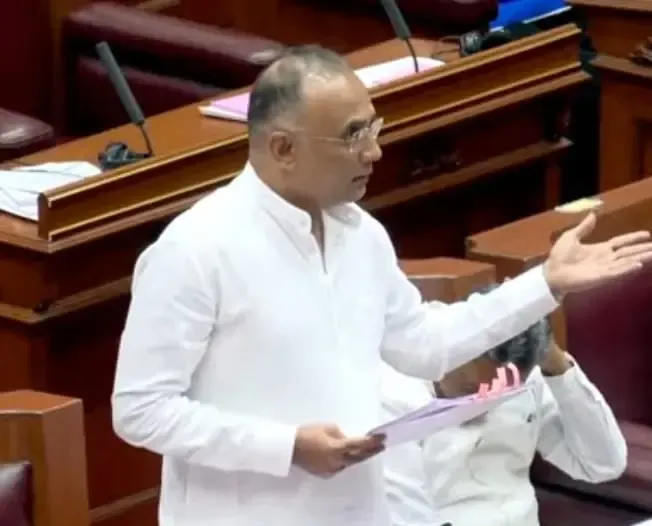
Belagavi (Karnataka), Dec 8 (NationPress) Karnataka's Health and Family Welfare Minister Dinesh Gundu Rao stated on Monday that the state's health department cannot intervene unless it is determined that cesarean deliveries are being performed intentionally throughout Karnataka.
In response to a question posed by JD-S Legislative Council member Govindaraju regarding the rise in cesarean deliveries, Minister Rao emphasized that malnutrition is not the sole factor contributing to this increase.
MLC Govindaraju expressed concerns that doctors might be misleading patients on this issue.
He pointed out that in Kolar Government Hospital, 36 percent of births are cesarean, while private hospitals report over 76 percent. He urged the state government to acknowledge the matter.
He noted, “Doctors claim that malnutrition is the primary reason for the high cesarean rates in the Kolar area, which is even higher in the Kalyana-Karnataka region.”
Govindaraju appealed for government intervention to limit the rising cesarean rates and to impose regulations on private hospitals.
Minister Rao remarked, “A pilot project regarding cesarean deliveries was undertaken in Tumkur, and we have the findings. Some hospitals report cesarean rates as high as 75-80 percent. This issue requires careful examination as it is sensitive, and the decision between normal and cesarean delivery is a personal one.”
He added, “The department cannot step in unless it is evident that cesarean deliveries are being carried out intentionally. We need to foster medical and social awareness among expectant mothers and their families.”
Rao further stated, “Malnutrition alone cannot be blamed for the rise in cesarean deliveries. It is one of many factors, but educated, middle-class women in urban settings are often more inclined to choose cesarean deliveries out of fear, societal norms, and the desire to avoid labor pain.”
“Numerous reasons contribute to this trend. Private hospitals may prefer cesareans due to higher fees and lower perceived risks. Normal deliveries necessitate more extensive care, whereas cesareans can sometimes be essential due to medical conditions that only doctors can ascertain,” he explained.
Minister Rao also addressed another inquiry from BJP Legislative Council member H.S. Gopinath regarding the state government's awareness of long wait times and staffing shortages at hospitals such as Victoria, Bowring, and K.C. General in Bengaluru.
He mentioned, “The waiting time at K.C. General Hospital has been minimized through a QR code-based ticketing system. Victoria Hospital, associated with the Bangalore Medical College and Research Institute, caters to patients from Andhra Pradesh and Tamil Nadu, and necessary actions are being taken. Currently, there are no long wait times at Victoria Hospital. Bowring, Lady Curzon, Ghosha Hospital, and Charaka Hospital in Shivajinagar are functioning smoothly.”
“At Victoria Hospital, we are hiring doctors and paramedics on a contract basis, and there is no shortage of staff at Bowring Hospital,” he clarified.
“In the Bengaluru district, separate units for non-communicable diseases have been established in nine hospitals as part of the non-communicable disease program. Screening for these diseases is being conducted at all primary health centers in Bengaluru. Medications supplied to hospitals undergo quality testing at the Karnataka State Medical Services and Supplies Corporation Limited through the Aushada QC module. Both central and state drug controllers routinely test random samples of medicines.”
Point of View
It is imperative to recognize the complexities surrounding cesarean deliveries in Karnataka. The dialogue initiated by Health Minister Dinesh Gundu Rao emphasizes the balance between personal choice and medical necessity, urging both awareness and regulation in private healthcare practices.
NationPress
09/12/2025
Frequently Asked Questions
What is the main concern regarding cesarean deliveries in Karnataka?
The primary concern is the increasing rate of cesarean deliveries, particularly in private hospitals, and whether these are being performed intentionally by doctors.
Is malnutrition the only reason for the rise in cesarean rates?
No, while malnutrition is a contributing factor, other influences such as societal beliefs and personal choices also play significant roles.
What actions is the Karnataka government considering?
The government is urged to regulate private hospitals and enhance awareness among families regarding delivery options.
How does the government plan to address long waiting times at hospitals?
The government is implementing systems like QR code-based ticketing to reduce waiting times and hiring additional medical staff.
What steps are being taken for non-communicable diseases in Bengaluru?
Separate units for non-communicable diseases have been established in nine hospitals, along with screening programs at primary health centers.