AAP's Political Downfall: How a Clean Governance Promise Collapsed
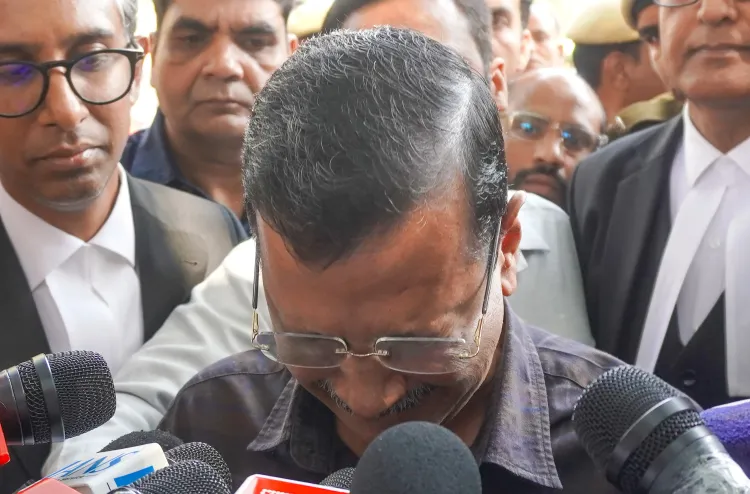
Synopsis
Born from India's most electric anti-corruption moment, the Aam Aadmi Party's collapse is not just a political story — it's a cautionary tale about what happens when a movement built on moral authority encounters the unchecked temptations of power. AAP's fall may be the defining political tragedy of a generation.
Key Takeaways
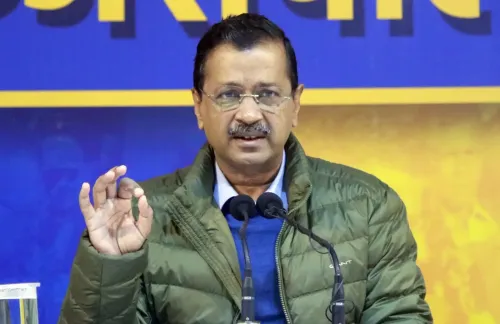
AAP was founded in 2012 by Arvind Kejriwal from the momentum of Anna Hazare's 2011 anti-corruption movement , promising clean and transparent governance.
The party achieved a historic mandate in 2015 Delhi elections , winning 67 of 70 seats — one of the largest victories in Indian state election history.
Manish Sisodia was arrested in February 2023 and Kejriwal in March 2024 in the Delhi liquor policy case , severely damaging the party's anti-corruption image.
Founding leaders including Yogendra Yadav, Prashant Bhushan, Kumar Vishwas , and others left the party, citing centralisation of power and lack of internal democracy.
AAP failed to win any of the 7 Lok Sabha seats in Delhi in the 2024 general elections and subsequently lost the 2025 Delhi Assembly elections .
Kejriwal lost his own New Delhi Assembly constituency in 2025 — a seat he had held since 2013 — marking a symbolic end to his decade-long dominance of Delhi politics.
New Delhi, April 26: The Aam Aadmi Party (AAP), born from India's landmark anti-corruption movement of 2011, has witnessed one of modern Indian politics' most dramatic arcs — from a symbol of moral politics to a party mired in legal battles, internal exodus, and crushing electoral defeats. What makes this collapse uniquely painful is not just the political loss, but the erosion of a rare public belief: that Indian politics could actually be different.
From Anna's Streets to Delhi's Throne
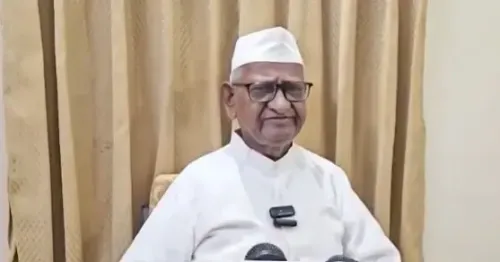
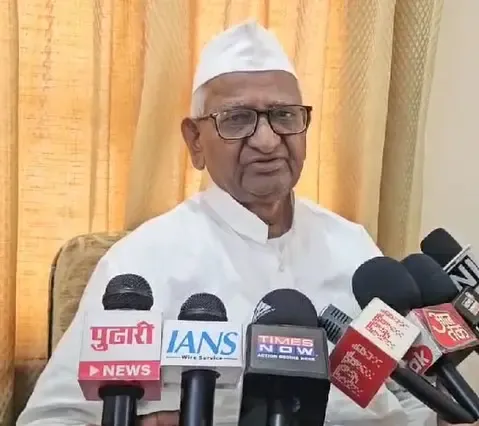
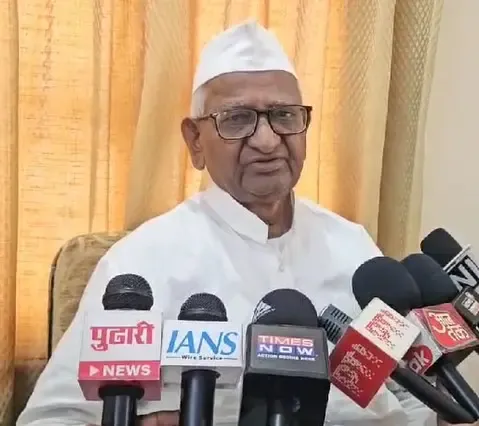
In 2011, Anna Hazare's fast against corruption ignited a national moment unlike anything India had seen in decades. The UPA-2 government was reeling under the weight of back-to-back scams — 2G spectrum, Commonwealth Games, Coalgate — and public anger had reached a boiling point. Hazare's 12-day fast forced a government response and, more importantly, brought the urban middle class — historically disengaged — onto the streets in unprecedented numbers.
Around Hazare rallied a core group: Arvind Kejriwal, Kiran Bedi, Prashant Bhushan, Yogendra Yadav, Kumar Vishwas, and others. The movement was not ideological — it was emotional, built on shared outrage and the hunger for accountability.
When Kejriwal chose to convert that energy into electoral politics in 2012, founding the Aam Aadmi Party, Hazare himself was unconvinced. He believed the movement's power lay precisely in its distance from the system it was challenging. That fundamental disagreement foreshadowed the tensions that would follow.
The Sweeping Mandate and the Seeds of Contradiction
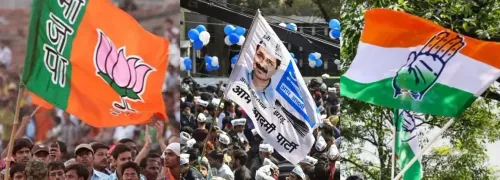
AAP's electoral journey began with a stunning debut. After a brief 49-day government in 2013-14, the party returned in February 2015 with a near-total mandate — 67 out of 70 Delhi Assembly seats. The BJP was reduced to three seats; the Congress was wiped out entirely. It was a verdict that rewrote the rules of Delhi politics.
The broom — AAP's electoral symbol — became shorthand for a new political vocabulary: transparency, accessibility, and governance without entitlement. Schemes like free water, subsidised electricity, mohalla clinics, and government school reforms were cited as evidence that the promise was real.
In 2020, Delhi voters reaffirmed their faith with another strong mandate. Emboldened, AAP expanded nationally — winning a sweeping majority in Punjab in 2022 under Bhagwant Mann and testing electoral ground in Goa and Gujarat. On paper, it looked like a movement that had successfully made the transition to governance.
The Internal Fractures Nobody Could Ignore
But beneath the electoral wins, the cracks were deepening. The first to go were the movement's own intellectual architects. Yogendra Yadav and Prashant Bhushan were expelled in 2015 after publicly questioning the party's internal democracy and decision-making concentration. Their removal was not a quiet departure — both spoke openly about an organisation drifting from its founding principles.
They were followed by a steady stream of prominent figures: Shazia Ilmi, Kumar Vishwas, Kapil Mishra, Ashutosh, and others. Each exit carried different circumstances, but the underlying pattern was consistent — a party that once projected collective leadership appeared to have centralised power around a single figure. Dissent, critics argued, had no structural home within AAP.
This is a contradiction that deserves scrutiny: a party formed explicitly to challenge authoritarian political culture was being accused by its own founders of replicating that very culture internally.
Legal Crises and the Collapse of Moral Authority
The most damaging blow came not from opponents but from the courts. The Delhi liquor policy case — involving alleged irregularities in the 2021-22 excise policy — drew Kejriwal and senior leader Manish Sisodia into serious legal jeopardy. Both were arrested and spent time in judicial custody. Sisodia, once celebrated as the architect of Delhi's education transformation, was among the first to be detained in February 2023. Kejriwal himself was arrested by the Enforcement Directorate in March 2024.
For a party that had built its entire identity on moral clarity and zero tolerance for corruption, these developments were existentially damaging. The gap between the party's founding promise and its lived reality became impossible to paper over.
The controversy over Kejriwal's official residence — dubbed 'Sheesh Mahal' by critics and reportedly renovated at significant public expense — further fed into a narrative of entitlement that directly contradicted AAP's original image of austerity and common-man governance.
Electoral Reckoning: Delhi Delivers Its Verdict
The political consequences arrived swiftly. In the 2024 Lok Sabha elections, AAP failed to win a single one of the seven parliamentary seats in Delhi. Then, in the February 2025 Delhi Assembly elections, the party suffered a historic defeat — losing power in the very capital it had dominated for a decade.
Most symbolically, Kejriwal lost his own New Delhi constituency — a seat he had held since 2013 — amid visible public anger. Scenes of voters booing him during campaigning marked a profound reversal of the emotional bond that had once defined his political identity.
The verdict was not merely electoral arithmetic. It was a public withdrawal of the trust that had been extended — generously, repeatedly — to a party that had asked for faith in a different kind of politics.
As AAP attempts to regroup, the questions its story raises go far beyond one party's fate. They speak to the structural pressures that transform movements into machines, the fragility of moral politics when it encounters the temptations of power, and whether Indian voters — having extended and withdrawn trust — will find new vehicles for the aspirations that AAP once carried. The answers will shape Indian politics well into the next decade.
Point of View
They staked their belief in democratic renewal on it. The liquor policy arrests, the internal purges of founding voices like Yadav and Bhushan, and the 'Sheesh Mahal' controversy are not isolated incidents — they form a coherent pattern of institutional capture by a leadership that outgrew its accountability architecture. The mainstream narrative focuses on electoral numbers; the more important story is what AAP's fall does to civic trust in reform politics — and how long it will take India's next movement to rebuild it.
NationPress
19 Sept 2026
Frequently Asked Questions
Why did AAP lose the 2025 Delhi Assembly elections?
AAP lost the February 2025 Delhi Assembly elections due to a combination of factors including the Delhi liquor policy scandal, the arrests of Arvind Kejriwal and Manish Sisodia, and widespread public disillusionment with the party's governance record. The party, which had won 67 of 70 seats in 2015, was unable to recover from the credibility damage caused by these controversies.
What was the Delhi liquor policy case involving AAP?
The Delhi liquor policy case involves alleged irregularities in AAP's 2021-22 excise policy, with the Enforcement Directorate and CBI investigating claims of financial misconduct. Manish Sisodia was arrested in February 2023 and Arvind Kejriwal in March 2024 in connection with the case.
Who left the Aam Aadmi Party and why?
Several founding members and prominent leaders left AAP over the years, including Yogendra Yadav, Prashant Bhushan, Kumar Vishwas, Shazia Ilmi, Kapil Mishra, and Ashutosh. Most cited concerns about the centralisation of power around Kejriwal and the erosion of internal democracy within the party.
How did AAP start and what was its original promise?
AAP was founded in 2012 by Arvind Kejriwal and others emerging from Anna Hazare's India Against Corruption movement of 2011. The party promised clean governance, transparency, and accountability — positioning itself as a radical alternative to established political parties.
What happens to AAP after losing Delhi in 2025?
Following its 2025 Delhi defeat, AAP still governs Punjab under Bhagwant Mann but faces significant questions about its national relevance and leadership credibility. The party's ability to rebuild will depend on resolving its legal challenges, restoring internal cohesion, and reconnecting with voters who feel betrayed by the gap between its promises and its conduct in power.