Air India AI 171 crash: Pilots' body says electrical failure, not suicide, downed Boeing
Synopsis
India's pilots' federation has fired a direct challenge at the official Air India crash narrative: simulator tests, it says, make the government's four-second turbine deployment timeline physically impossible under a manual fuel cutoff. If the FIP's data holds, the entire 'pilot suicide' conclusion unravels — and the focus shifts to a systemic electrical fault that investigators may have bypassed.
Key Takeaways
The Federation of Indian Pilots (FIP) disputes the official finding that the crew of Air India Flight AI 171 deliberately shut off fuel, causing the 12 June 2025 Ahmedabad crash.
FIP simulator tests show a manual fuel cutoff takes 18 seconds to trigger the ram air turbine — not the 4 seconds cited in the interim report.
The federation alleges a catastrophic electrical failure crippled the aircraft before engines stopped, and that the plane had prior unresolved electrical issues.
The lone survivor reportedly described cabin lights flickering before the crash, which the FIP says supports its electrical-failure theory.
Sandhu , described as India's top Boeing 787 expert, was allegedly excluded from investigative testing by government authorities.
The FIP has submitted its data to Boeing and aviation authorities, and is demanding a halt to the final report until discrepancies are resolved.
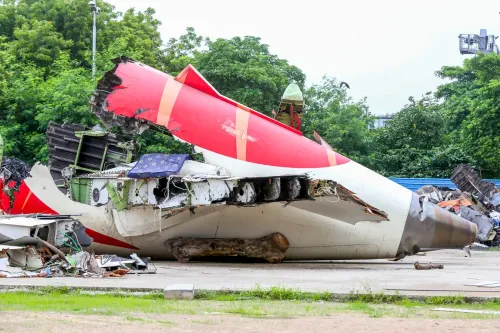
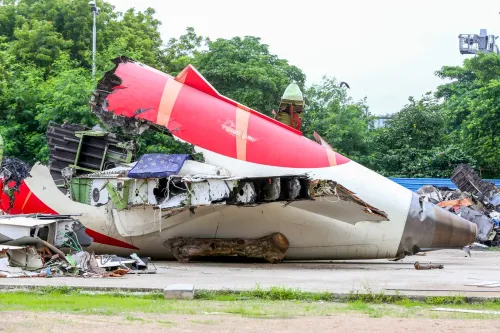
The Federation of Indian Pilots (FIP) has formally disputed the official interim findings on the crash of Air India Boeing Flight AI 171, which went down seconds after take-off from Ahmedabad airport on 12 June 2025, killing nearly all on board. The federation claims that new simulator data points to a catastrophic systemic electrical failure as the cause — directly contradicting the government investigators' conclusion of a deliberate pilot-initiated fuel cutoff.
What the Official Report Said
The interim accident report, released by government investigators, concluded that the flight crew deliberately shut off fuel supplies to both engines in what was characterised as a coordinated suicide pact. Investigators noted that the aircraft's ram air turbine — an emergency backup power unit that deploys automatically during total power loss — activated just four seconds after the alleged manual shutdown.
What the FIP's Simulator Tests Found
Addressing a press conference in New Delhi on 19 June 2025, FIP President Captain C.S. Randhawa said the federation had conducted exhaustive simulator tests replicating the exact weight, balance, and weather conditions of Flight AI 171 on the day of the crash. The results, he argued, expose a fundamental impossibility in the official timeline.
'Our simulator tests prove that a manual fuel cut-off takes a full 18 seconds to drop that backup turbine. The official timeline of four seconds is physically and technically impossible under a manual shutdown scenario,' Captain Randhawa said.
The FIP contends that the ram air turbine deployed so rapidly because a catastrophic electrical failure had already crippled the aircraft before the engines lost power — and that this systemic fault, not a deliberate crew action, triggered the engine switches and caused the crash.
Survivor Account and Aircraft History
The federation also cited testimony from the lone survivor of Flight AI 171, who reportedly described seeing cabin lights flicker and dim moments before the aircraft began its final descent — an observation the FIP says aligns directly with a sudden, large-scale power failure rather than a manual shutdown sequence.
Additionally, the FIP alleged that the aircraft involved had a documented history of unresolved electrical issues in the period leading up to the fatal flight, though this claim has not been independently verified.
Allegation of Expert Sidelining
A pointed allegation at the press conference concerned Captain R.S. Sandhu, described by the FIP as India's foremost Boeing 787 expert. The federation alleged that government investigators deliberately excluded Captain Sandhu from the hands-on investigative testing phase.
'They are ignoring the input of our most experienced pilot because his knowledge would completely disprove their pilot suicide theory. It is easier to blame dead pilots who cannot defend themselves than to confront a major mechanical or software flaw,' Captain Randhawa alleged.
Government aviation authorities have not publicly responded to these specific allegations.
FIP's Demands
The FIP confirmed it has formally submitted its simulator findings to both Boeing and Indian government aviation authorities. The federation is demanding an immediate suspension of the final accident report's publication until the technical discrepancy over the turbine deployment timeline is independently resolved. It has also called for the immediate reinstatement of Captain Sandhu to the official investigation team to ensure, in its words, a transparent and unbiased review. The outcome of these demands — and whether investigators will revisit the interim findings — is expected to shape the final report's credibility.
Point of View
And that question deserves a rigorous, independent answer before a final report is published. What is troubling is the allegation that a named subject-matter expert was excluded from testing: if true, it suggests the investigation's methodology is as contested as its conclusions. The 'pilot suicide' framing, once set in an interim report, carries enormous reputational and legal weight for the deceased crew's families. India's aviation regulator must demonstrate that its process can withstand technical scrutiny — not just procedural box-ticking — or risk a credibility deficit that will outlast this inquiry.
NationPress
20 Sept 2026
Frequently Asked Questions
What did the FIP claim about the Air India AI 171 crash?
The Federation of Indian Pilots claimed that simulator tests prove the crash was caused by a catastrophic electrical failure, not a deliberate pilot-initiated fuel cutoff as the official interim report concluded. The FIP says its tests show the timeline in the official report is physically impossible.
What is the four-second versus eighteen-second discrepancy?
The official interim report states that the aircraft's ram air turbine deployed just four seconds after the alleged manual fuel cutoff. FIP's simulator tests, replicating the flight's exact conditions, found that a manual fuel cutoff takes eighteen seconds to trigger that same turbine — making the official four-second figure, according to the FIP, technically impossible.
Who is Captain R.S. Sandhu and why does his exclusion matter?
Captain R.S. Sandhu is described by the FIP as India's foremost Boeing 787 expert. The FIP alleges that government investigators deliberately sidelined him from hands-on investigative testing, claiming his expertise would contradict the suicide conclusion. The government has not publicly responded to this allegation.
What evidence did the lone survivor provide?
The sole survivor of Flight AI 171 reportedly described seeing cabin lights flicker and dim immediately before the aircraft began its final descent. The FIP says this account is consistent with a sudden electrical failure rather than a manual engine shutdown.
What is the FIP demanding from authorities?
The FIP is demanding an immediate pause on the publication of the final accident report until the turbine deployment timeline discrepancy is fully and independently investigated. It is also demanding the reinstatement of Captain R.S. Sandhu to the official investigation team.