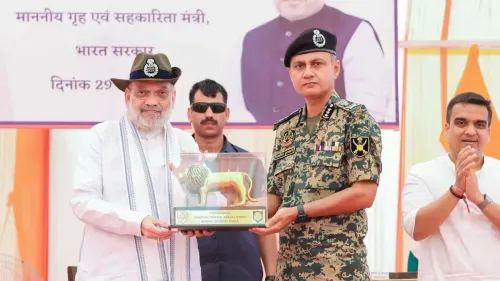
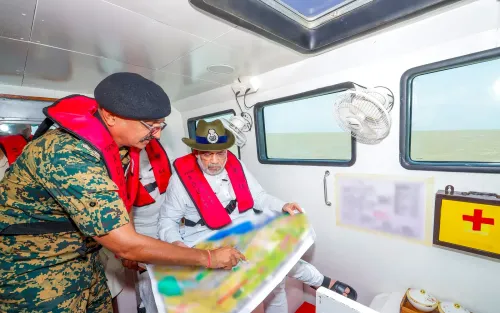
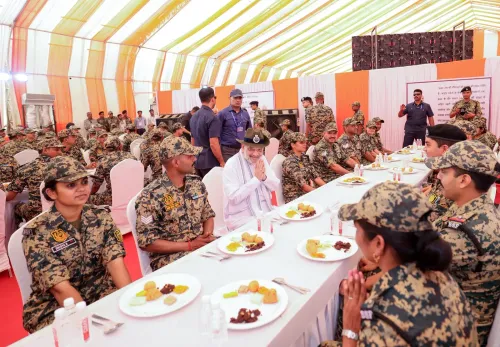
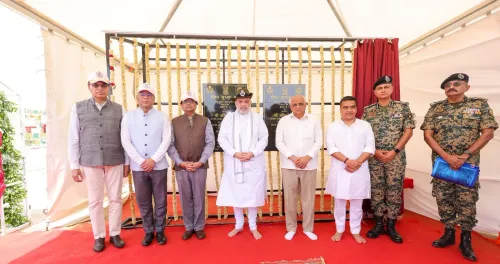
Amit Shah Visits BSF Border Post G-7 in Bhuj, Gujarat
Synopsis
Union Home Minister Amit Shah on 29 May 2026 interacted with BSF troops at Border Out Post G-7 on the India-Pakistan border near Bhuj, Gujarat, broadcasting the engagement live on X. The visit highlights continued ministerial oversight of India's western frontier security.
Key Takeaways
Union Home Minister Amit Shah visited Border Out Post G-7 on the India-Pakistan border near Bhuj, Gujarat on 29 May 2026 .
He interacted directly with BSF personnel stationed at the forward outpost and broadcast the engagement live.
The BSF was raised on 1 December 1965 and is responsible for securing the 3,323-km India-Pakistan frontier .
Bhuj in Kutch district is a key operational hub for BSF deployments along Gujarat's stretch of the western border.
The visit reflects ongoing ministerial oversight of India's western border security infrastructure and troop welfare.
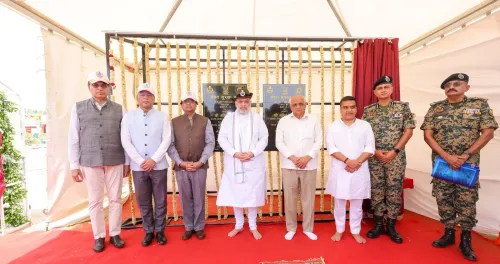
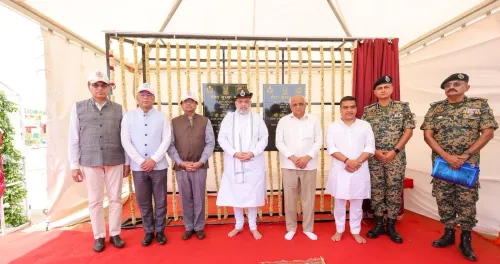
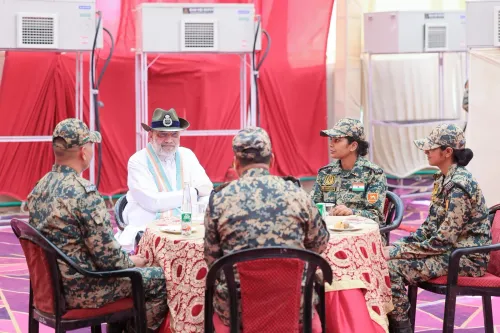
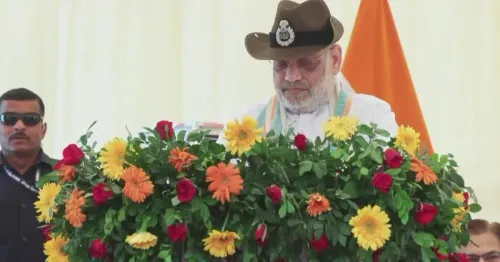
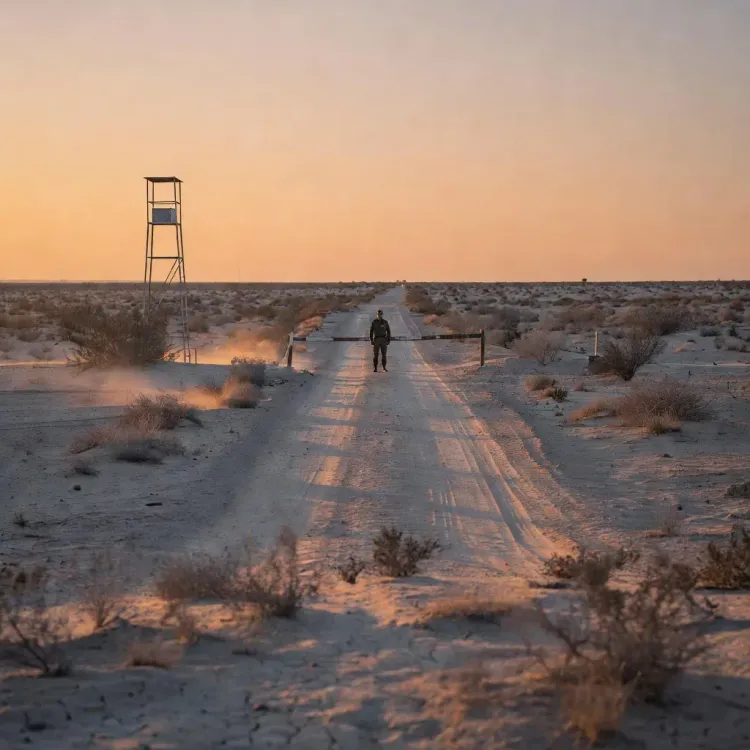
Union Home Minister Amit Shah on Friday, 29 May 2026 interacted with Border Security Force (BSF) personnel stationed at Border Out Post G-7, located on the India-Pakistan border near Bhuj in Gujarat's Kutch district. The visit marks a direct engagement by the Home Minister with frontline BSF troops guarding India's western frontier.
Shah posted on X, 'गुजरात के भुज में भारत–पाकिस्तान सीमा पर स्थित बॉर्डर आउट पोस्ट जी-7 पर BSF के वीर साथियों से संवाद कर रहा हूँ' ('I am interacting with the brave BSF comrades at Border Out Post G-7, situated on the India-Pakistan border in Bhuj, Gujarat'). The post linked to a live broadcast of the interaction.
Context
The Border Security Force was raised on 1 December 1965 in the aftermath of the India-Pakistan war to replace state police units on international borders. It is India's primary force tasked with securing the 3,323-km India-Pakistan frontier, which runs through Gujarat, Rajasthan, Punjab, and Jammu & Kashmir. The Kutch sector in Gujarat, which includes the Rann of Kutch, is among the most operationally significant stretches of this border.
Bhuj serves as a key logistical and operational hub for BSF deployments along the Gujarat segment of the western border. India began systematic fencing and floodlighting of this frontier in the early 1990s, and the infrastructure has been progressively upgraded since.
Policy Backdrop
As Union Home Minister, Shah holds direct oversight responsibility for the BSF, which functions under the Ministry of Home Affairs. Visits by successive Home Ministers to forward border outposts have been a consistent feature of India's border management approach, signalling political attention to frontline security conditions. Such engagements typically accompany periodic reviews of force deployment, infrastructure projects, and technology-driven surveillance upgrades.
The government has in recent years accelerated the rollout of the Comprehensive Integrated Border Management System (CIBMS), which deploys sensors, cameras, and communication networks along vulnerable border stretches, including in the Gujarat sector. Modernisation of BSF equipment and welfare of border troops have been stated priorities under the current administration.
Stakeholders and Impact
The primary stakeholders are the BSF personnel deployed at forward outposts along the Gujarat frontier, who operate in challenging terrain including the salt marshes of the Rann of Kutch. Direct ministerial visits carry both morale and administrative significance, often preceding announcements on infrastructure, welfare measures, or operational enhancements for border forces.
Residents of border villages in Kutch are also stakeholders, as BSF deployments directly affect local security and economic activity in the region. The Gujarat government and state police maintain a parallel security architecture that coordinates with BSF operations in the sector.
What's Next
Observers will watch for any follow-up announcements on BSF infrastructure projects or technology upgrades in the Gujarat sector stemming from this visit. The upcoming monsoon session of Parliament is likely to see questions on border security funding and force modernisation. Shah's engagement at BOP G-7 underscores that the western frontier — particularly the Gujarat segment — remains a focal point of India's internal security calculus, and ministerial-level attention to forward posts is likely to continue amid evolving security dynamics along the India-Pakistan border.
Point of View
Such visits also serve as a platform to project continuity of the internal security agenda. The Gujarat sector holds particular strategic salience given its proximity to the Rann of Kutch and historical cross-border incidents, making it a natural choice for a ministerial outreach that doubles as an operational review. Any infrastructure or welfare announcements that follow will be closely watched as indicators of the government's near-term border modernisation priorities.
NationPress
12 Oct 2026
Frequently Asked Questions
Why did Amit Shah visit the BSF post in Bhuj?
Amit Shah visited Border Out Post G-7 near Bhuj on 29 May 2026 to interact with BSF personnel deployed on the India-Pakistan border in Gujarat, as part of ministerial oversight of India's western frontier security.
Where is Border Out Post G-7 located?
Border Out Post G-7 is situated on the India-Pakistan border near Bhuj in Kutch district, Gujarat.
What is the BSF and what does it do?
The Border Security Force (BSF) is India's primary border guarding organisation, raised on 1 December 1965. It is responsible for securing India's international borders, including the 3,323-km India-Pakistan frontier.
What is the significance of the Bhuj sector for border security?
Bhuj in Kutch district, Gujarat, is a key operational hub for BSF deployments along the India-Pakistan border. The Rann of Kutch sector is strategically significant due to its terrain and history of cross-border incidents.
Has the Home Minister visited BSF posts before?
Yes, visits by the Union Home Minister to forward border outposts are a recurring feature of India's border management oversight, with successive ministers conducting such engagements to review security conditions and troop welfare.