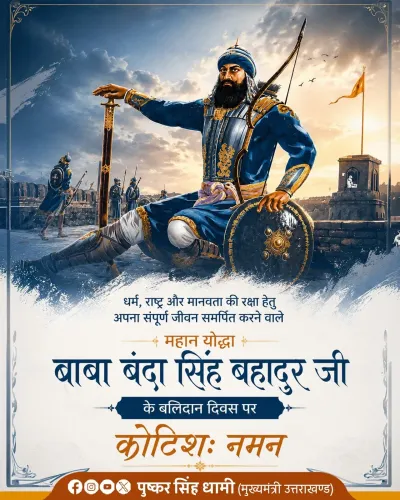
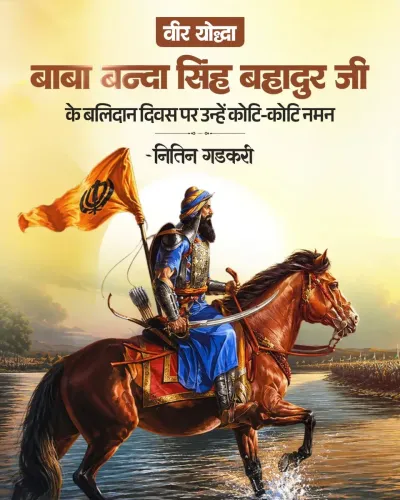
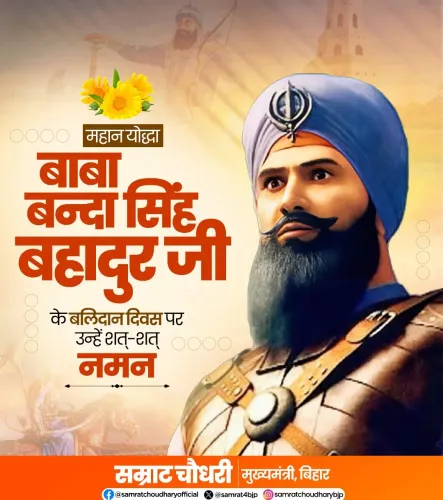
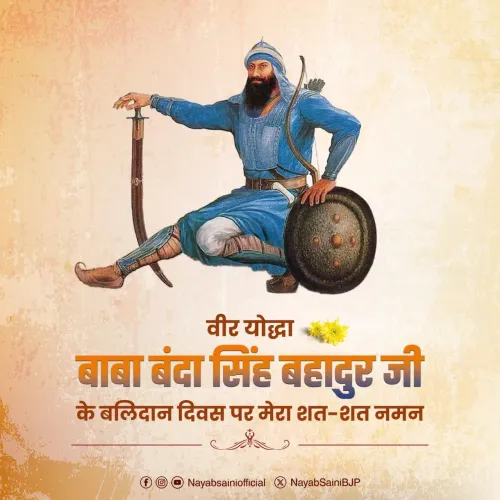
Amit Shah pays tribute to Banda Singh Bahadur on martyrdom day
Synopsis
Union Home Minister Amit Shah on June 25, 2026, paid homage to Baba Banda Singh Bahadur — the Khalsa army's first commander — on his martyrdom day, honouring his resistance against Mughal forces, his agrarian justice measures, and his refusal to convert under torture.
Key Takeaways
Union Home Minister Amit Shah posted a tribute to Baba Banda Singh Bahadur on his Shahidi Diwas on June 25, 2026 .
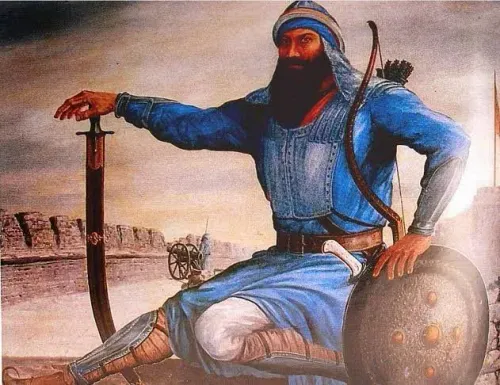
Banda Singh Bahadur is recognised as the first appointed commander of the Khalsa army , the Sikh warrior order founded by Guru Gobind Singh in 1699 .
He defeated Mughal armies multiple times and liberated large territories in Punjab before his capture and execution in 1716 .
Shah highlighted Banda Singh Bahadur's efforts to establish a just system for farmers and his refusal to convert despite severe torture.
The tribute is part of a broader BJP pattern of honouring pre-colonial regional warriors from diverse communities as symbols of resistance to external rule.
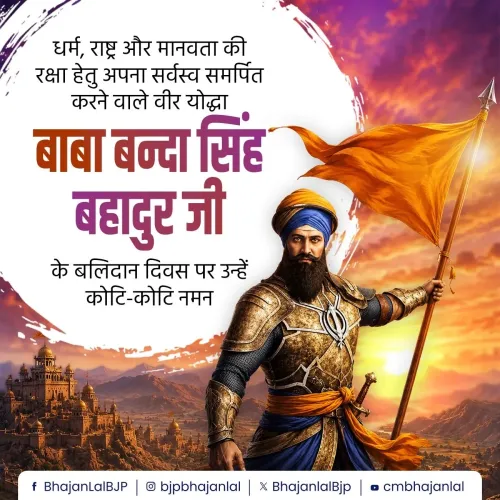
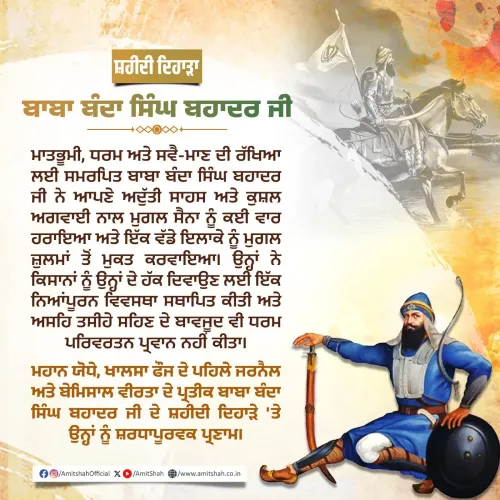
Union Home Minister Amit Shah on Thursday, June 25, 2026, paid tribute to Baba Banda Singh Bahadur, the first appointed commander of the Khalsa army, marking the warrior's martyrdom anniversary with a post on X that honoured his resistance against Mughal forces and his efforts to secure the rights of farmers.
Context
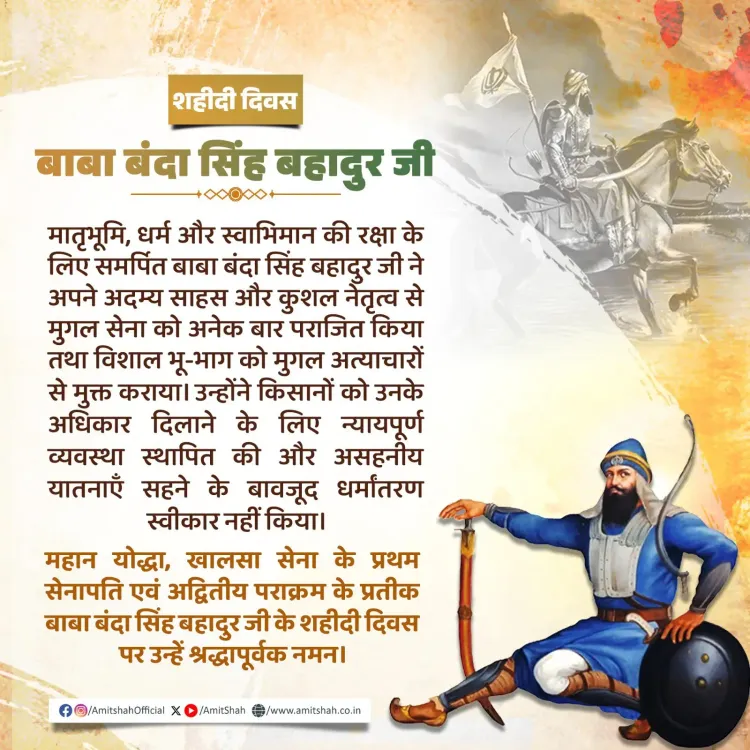
Shah's post, written in Hindi, described Banda Singh Bahadur as one 'dedicated to the protection of the motherland, dharma and self-respect' (dedicated to the protection of the motherland, faith and self-respect). The Home Minister noted that the 18th-century commander had defeated Mughal armies on multiple occasions and liberated vast territories from Mughal oppression. Shah also highlighted that Banda Singh Bahadur had refused to convert even under unbearable torture, calling him a symbol of unparalleled valour.
The tribute referred to him as 'mahaan yoddha, Khalsa sena ke pratham senapati' — the great warrior and the first commander of the Khalsa army — and offered respectful homage on his Shahidi Diwas, or martyrdom day.
Policy Backdrop
Baba Banda Singh Bahadur was an early 18th-century Sikh military commander who led the first major Khalsa campaigns following the era of Guru Gobind Singh, the founder of the Khalsa order in 1699. He briefly established an autonomous Sikh administration in parts of Punjab before his capture and execution in 1716. His campaigns are historically noted for redistributing agricultural land and establishing a more equitable order for farmers in the regions he controlled.
BJP leaders have periodically highlighted commemorations of Banda Singh Bahadur's campaigns since at least 2014, as part of broader recognition of regional figures who resisted Mughal authority. These tributes have formed part of a wider pattern of official statements that elevate pre-colonial warriors from Sikh, Maratha, Rajput and other traditions as symbols of resistance to external rule.
Stakeholders and Impact
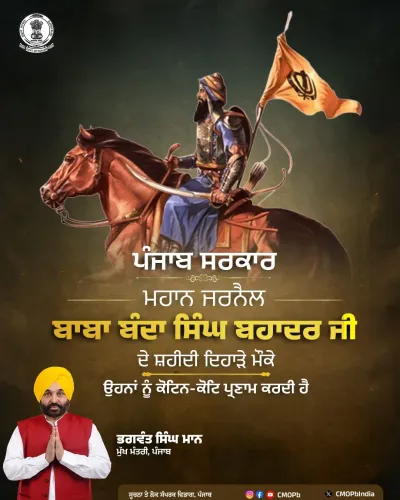
The tribute is directed primarily at the Sikh community, for whom Banda Singh Bahadur holds deep historical and spiritual significance as the Khalsa's first military commander and a martyr who refused to renounce his faith. Shah's emphasis on Banda Singh Bahadur's work to secure farmers' rights also connects the historical figure to contemporary agrarian concerns in Punjab and neighbouring states.
Such commemorations by senior central government figures carry symbolic weight in Punjab, a state with a predominantly Sikh population and a politically sensitive relationship with the central government on questions of community recognition and historical memory.
What's Next
The annual observance of Banda Singh Bahadur's martyrdom day is expected to see further commemorations at state and community levels. Any related announcements by state governments regarding memorials, cultural programmes or curriculum recognition of his legacy will be closely watched, particularly in Punjab. The tribute also sets a marker for how the BJP frames historical Sikh resistance narratives ahead of future electoral cycles in the region.
Point of View
Maratha, Rajput — as part of a shared national heritage narrative. By specifically underscoring Banda Singh Bahadur's agrarian justice record alongside his military feats, Shah broadens the appeal beyond religious commemoration to a socio-economic register that resonates in rural Punjab. The timing and framing reflect an ongoing effort by the central leadership to build credibility with the Sikh community on questions of historical recognition. Whether such symbolic gestures translate into policy or electoral traction in Punjab remains the key variable to watch.
NationPress
25 Jun 2026
Frequently Asked Questions
Who was Baba Banda Singh Bahadur?
Baba Banda Singh Bahadur was an early 18th-century Sikh military commander who served as the first appointed commander of the Khalsa army. He led major campaigns against Mughal forces in Punjab and briefly established an autonomous Sikh administration before his capture and execution in 1716.
Why did Amit Shah pay tribute to Banda Singh Bahadur?
Amit Shah paid tribute on the occasion of Banda Singh Bahadur's Shahidi Diwas, or martyrdom anniversary, on June 25, 2026, honouring his resistance against Mughal oppression, his work for farmers' rights, and his refusal to convert under torture.
When was Baba Banda Singh Bahadur executed?
Baba Banda Singh Bahadur was captured and executed in 1716 by Mughal authorities after leading several successful military campaigns in Punjab.
What is the Khalsa army?
The Khalsa is the Sikh warrior order founded by Guru Gobind Singh in 1699. Banda Singh Bahadur was appointed as its first military commander and led its initial territorial campaigns against Mughal forces.
What did Banda Singh Bahadur do for farmers?
Banda Singh Bahadur established a more equitable administrative order in the territories he controlled, redistributing agricultural land and securing the rights of farmers who had suffered under Mughal rule.