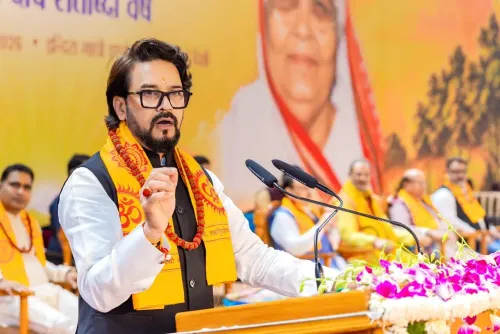
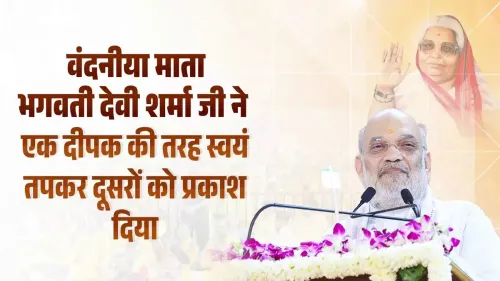
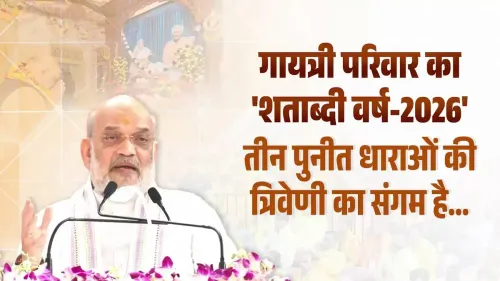
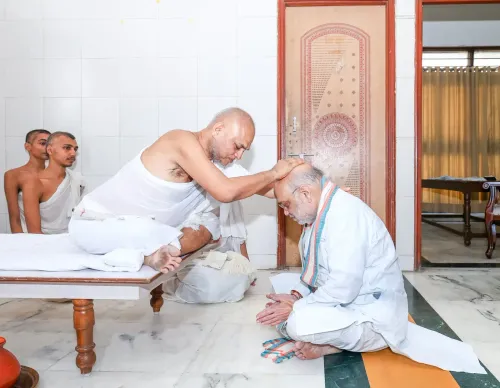
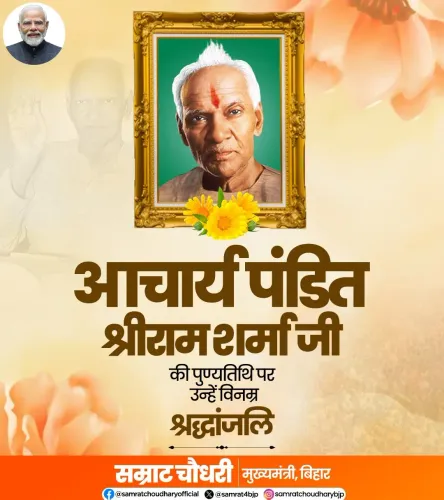
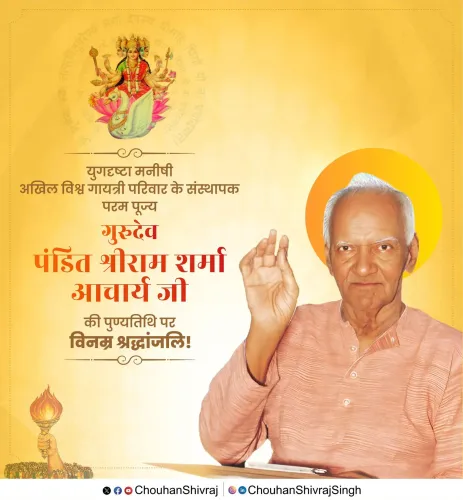
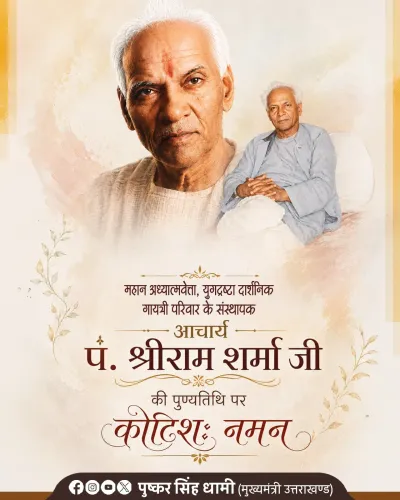
Amit Shah pays tribute to Pandit Shriram Sharma Acharya
Synopsis
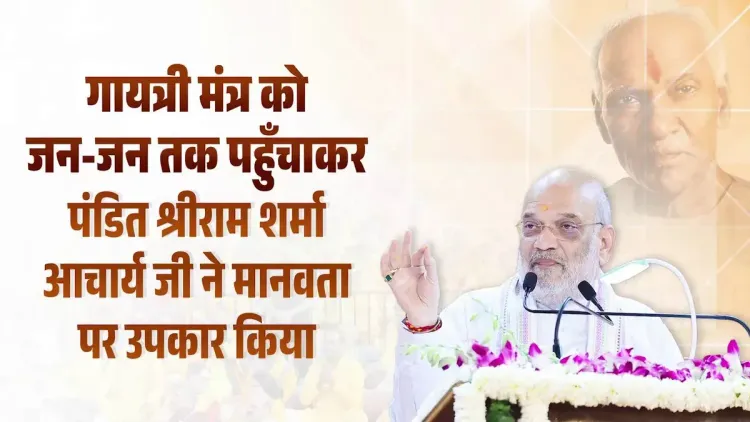
Union Home Minister Amit Shah honoured Pandit Shriram Sharma Acharya, founder of the All World Gayatri Pariwar, calling his work of spreading the Gayatri Mantra to every person an act of cultural service equal to that of India's ancient sages.
Key Takeaways
Union Home Minister Amit Shah posted a tribute to Pandit Shriram Sharma Acharya on November 2, 2026 .
Shah said Acharya's service in spreading the Gayatri Mantra to every person equalled that of India's ancient sages and epoch-makers.
Pandit Shriram Sharma Acharya ( 1911–1990 ) founded the All World Gayatri Pariwar , one of India's largest spiritual organisations.
His movement democratised the Gayatri Mantra, making it accessible across caste and region to tens of millions.
The tribute follows a consistent BJP practice of publicly honouring figures central to Hindu spiritual and cultural heritage.
A spiritual reformer who carried the Gayatri Mantra out of the temple and into the everyday lives of millions earned a sweeping tribute from Union Home Minister Amit Shah on Monday, November 2, 2026 — placing the legacy of Pandit Shriram Sharma Acharya on par with India's ancient sages.
Shah wrote in Hindi: 'Rishiyon aur yug purushon ne Bharatiya sanskriti par jo upkar kiya, utna hi bada upkar Pandit Shriram Sharma Acharya ji ne Gayatri Mantra ko jan-jan tak pahunchakar kiya hai' — ('The service that sages and epoch-makers rendered to Indian culture is equalled by the service Pandit Shriram Sharma Acharya rendered by carrying the Gayatri Mantra to every person'). The comparison is deliberate and striking: to place a 20th-century spiritual teacher alongside the rishis of the Vedic age is a measure of the esteem in which Acharya ji is held across Hindu devotional circles.
Who was Pandit Shriram Sharma Acharya?
Born in 1911 and passing in 1990, Pandit Shriram Sharma Acharya founded the All World Gayatri Pariwar, one of India's largest spiritual organisations. His life's mission was the democratisation of the Gayatri Mantra — a Vedic hymn from the Rigveda that had, for centuries, been accessible only to a narrow section of society. Acharya ji dismantled that barrier, propagating the mantra across caste, region, and social standing.
The Gayatri Mantra's journey from scripture to mass practice
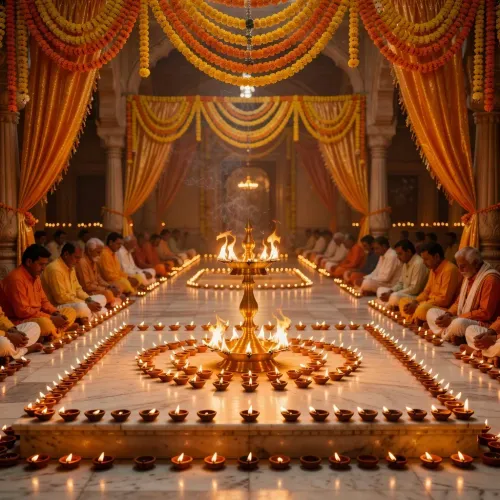
The Gayatri Mantra is among the most revered Vedic verses, a prayer for illumination addressed to the solar deity. For much of Indian religious history, its recitation was restricted. Acharya ji's movement changed that calculus entirely — through literature, yagyas (fire rituals), and grassroots outreach, the All World Gayatri Pariwar spread its practice to tens of millions of households. That is the scale of transformation Shah is honouring.
BJP's consistent thread of cultural tribute
Senior BJP leaders have made it a sustained practice to publicly acknowledge figures associated with Hindu spiritual and cultural heritage. Such tributes serve a dual purpose: they honour genuine historical contributions and they reinforce the party's emphasis on India's civilisational identity in public discourse. Shah's post fits squarely within that pattern — but the warmth and specificity of the comparison to the ancient rishis gives it an uncommon intensity.
For the millions affiliated with the All World Gayatri Pariwar and the countless households that begin their mornings with the Gayatri Mantra, the Home Minister's words land as more than a political statement — they are an acknowledgement of a quiet, century-spanning revolution in Indian spiritual life.
Point of View
Shah highlights a socially inclusive strand of Hindu reform, lending the post a broader resonance beyond the party's core base. Tributes to Gayatri Pariwar's founder also tap into a vast, organised devotional network spread across Indian households. The post is a reminder that for BJP, cultural statecraft and electoral outreach are rarely fully separate exercises.
NationPress
2 Nov 2026
Frequently Asked Questions
Who was Pandit Shriram Sharma Acharya?
Pandit Shriram Sharma Acharya (1911–1990) was a spiritual leader and founder of the All World Gayatri Pariwar who dedicated his life to spreading the Gayatri Mantra to people of all backgrounds across India.
What is the All World Gayatri Pariwar?
The All World Gayatri Pariwar is one of India's largest spiritual organisations, founded by Pandit Shriram Sharma Acharya. It promotes the recitation of the Gayatri Mantra and Vedic values across communities worldwide.
Why did Amit Shah pay tribute to Pandit Shriram Sharma Acharya?
Union Home Minister Amit Shah posted a tribute on November 2, 2026, praising Acharya's contribution in making the Gayatri Mantra accessible to every person, comparing his service to that of India's ancient sages.
What is the significance of the Gayatri Mantra?
The Gayatri Mantra is one of the most sacred hymns in the Vedic tradition, drawn from the Rigveda. It is a prayer for illumination and wisdom, and Pandit Shriram Sharma Acharya is credited with bringing its practice to millions who were historically excluded from it.
Does BJP regularly honour Hindu spiritual leaders?
Yes. Senior BJP leaders regularly issue public tributes to historical and modern spiritual figures associated with Hindu traditions, as part of the party's emphasis on India's cultural and civilisational heritage in official communications.