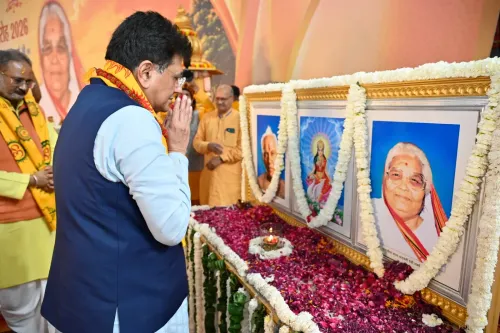
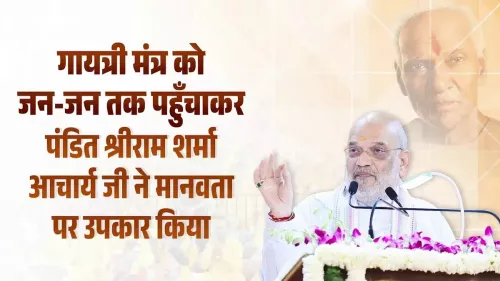
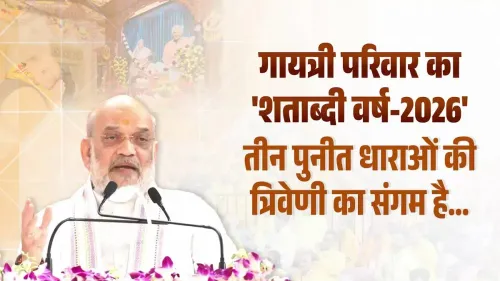
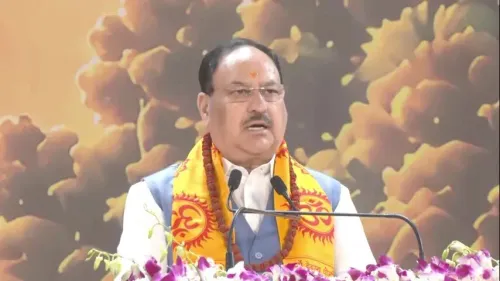
Amit Shah pays tribute to Vandaniya Mataji of Gayatri Parivar
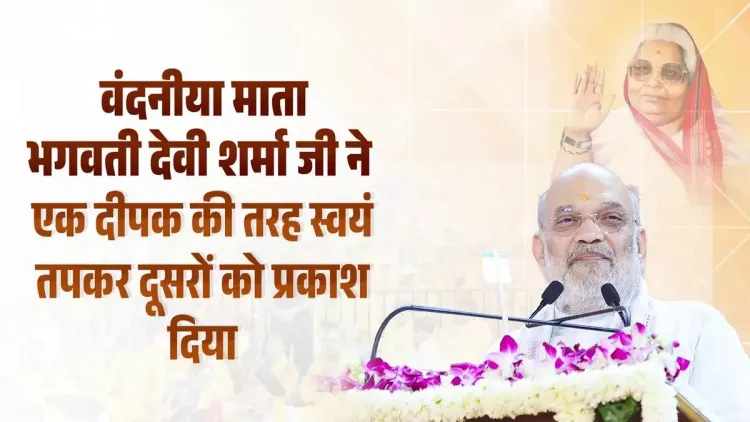
Synopsis
Union Home Minister Amit Shah honoured Vandaniya Mataji, co-founder of Akhil Vishwa Gayatri Parivar, describing her as a lamp that burned itself to illuminate others — a tribute to her life of sacrifice and service to the spiritual movement.
Key Takeaways
Amit Shah posted a tribute to Vandaniya Mataji on 2 November 2026 .
He described her as a lamp — burning herself to give light to others.
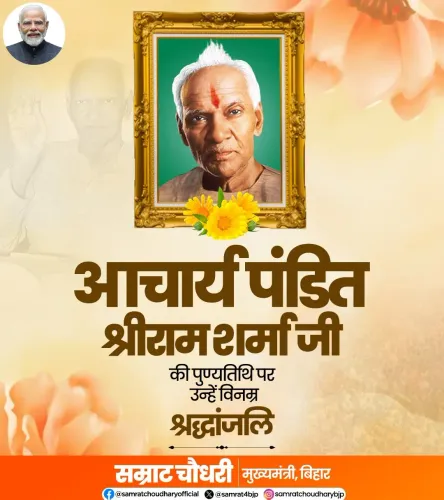
Vandaniya Mataji was co-founder and spiritual leader of Akhil Vishwa Gayatri Parivar , wife of Pandit Shriram Sharma Acharya .
Akhil Vishwa Gayatri Parivar is a 20th-century Hindu reform movement promoting the Gayatri mantra, yagya, and community service across India and abroad.
Shah called her sacrifice and service 'the very soul' of the Gayatri Parivar movement.
A flame that burns itself to light others — that is how Union Home Minister Amit Shah chose to remember Vandaniya Mataji, the revered co-founder and spiritual pillar of Akhil Vishwa Gayatri Parivar, in a tribute posted on 2 November 2026.
Shah wrote in Hindi: 'वंदनीया माताजी ने एक दीपक की तरह स्वयं तपकर दूसरों को प्रकाश दिया, उनका त्याग और सेवा ही अखिल विश्व गायत्री परिवार की मूल भावना है' — 'Vandaniya Mataji illuminated others like a lamp, burning herself in the process; her sacrifice and service are the very soul of Akhil Vishwa Gayatri Parivar.'
Who Vandaniya Mataji was — and what Gayatri Parivar represents
Vandaniya Mataji was the wife and spiritual partner of Pandit Shriram Sharma Acharya, the founder of Akhil Vishwa Gayatri Parivar — a 20th-century Hindu reform and spiritual movement built around the Gayatri mantra, yagya rituals, and community service. Together, they shaped an organisation that today spans India and dozens of countries abroad, drawing millions of followers committed to inner discipline and social uplift.
Mataji's own legacy rested on lived example: quiet austerity, hands-on service, and the kind of sacrifice that movements are built upon rather than merely preached about. Shah's metaphor of a lamp — ek deepak ki tarah swayam tapkar, burning itself to give light — echoes the imagery Gayatri Parivar uses to describe dedicated spiritual service.
BJP's long engagement with Hindu reform movements
Tributes like this are a consistent feature of BJP leaders' public communication — a deliberate acknowledgement of cultural and religious organisations that blend traditional Hindu values with grassroots social work. For Amit Shah, one of the party's most senior figures and its former national president, such statements also signal sustained engagement with a devotee base spread across India's heartland states.
Gayatri Parivar's emphasis on education, health camps, and women's empowerment gives it a social-service credibility that resonates beyond purely religious constituencies — making a tribute from the Union Home Minister both culturally meaningful and politically deliberate.
Point of View
Which command millions of devoted followers across India's heartland. By invoking the imagery of selfless sacrifice — central to Gayatri Parivar's identity — Shah frames the tribute in the movement's own language, deepening that connection. Such gestures are not merely ceremonial; they reinforce the BJP's positioning as a party attentive to cultural and spiritual heritage. The timing and sincerity of the tribute will resonate most among Gayatri Parivar's vast, committed devotee base.
NationPress
2 Nov 2026
Frequently Asked Questions
Who is Vandaniya Mataji of Gayatri Parivar?
Vandaniya Mataji was the wife of Pandit Shriram Sharma Acharya and co-founder of Akhil Vishwa Gayatri Parivar , revered for her emphasis on sacrifice, Gayatri sadhana, and community service.
What is Akhil Vishwa Gayatri Parivar?
Akhil Vishwa Gayatri Parivar is a 20th-century Hindu spiritual and social reform movement founded by Pandit Shriram Sharma Acharya , promoting the Gayatri mantra, yagya rituals, and grassroots community service in India and abroad.
What did Amit Shah say about Vandaniya Mataji?
Amit Shah said Vandaniya Mataji 'illuminated others like a lamp, burning herself in the process,' and that her sacrifice and service are the soul of Akhil Vishwa Gayatri Parivar.
Why did Amit Shah pay tribute to Vandaniya Mataji?
Shah posted the tribute on 2 November 2026 to honour her legacy of sacrifice and service; the exact occasion was not specified in his post.
Who founded Akhil Vishwa Gayatri Parivar?
Pandit Shriram Sharma Acharya founded Akhil Vishwa Gayatri Parivar in the 20th century, with Vandaniya Mataji as his spiritual partner and co-founder.