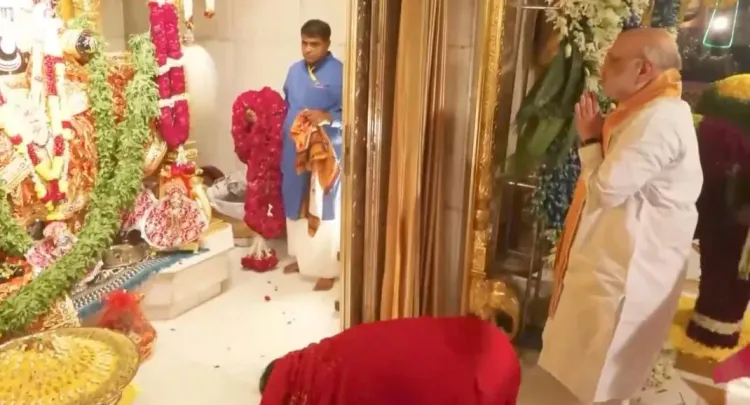
Amit Shah offers mangala aarti at Ahmedabad's Jagannath Temple for 149th Rath Yatra
Synopsis
Home Minister Amit Shah was among the first to arrive at Ahmedabad's 400-year-old Jagannath temple on 16 July, performing the pre-dawn mangala aarti to mark the opening of the city's 149th Rath Yatra — India's second-largest after Puri — with over 31,000 police personnel and AI-enabled surveillance securing the 16-km route.
Key Takeaways
Amit Shah performed the mangala aarti at Shree Jagannath Mandir, Jamalpur, Ahmedabad on 16 July .
The ceremony marked the start of Ahmedabad's 149th annual Jagannath Rath Yatra , held on Ashadhi Bij .
The yatra is considered the second-largest Jagannath Rath Yatra in India after Puri , drawing lakhs of devotees from across the country.
The Shree Jagannathji Mandir in Jamalpur is nearly 400 years old ; the procession covers a 16-km route .
Gujarat Police deployed more than 31,000 personnel , backed by drones, AI surveillance, CCTV cameras, and body-worn cameras.
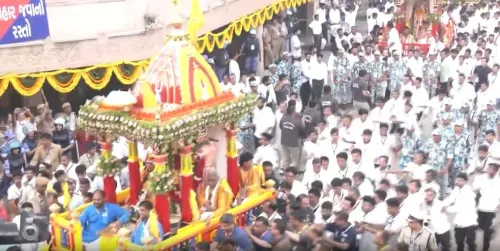
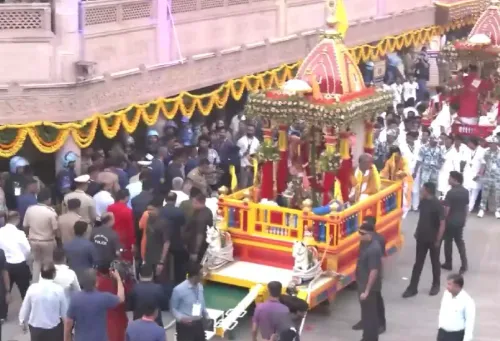
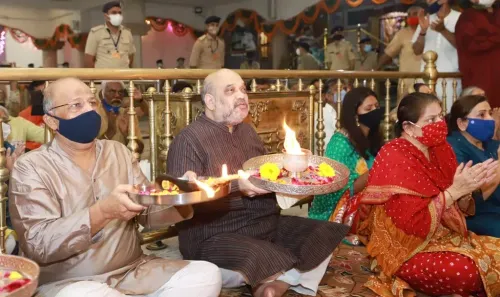
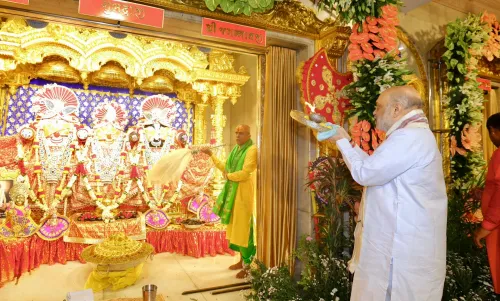
Union Home and Cooperation Minister Amit Shah performed the mangala aarti and offered prayers to Lord Jagannath at the historic Shree Jagannath Mandir in the Jamalpur area of Ahmedabad on Thursday, 16 July, marking the ceremonial start of the city's 149th annual Jagannath Rath Yatra. Shah arrived at the temple in the early hours and participated in the traditional pre-dawn ritual before taking darshan of the deity.
The Opening Rituals
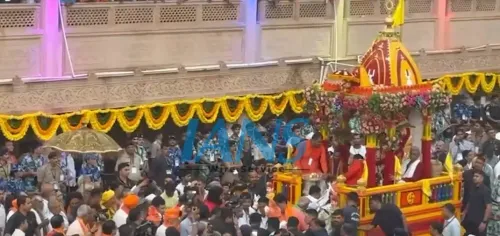
The mangala aarti is among the first and most sacred ceremonies of Rath Yatra day, preceding the departure of the three chariots carrying the idols of Lord Jagannath, Lord Balabhadra, and Devi Subhadra. Thousands of devotees gathered at the temple to witness the religious proceedings before the grand procession commenced. Senior state government officials, temple authorities, and senior police officers were also present as final preparations for the yatra fell into place.
History and Significance of the Yatra
The annual Jagannath Rath Yatra, held on Ashadhi Bij, originates from the nearly 400-year-old Shree Jagannathji Mandir in Jamalpur and winds through several parts of Ahmedabad before returning to the temple by the end of the day. Widely regarded as the second-largest Jagannath Rath Yatra in India after the celebrated procession in Puri, the Ahmedabad event draws lakhs of devotees from across Gujarat and other states every year. Shah has regularly attended the mangala aarti in previous years, continuing a long-standing personal tradition of offering prayers before the procession begins.
Security and Civic Arrangements
This year's yatra is being conducted under extensive security cover. Gujarat Police have deployed more than 31,000 personnel along the 16-km procession route, supported by drones, artificial intelligence-enabled surveillance, thousands of CCTV cameras, and body-worn cameras. Civic authorities have simultaneously put in place arrangements for crowd management, sanitation, medical services, and emergency response to ensure the smooth conduct of one of Gujarat's most significant annual religious events.
What to Watch
With lakhs of pilgrims expected to line the route, the coordination between temple authorities, police, and civic agencies will be closely watched. The successful conduct of the 149th edition of the yatra would reinforce Ahmedabad's standing as one of the country's foremost centres of the Jagannath tradition outside Odisha.
Point of View
000 police and AI-enabled surveillance for a single-day procession reflects both the scale of the event and the state's heightened security calculus in post-2002 Ahmedabad. What mainstream coverage often underplays is the Rath Yatra's role as a live stress-test for Gujarat's law-enforcement machinery — a 16-km, multi-hour corridor through a dense urban fabric that doubles as an annual rehearsal for mass-event management. The seamless conduct of the 149th edition would carry symbolic weight well beyond the religious calendar.
NationPress
16 Jul 2026
Frequently Asked Questions
What is the Ahmedabad Jagannath Rath Yatra?
The Ahmedabad Jagannath Rath Yatra is an annual religious procession originating from the nearly 400-year-old Shree Jagannathji Mandir in the Jamalpur area of Ahmedabad, held on Ashadhi Bij. It is considered the second-largest Jagannath Rath Yatra in India after the procession in Puri, attracting lakhs of devotees from Gujarat and across the country each year.
Why did Amit Shah attend the mangala aarti?
Amit Shah participated in the pre-dawn mangala aarti at Shree Jagannath Mandir on 16 July as part of a long-standing personal tradition of offering prayers before the commencement of Ahmedabad's Rath Yatra procession. He has regularly attended the ceremony in previous years.
What security arrangements were made for the 149th Rath Yatra?
Gujarat Police deployed more than 31,000 personnel along the 16-km procession route, supported by drones, AI-enabled surveillance systems, thousands of CCTV cameras, and body-worn cameras. Civic authorities also arranged crowd management, sanitation, medical services, and emergency response facilities.
Which deities are carried in the Ahmedabad Rath Yatra chariots?
Three chariots carry the idols of Lord Jagannath, Lord Balabhadra, and Devi Subhadra during the procession. The chariots depart from the Shree Jagannathji Mandir in Jamalpur and return to the temple after passing through several parts of Ahmedabad.
How does the Ahmedabad Rath Yatra compare to the one in Puri?
The Ahmedabad Rath Yatra is widely regarded as the second-largest Jagannath Rath Yatra in India, after the iconic procession held annually in Puri, Odisha. The 2025 edition in Ahmedabad is the 149th, underlining the event's deep historical roots in the city.