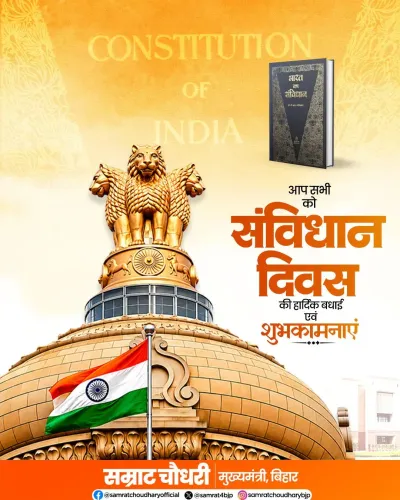
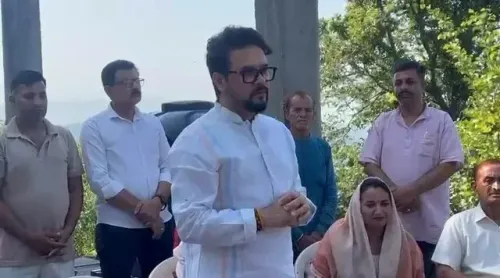
BJP MP Anurag Thakur greets nation on Constitution Day
Synopsis
BJP MP Anurag Thakur greeted Indians on Constitution Day 2026, calling the Constitution a living, inclusive document. He thanked B.R. Ambedkar and the framers and asked citizens to protect democratic values while fulfilling duties toward Prime Minister Narendra Modi's Viksit Bharat goal.
Key Takeaways
BJP MP Anurag Thakur issued Constitution Day greetings on 26 November 2026 .
He described the Constitution as a living, all-inclusive document that grants justice and recalls both rights and duties.
He thanked Baba Saheb Bhimrao Ambedkar and all constitution-makers of the Constituent Assembly.
He asked citizens to protect democratic values and contribute to Viksit Bharat by fulfilling constitutional duties.
The Constitution was adopted on 26 November 1949 and came into force on 26 January 1950 ; 26 November has been Constitution Day since 2015 .
On 26 November 2026, BJP MP Anurag Thakur marked Constitution Day by calling India's charter a living document of democracy — all-inclusive, a giver of justice, and a reminder of rights as well as duties. The Lok Sabha member from Hamirpur in Himachal Pradesh, a former Union minister for Information and Broadcasting and Youth Affairs and Sports, greeted the country and placed a civic pledge at the centre of the day's message.
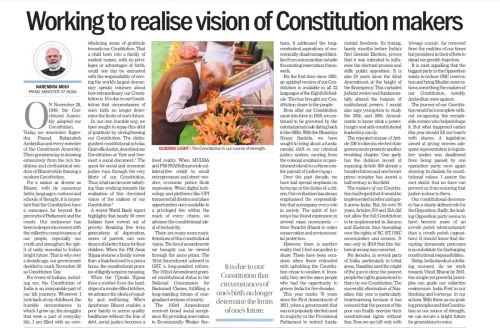
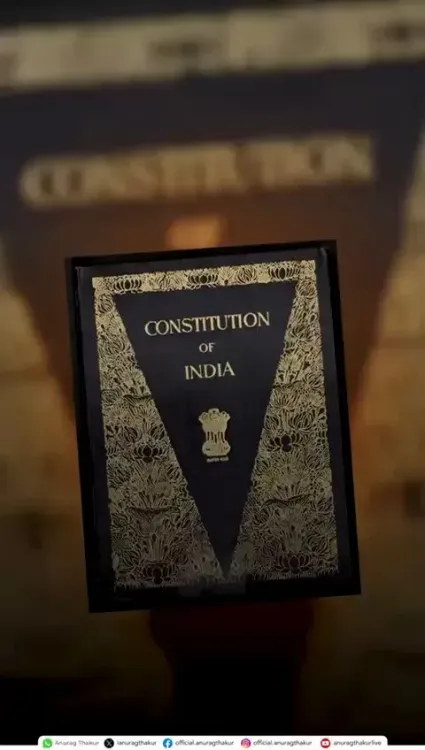
Writing in Hindi, Thakur opened with हम भारत के लोग (We the people of India) and offered heartfelt greetings to all countrymen. He said the Constitution is a living document of Indian democracy, inclusive and justice-giving, and that it makes everyone aware of their rights and duties. On this day, he added, Indians express gratitude to Baba Saheb Bhimrao Ambedkar and all the constitution-makers. He then asked citizens to take a pledge to protect democratic values and, while discharging constitutional obligations, contribute as true citizens to fulfilling Prime Minister Narendra Modi's resolve of a developed India. He ended with जय हिन्द (Jai Hind).
Why 26 November is Constitution Day
The Constituent Assembly adopted the Constitution of India on 26 November 1949. The document came into force on 26 January 1950, which India observes as Republic Day. In 2015, the Government of India formally declared 26 November as Constitution Day, to spotlight constitutional values and public awareness.
B.R. Ambedkar, chairman of the Drafting Committee, is remembered as the principal architect of the Constitution. The Assembly itself sat from 1946 to 1949 to draft and adopt the text that still frames Indian public life.
A pledge tied to Viksit Bharat
Thakur's message followed a familiar annual pattern: tribute to Ambedkar and the framers, affirmation of democratic values, and a link to contemporary national goals. He explicitly connected citizen duties to Viksit Bharat, the government's vision of a developed nation by 2047.
The appeal was not only commemorative. It asked Indians to treat constitutional obligations as the method for that development target — rights named, duties invoked, and the founding document held up as a working guide rather than a museum piece.
Memory, then a mandate: honour the framers, keep the values, and treat the Constitution as the citizen's brief for 2047.
Point of View
Since 2015, become a ritual that fuses homage to Ambedkar with the government's development vocabulary. Thakur's post sits in that lineage: the 1949 adoption is recalled, the day's official status is taken as given, and Viksit Bharat supplies the contemporary horizon. The political move is to recast constitutional duty as participation in a 2047 project, not only as a check on power. Watch whether Parliament's annual sitting and any literacy campaigns echo the same rights-and-duties pairing.
NationPress
26 Nov 2026
Frequently Asked Questions
When is Constitution Day celebrated in India?
Constitution Day is observed every year on 26 November. It marks the date in 1949 when the Constituent Assembly adopted the Constitution of India.
Why is 26 November observed as Constitution Day?
The Constituent Assembly adopted the Constitution on 26 November 1949, and in 2015 the Government of India formally designated the date as Constitution Day. The aim is to highlight constitutional values and public awareness; the Constitution itself came into force on 26 January 1950.
Who was the chairman of the Constitution Drafting Committee?
B.R. Ambedkar, widely called Baba Saheb Bhimrao Ambedkar, chaired the Drafting Committee of the Constituent Assembly. He is regarded as the principal architect of the Indian Constitution.
What did Anurag Thakur say on Constitution Day 2026?
BJP MP Anurag Thakur greeted Indians, called the Constitution a living and inclusive document, thanked Ambedkar and the framers, and asked citizens to protect democratic values while fulfilling duties toward Viksit Bharat.
What is Viksit Bharat in Anurag Thakur's Constitution Day message?
Viksit Bharat is Prime Minister Narendra Modi's vision of a developed India by 2047. Thakur tied that goal to citizens discharging their constitutional duties.