Anurag Thakur Marks Partition Horrors Day, Vows Viksit Bharat 2047
Synopsis
On Vibhajan Vibhishika Smriti Divas, BJP MP Anurag Thakur honoured the millions displaced and killed in the 1947 Partition, saluted their resilience, and pledged to resist separatism while working toward a developed India by 2047.
Key Takeaways
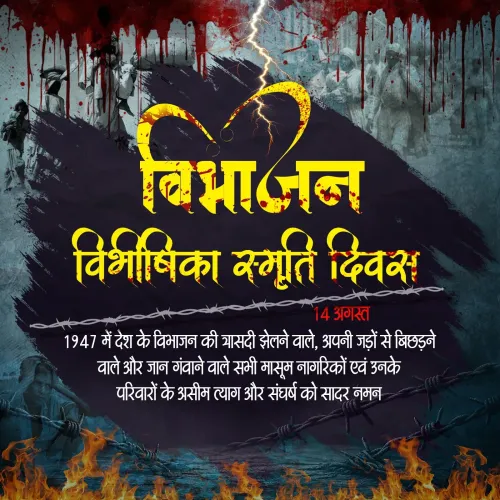
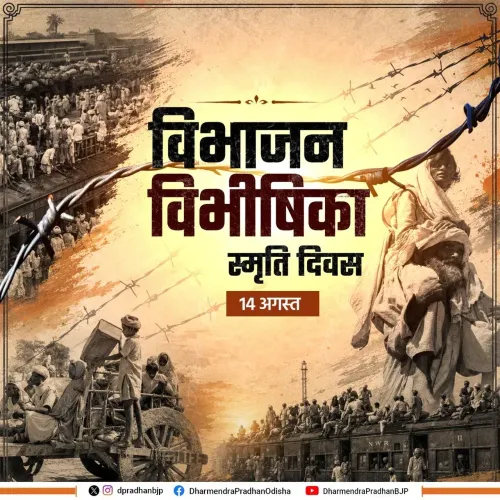
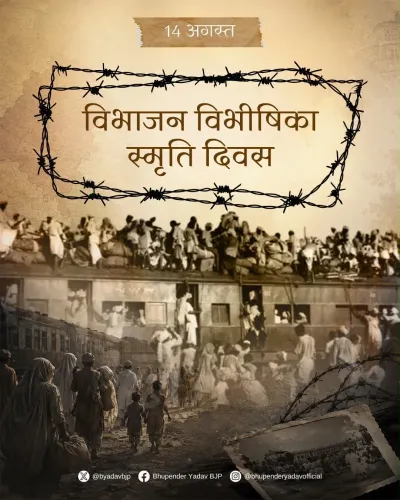
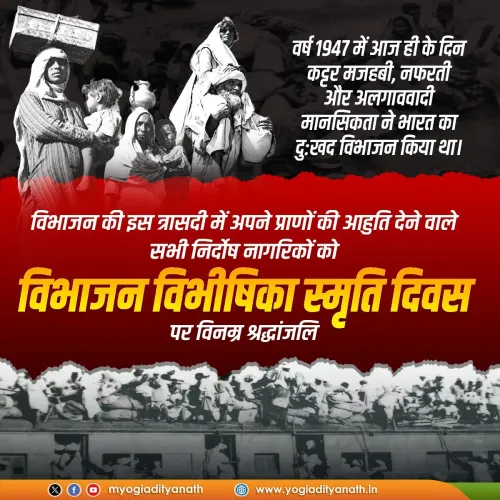
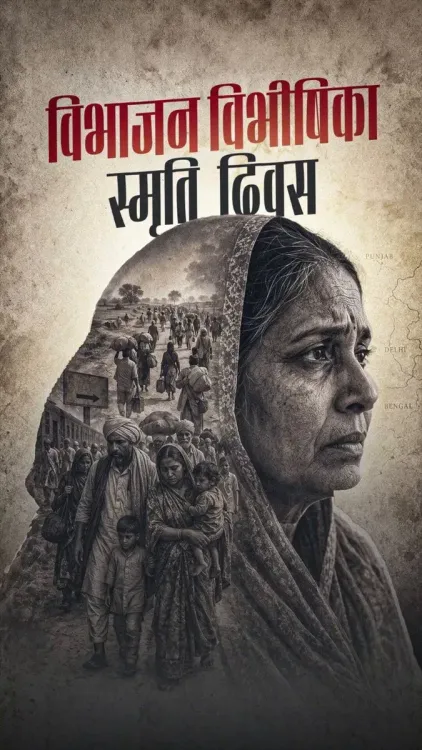
14 August is observed as Vibhajan Vibhishika Smriti Divas (Partition Horrors Remembrance Day), established by the Union Government in August 2021 .
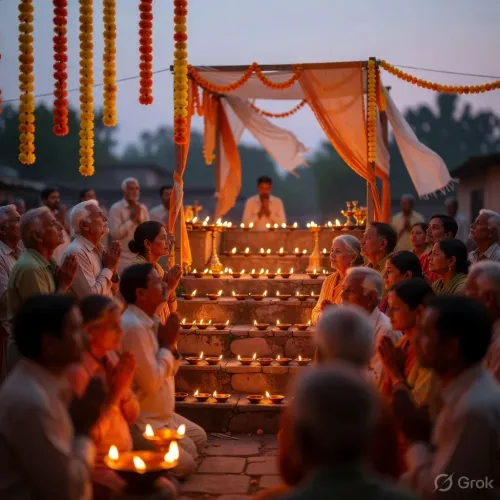
BJP MP Anurag Thakur paid tribute to Partition-affected families who lost lives, homes, and relatives in the 1947 division of British India .
Thakur saluted the resilience of survivors who rebuilt their lives from nothing and contributed to India's progress.
He called for a national resolve against all divisive and separatist forces.
The message linked Partition remembrance to the government's Viksit Bharat 2047 vision of achieving developed-nation status by India's independence centenary.
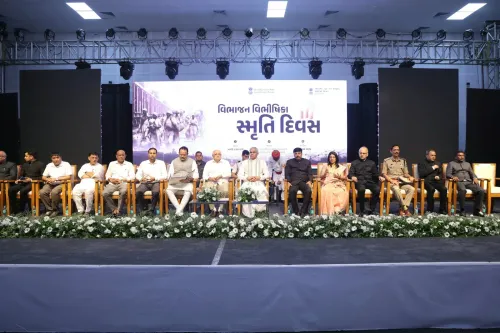
Every year on 14 August, India pauses to remember one of history's most violent ruptures — and this year, BJP MP Anurag Thakur used Vibhajan Vibhishika Smriti Divas to honour the millions displaced by the 1947 Partition of India and to renew a pledge that such a catastrophe must never recur.
In his post, Thakur paid tribute to the families who were uprooted, lost loved ones, and were forced to rebuild their lives from nothing — 'shunya se apni zindagi shuru karne par majboor hue' (compelled to restart life from zero). He saluted their resilience and their contribution to the nation's progress despite unimaginable loss.
A Day Carved From Grief: What Vibhajan Vibhishika Smriti Divas Marks
The observance was established by the Union Government in August 2021, designating 14 August — the eve of Independence Day — as Partition Horrors Remembrance Day. The date is deliberate: it sits at the precise hinge between the trauma of division and the celebration of freedom, asking India to hold both truths at once.
The 1947 Partition triggered one of the largest forced migrations in human history. Millions were displaced across the newly drawn borders of India and Pakistan. Entire families were separated, communities erased, and an estimated one to two million lives lost to sectarian violence — numbers that remain almost impossible to fully grasp.
From Partition's Shadow to 2047's Promise
Thakur's message did not stop at remembrance. He called on citizens to resolve never to allow divisive or separatist forces to take root, and tied that commitment directly to the government's flagship vision: building a Viksit Bharat — a developed India — by 2047, the centenary of independence.
The Viksit Bharat 2047 framework is an official Government of India goal that links economic development targets to the symbolic weight of the independence centenary. By invoking it on Partition Remembrance Day, Thakur drew a direct line: the suffering of 1947 becomes the moral fuel for the ambitions of 2047.
He closed with 'Vande Mataram, Jai Hind' — a dual salute that has anchored Indian political expression since the freedom struggle itself.
As India marks its independence anniversary, the twin gestures of grief and aspiration on display today reflect a deliberate political memory: that the cost of division must never be forgotten — and that the answer to it is a unified, prosperous nation by the time the centenary arrives.
Point of View
Using 14 August as a counter-narrative to Independence Day's celebratory register. By yoking grief over 1947 to the Viksit Bharat 2047 goal, the messaging frames national unity not as a given but as an ongoing, hard-won commitment. The invocation of anti-separatism — 'never let divisive forces flourish' — carries contemporary political weight, signalling continuity between historical trauma and present-day security discourse. For the BJP, Partition Remembrance Day has become a durable instrument: simultaneously a solemn tribute and a forward-looking nationalist pledge.
NationPress
28 Sept 2026
Frequently Asked Questions
What is Vibhajan Vibhishika Smriti Divas?
Vibhajan Vibhishika Smriti Divas, or Partition Horrors Remembrance Day, is observed on 14 August every year to honour the victims of the 1947 Partition of India . The Union Government established the observance in August 2021 .
Why is 14 August chosen for Partition Remembrance Day?
14 August falls on the eve of India's Independence Day, placing the memory of Partition's violence and displacement directly alongside the celebration of freedom — a deliberate pairing of grief and gratitude.
What is Viksit Bharat 2047?
Viksit Bharat 2047 is an official Government of India vision to achieve developed-nation status by 2047 , the centenary of India's independence. It encompasses economic, social, and infrastructure development goals.
What did Anurag Thakur say on Partition Remembrance Day 2026?
BJP MP Anurag Thakur honoured families affected by the 1947 Partition, saluted their resilience in rebuilding from nothing, pledged to resist separatist forces, and committed to building a Viksit Bharat by 2047 .
How many people were affected by the 1947 Partition of India?
The 1947 Partition triggered one of the largest forced migrations in history, displacing millions across the borders of India and Pakistan, with an estimated one to two million lives lost to violence and displacement.