CM Naidu: AP Women Claim 61% of MBBS State-Quota Seats
Synopsis
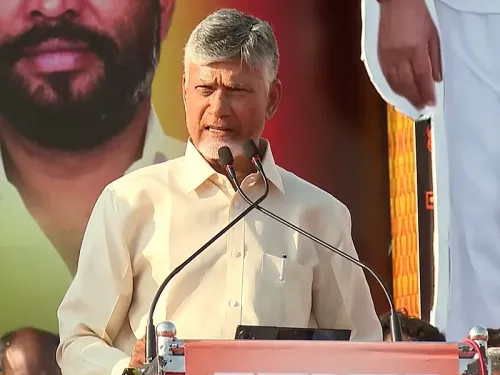
Andhra Pradesh CM N. Chandrababu Naidu highlighted that women captured 61.34% of MBBS state-quota seats in the state, far ahead of men at 38.66%, calling it a reflection of talent and growing aspirations among the state's young women.
Key Takeaways
Women secured 61.34% of MBBS state-quota seats in Andhra Pradesh, against 38.66% for men.
Chandrababu Naidu publicly congratulated the female students and reaffirmed the state's commitment to equal educational opportunities.
The result fits a broader national pattern of female students outperforming male counterparts in NEET-based medical admissions across several Indian states.
Andhra Pradesh expanded government medical college capacity significantly after the 2014 bifurcation to address regional healthcare gaps.
The incoming female-majority MBBS cohort is expected to reshape the state's public healthcare workforce by the mid- 2030s .
Women medical aspirants in Andhra Pradesh have decisively outpaced their male peers in the state-quota MBBS admissions cycle, with young women securing a commanding 61.34% of available seats against men's 38.66% — a margin that has drawn a proud public acknowledgement from Andhra Pradesh Chief Minister N. Chandrababu Naidu on Thursday, 19 November 2026.
A 61-to-39 split that tells a bigger story
The numbers speak with rare clarity. For every two women stepping into a government medical college seat in Andhra Pradesh this cycle, fewer than one and a half men follow. CM Naidu framed the outcome not as a statistical quirk but as 'a reflection of talent, determination and growing aspirations' — language that ties individual merit to a structural shift in who now pursues professional medicine in the state.
India's NEET-driven admissions system has, over the past several years, quietly rewritten the gender ledger in medical education. Female candidates have crossed the 50% threshold for MBBS seats in multiple states, riding a wave of sustained academic outperformance at school level. Andhra Pradesh's reported figure of 61.34% sits at the sharper end of that national trend, signalling that the gap has widened, not merely held.
Andhra Pradesh's post-2014 medical education push
Andhra Pradesh embarked on an aggressive expansion of government medical colleges after the 2014 bifurcation created the new state and left it with a thinner healthcare infrastructure than its predecessor. New colleges and additional MBBS seats were added to close regional gaps — a larger pool that, by arithmetic alone, made the gender distribution more visible and more meaningful. More seats meant more daughters from smaller towns and rural districts entering the frame, and they arrived prepared.
CM Naidu, whose Telugu Desam Party (TDP) has repeatedly positioned women's education access as a core governance plank, used the moment to reaffirm commitment: 'We remain committed to empowering every daughter of Andhra Pradesh with equal opportunities to dream, achieve and lead.' The sentiment aligns with a longer arc of TDP-era policy that has sought to anchor female empowerment in measurable institutional outcomes rather than aspirational rhetoric alone.
What the classroom figure means for the clinic floor
Medical education pipelines take a decade to reshape a healthcare workforce. The women entering MBBS seats today in Andhra Pradesh will begin practising in the mid-2030s — a cohort that, if the trend holds, will make the state's public health system majority-female at the entry level. Research from across South Asia consistently links higher female physician density to improved maternal and child health outcomes, particularly in rural areas where women patients are more likely to seek care from women doctors.
The next signpost will be whether the state follows the admission milestone with downstream support — dedicated hostel infrastructure, rural posting incentives, and postgraduate seat expansion — that keeps women in the system through specialisation, not just at the door of it.
Point of View
Institution-level validation of the incremental investments in girls' secondary education and NEET coaching access that multiple state governments, including TDP-led ones, have pursued over the past decade. For CM Naidu, the figure offers a rare policy dividend that is both quantifiable and politically resonant — women's educational achievement is a credibility signal in a state where welfare politics and development optics are fiercely contested. The deeper test, however, is downstream retention: whether the state's postgraduate infrastructure and rural-posting policies are robust enough to prevent this admission-stage breakthrough from stalling at the specialisation stage, as it has in several comparable states.
NationPress
19 Nov 2026
Frequently Asked Questions
What percentage of MBBS state-quota seats in Andhra Pradesh did women secure in 2026?
Women secured 61.34% of MBBS seats under the Andhra Pradesh state quota, while male students accounted for 38.66% , according to a post by Chief Minister N. Chandrababu Naidu on 19 November 2026.
Why are more women than men getting MBBS seats in Andhra Pradesh?
Female candidates have consistently outperformed male counterparts in NEET across India, driven by strong academic preparation at school level. Andhra Pradesh's outcome reflects this national trend, amplified by the state's post-2014 expansion of government medical college seats.
What has Andhra Pradesh done to expand medical education since 2014?
Following the 2014 bifurcation that created the new state of Andhra Pradesh, the government invested in adding government medical colleges and increasing MBBS intake to close regional healthcare infrastructure gaps.
Is female majority in MBBS admissions a nationwide trend in India?
Yes. Female students have crossed the 50% threshold for MBBS seats in several Indian states under NEET-based admissions, with Andhra Pradesh's 61.34% figure sitting at the higher end of that national pattern.
What did CM Chandrababu Naidu say about women in medical education?
CM N. Chandrababu Naidu called the result 'a reflection of talent, determination and growing aspirations' and reaffirmed the state's commitment to empowering every daughter of Andhra Pradesh with equal opportunities to dream, achieve and lead.