Indian Army Successfully Evacuates 1,321 Tourists and 84 Locals from North Sikkim After Landslides
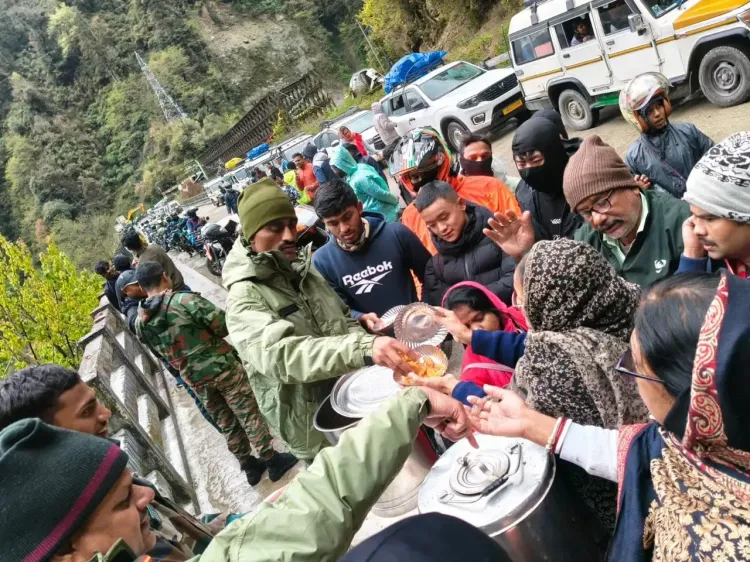
Synopsis
In a remarkable display of coordination and resilience, the Indian Army has evacuated 1,321 tourists and 84 locals from North Sikkim after landslides isolated the region. This operation, termed 'Operation Him Setu,' highlights the Army's commitment to ensuring safety amidst challenging conditions.
Key Takeaways
The Indian Army evacuated 1,321 tourists and 84 locals.
Operation Him Setu was completed within 48 hours.
Footbridge construction facilitated safe evacuation.
Medical teams provided essential care during the operation.
Coordination with civil administration was crucial for success.
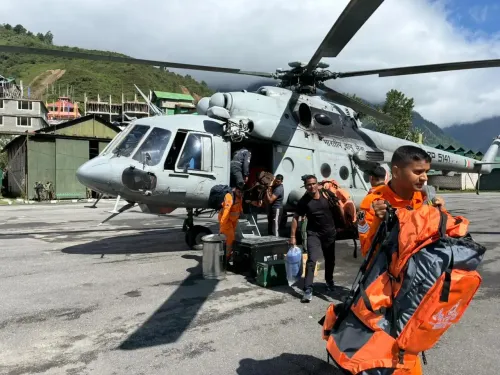
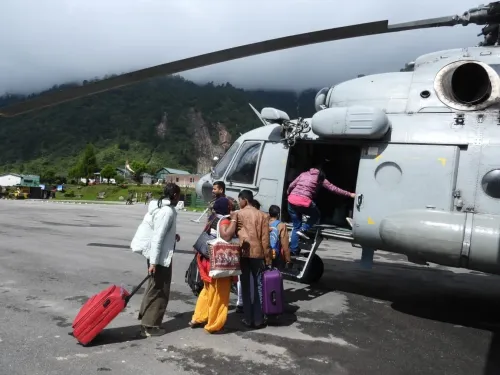
Gangtok, April 9 (NationPress) The Indian Army has effectively rescued all 1,321 stranded tourists and 84 local residents from North Sikkim on Thursday following landslides that disrupted road access in the area, as reported by officials.
Defence Spokesman Lieutenant Colonel Mahendra Rawat stated that 'Operation Him Setu', initiated earlier to aid stranded tourists in the Lachen region of North Sikkim, has been accomplished successfully.
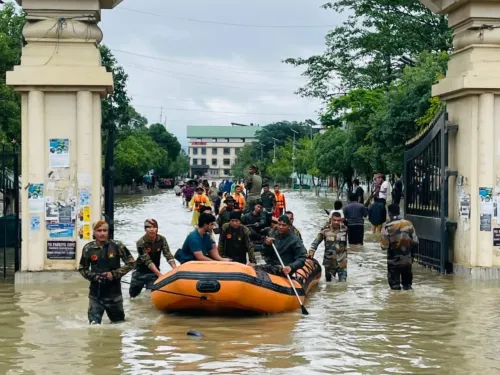
He emphasized that the evacuation of all stranded individuals occurred in a smooth, coordinated, and incident-free manner within 48 hours, despite challenging weather conditions.
"In total, 1,321 tourists and 84 local residents were safely evacuated during 'Operation Him Setu,'" said the official.
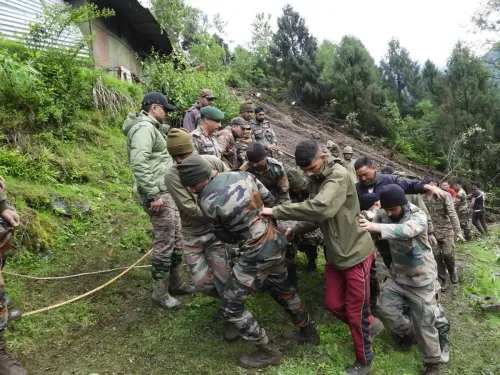
Lieutenant Colonel Rawat noted that connectivity in the impacted area was reinstated through the creation of a footbridge, which ensured a safe and continuous evacuation across damaged sections following the landslide on the Lachen-Chungthang road.
Reception centers were established at strategic locations to provide food, shelter, and medical assistance, while medical teams remained on standby to support those in need, he added.
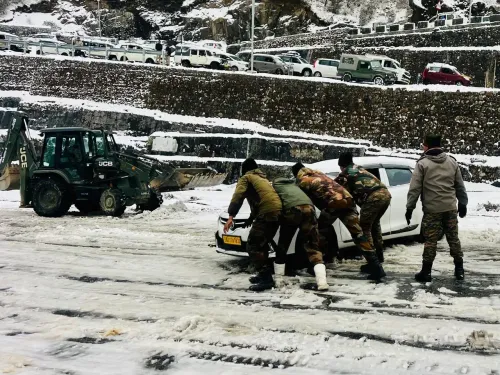
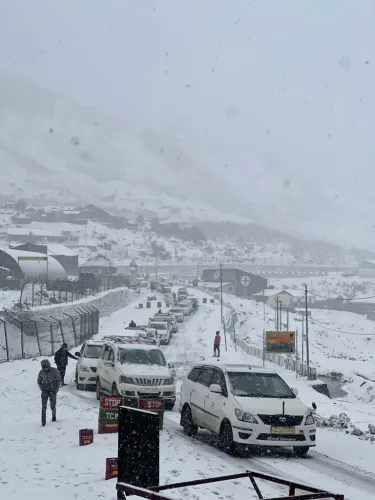
Army vehicles also aided in towing civilian vehicles through the challenging terrain.
Despite severe weather and heavy snowfall, troops worked diligently to open vital mountain passes and activate alternative routes to facilitate the evacuation.
"The operation was carried out in close collaboration with the civil administration and the Border Roads Organisation (BRO), which concurrently undertook road clearance, snow removal, and connectivity restoration under extremely adverse conditions," the Defence Spokesman remarked.
The evacuation mission was led by the Trishakti Corps under the Eastern Command of the Indian Army, with troops ensuring a constant ground presence to guarantee the safe and orderly movement of evacuees throughout the operation.
Another Army official stated, "Troops ensured the restoration of connectivity, including constructing temporary bridges and safe crossing points, allowing uninterrupted evacuation despite the challenging environment."
The situation remains under close observation.
A Sikkim government official also confirmed that multiple landslides have interrupted road connectivity between Lachen and Chungthang, with the affected area situated near the India-China border.
Frequently Asked Questions
What triggered the evacuation in North Sikkim?
The evacuation was triggered by multiple landslides that disrupted road connectivity in the region.
How many individuals were evacuated?
A total of 1,321 tourists and 84 local residents were evacuated.
What was the name of the operation?
'Operation Him Setu' was the name of the evacuation operation conducted by the Indian Army.
How did the Indian Army assist during the evacuation?
The Army constructed a footbridge, provided medical assistance, and towed civilian vehicles across difficult terrain.
Which organization collaborated with the Indian Army during the evacuation?
The Border Roads Organisation (BRO) collaborated with the Indian Army for road clearance and restoration of connectivity.