72nd National Film Awards: Murmu honours films on unity, women's safety at Ekta Nagar
Synopsis
For the first time in its history, the National Film Awards left Delhi — and President Murmu used the Ekta Nagar stage to spotlight films that went beyond entertainment. From the nationalism of Article 370 to the Paralympic grit of Chandu Champion and the women's safety alarm of Bhakshak, the 72nd edition read like a mirror held up to India's most urgent conversations.
Key Takeaways
President Droupadi Murmu presented the 72nd National Film Awards at Ekta Nagar, Gujarat on 22 September — the first ceremony held outside Delhi.
Article 370 won Best Feature Film ; Yami Gautam took home Best Actress for the same film.
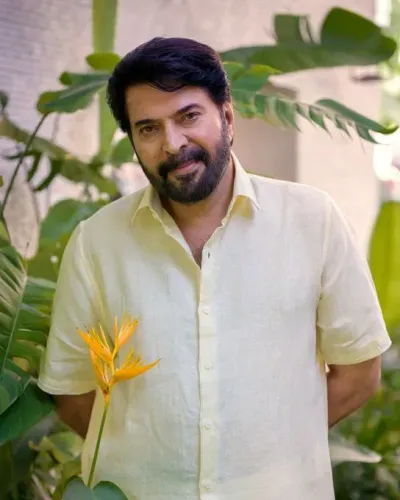
Best Actor was shared by Mammootty (Bramayugam) and Kartik Aaryan (Chandu Champion).
Randeep Hooda won Best Debut Film of a Director for Swatantrya Veer Savarkar .
Santhali film Angen , directed by Ravi Raj Murmu , was recognised for promoting cultural diversity and social inclusion.
The awards cover cinematic achievements for films certified during 2024 .
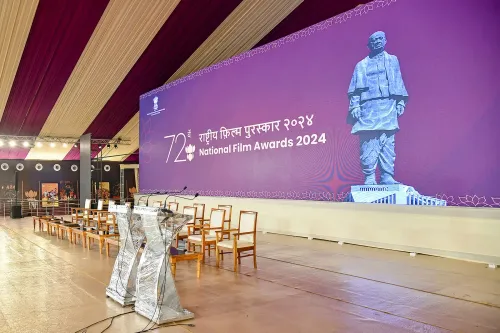
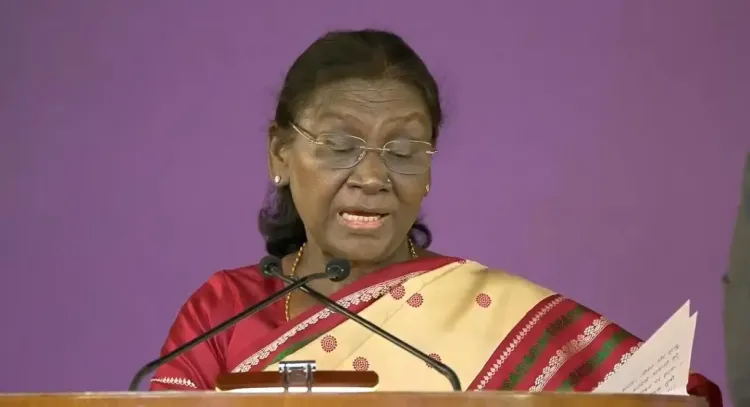
President Droupadi Murmu on Tuesday, 22 September presided over the 72nd National Film Awards ceremony at Ekta Nagar, Gujarat, spotlighting films that tackled national unity, women's safety, and cultural diversity. The event — held against the backdrop of the Statue of Unity — marked the first time the National Film Awards were presented outside New Delhi.
Key Wins and Presidential Citations
Article 370 claimed the Best Feature Film award, with President Murmu describing it as a film that illuminates 'a special chapter of nationalism' and presenting a 'vivid account of the serious challenges related to the unity of the country and their solutions.' Lead actress Yami Gautam received the Best Actress award for her performance in the film.
The Best Actor award was shared between Mammootty, recognised for his role in Bramayugam, and Kartik Aaryan, honoured for Chandu Champion. Murmu noted that she had also conferred the Padma Bhushan on Mammootty earlier this year, underscoring his stature in Indian cinema.
Chandu Champion and the Murlikant Petkar Story
Speaking about Chandu Champion, the President drew attention to the real-life inspiration behind the film — Indian soldier and Paralympic athlete Murlikant Petkar. 'Petkar was injured during the 1965 India-Pakistan war but, despite serious challenges, went on to become India's first Paralympic gold medallist at the 1972 Games,' she said. Petkar was awarded the Padma Shri in 2018. Murmu congratulated Aaryan for bringing the character to life.
Women's Safety, Savarkar and Cultural Inclusion
Bhakshak drew particular praise for its focus on women's safety. Murmu remarked: 'The film drew society's attention to the extremely serious issue of women's safety. Society should remain grateful to those who fight for the safety of daughters,' commending the team for its sensitive treatment of the subject.
Randeep Hooda received the award for Best Debut Film of a Director for Swatantrya Veer Savarkar, which Murmu described as an artistic tribute to Savarkar's life story.
The Santhali film Angen, directed by Ravi Raj Murmu, was also highlighted by the President. 'Its national recognition not only encouraged an outstanding film but also promoted cultural diversity and social inclusion,' she said, reflecting the awards' broader mandate to represent India's linguistic and regional breadth.
Children's Cinema and the Broader Sweep
Murmu also underscored the importance of children's cinema, calling recognition of young talent an 'artistic investment' in the country's future. She personally congratulated child artists Atish Shetty, Arunadev Pathula, Ridhyan Banerjee, Tapomay Dev, and Geetashree Chakraborty.
Addressing the gathering, the President praised the jury's selections for engaging with issues of national and social consequence. 'Films made in different languages and regions reflected India's image. Indian cinema captures the dreams, traditions, struggles and future possibilities of its people,' she said.
The 72nd National Film Awards recognise cinematic achievements across feature films, non-feature films, and writing on cinema for works certified during 2024. With its historic shift to Ekta Nagar, the ceremony itself sent a symbolic message about decentralisation and the national reach of Indian filmmaking.
Point of View
Historical memory, and social accountability, reflecting both jury priorities and a broader cultural moment. The shared Best Actor win is notable: Mammootty's art-house Malayalam entry and Aaryan's mainstream Bollywood biopic sitting at the same podium signals that the jury is trying to bridge India's parallel cinema ecosystems. Whether that balance holds in future editions, or whether the thematic emphasis on nationalism crowds out more experimental voices, is worth watching.
NationPress
22 Sept 2026
Frequently Asked Questions
Which film won the Best Feature Film award at the 72nd National Film Awards?
Article 370 won the Best Feature Film award at the 72nd National Film Awards. President Murmu described it as a film presenting 'a vivid account of the serious challenges related to the unity of the country and their solutions.'
Who won Best Actor and Best Actress at the 72nd National Film Awards?
The Best Actor award was shared by Mammootty for Bramayugam and Kartik Aaryan for Chandu Champion. Yami Gautam won Best Actress for her performance in Article 370.
Where were the 72nd National Film Awards held, and why is that significant?
The ceremony was held at Ekta Nagar in Gujarat, against the backdrop of the Statue of Unity. It was the first time the National Film Awards were presented outside New Delhi.
Who is Murlikant Petkar, and why was he mentioned at the awards?
Murlikant Petkar is an Indian soldier and Paralympic athlete who inspired the film Chandu Champion. He was injured in the 1965 India-Pakistan war and went on to become India's first Paralympic gold medallist at the 1972 Games; he received the Padma Shri in 2018.
What is the Santhali film Angen, and why did President Murmu highlight it?
Angen is a Santhali-language film directed by Ravi Raj Murmu that received national recognition at the 72nd National Film Awards. President Murmu said its recognition 'promoted cultural diversity and social inclusion,' emphasising the awards' role in celebrating India's linguistic diversity.