UNGA President Baerbock lauds India's UN role, cites 300,000 troop contributions
Synopsis
UNGA President Annalena Baerbock travelled to New Delhi to publicly anchor India as a cornerstone of multilateralism — citing over 300,000 troops contributed to UN missions and 184 peacekeepers killed in service. Her visit, coming amid direct pressure on the UN Charter, is a clear signal that the UN is courting India's diplomatic weight at a critical moment for global governance.
Key Takeaways
UNGA President Annalena Baerbock visited New Delhi on 29 April 2025 , praising India's role across all three pillars of the UN Charter.
India has contributed more than 300,000 troops to over 53 UN peacekeeping missions since 1948 ; more than 184 Indian peacekeepers have died in service.
Jaishankar to discuss strengthening multilateral cooperation amid growing geopolitical tensions.
She highlighted India's leadership in South-South cooperation and contributions to the Indian-UN Development Partnership Fund supporting least developed nations.
The UNGA President called for a cross-regional alliance to defend the UN Charter, describing it as "our common life insurance." Baerbock flagged that the position of UN Secretary-General has never been held by a woman in the organisation's 80-year history .
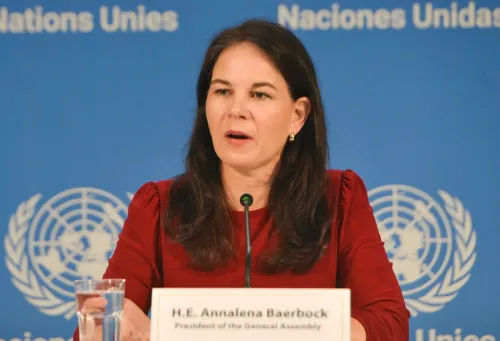
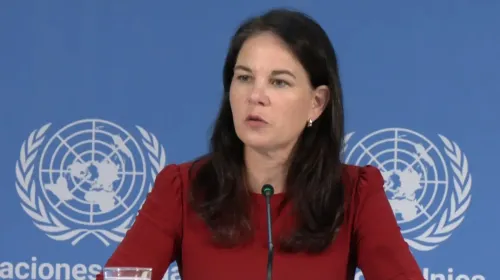
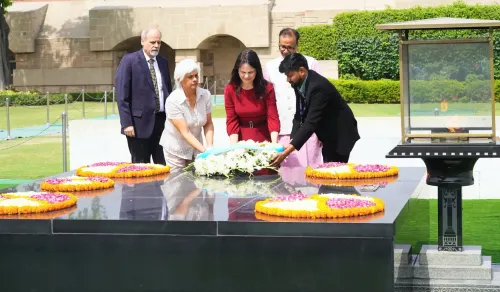
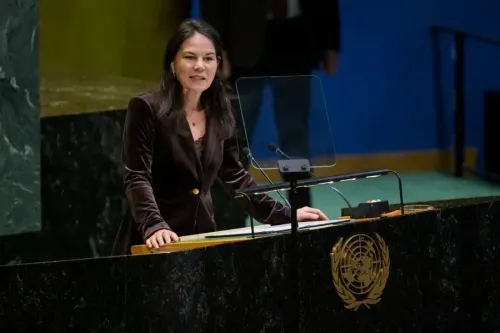
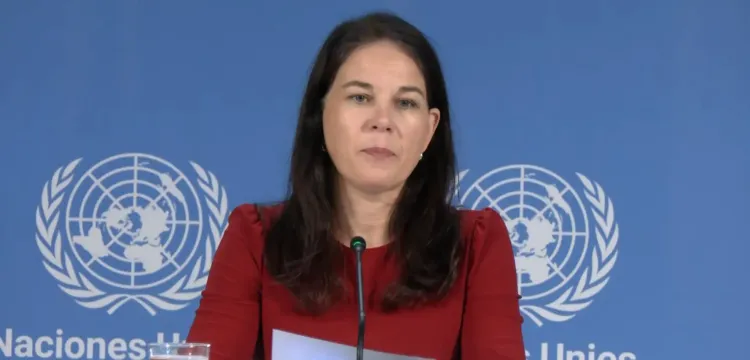
United Nations General Assembly (UNGA) President Annalena Baerbock on Tuesday, 29 April 2025, praised India's foundational and ongoing contributions to the United Nations during a press conference in New Delhi, calling India's partnership for multilateralism "central in these times" of growing geopolitical fragmentation.
Key Highlights from Baerbock's New Delhi Visit
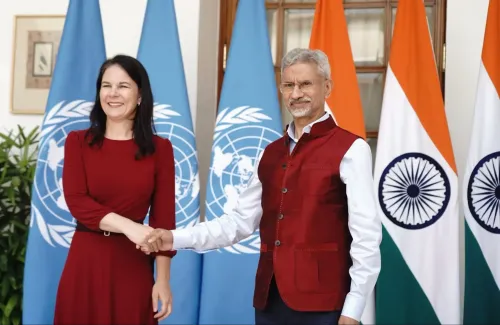
Baerbock, who met External Affairs Minister (EAM) S. Jaishankar in Delhi on Tuesday, said the discussions centred on how the UN and India can strengthen multilateral cooperation on global issues amid current global headwinds. She thanked the Indian government for the invitation and its warm hospitality.
The UNGA President underscored India's historic commitment to UN peacekeeping, noting that the country has contributed more than 300,000 troops to over 53 UN missions since 1948. "More than 184 Indian peacekeepers have made the ultimate sacrifice in service of global peace," she said.
India's Role Across All Three UN Pillars
Baerbock described India as one of the founding members of the United Nations and credited it with playing "a critical role throughout the organisation's 80-year history" across peace and security, development, and human rights — the three pillars of the UN Charter.
She hailed India's contribution to the Indian-UN Development Partnership Fund, which supports least developed countries, landlocked developing countries, and small island developing states in their pursuit of the Sustainable Development Goals (SDGs). India's leadership in South-South cooperation was also specifically acknowledged.
"As one of the founding members of the United Nations, India has played a critical role throughout the organisation's 80-year history and across all three pillars of the UN Charter," Baerbock stated.
The Urgency of Defending the UN Charter
Baerbock painted a stark picture of the current multilateral order, citing "growing geopolitical tensions, increasing fragmentation and pressure on the three pillars of the United Nations" and even "direct attacks on the UN Charter." She argued that no country, regardless of size or strength, can address today's complex global challenges alone.
"From climate change and global health pandemics like Covid to the global economic impact of wars as seen with the Russian invasion of Ukraine, closing of the Strait of Hormuz in one part of the world affects everyone everywhere," she said. "Complying with international law and the delivery on the Sustainable Development Goals is not optional, but in the interest of all of us."
She described the UN Charter as "our common life insurance" and called for a cross-regional alliance to support multilateralism, stating that India — as "one of the world's biggest democracies" — is central to that effort.
UN Secretary-General Selection and Women's Rights
Baerbock also drew attention to the ongoing selection process for the next UN Secretary-General, a position that has never been held by a woman in the organisation's 80-year history. She invoked the legacy of Dr. Hansa Mehta, the Indian leader who ensured the Universal Declaration of Human Rights (1948) reads "all human beings" rather than "all men."
"The selection of the next Secretary-General is a statement of intent that will shape the direction of the world's unique multilateral organisation," Baerbock said, emphasising that the UN must demonstrate it "truly represents the more than 8 billion people we serve around the world."
UN Reform and India's Development Role
The UNGA President also met with UN resident coordinators and UN country teams of India and Bhutan to discuss how the UN80 reform process can strengthen on-the-ground delivery. She stressed that the UN must become "more efficient, more agile, and avoid duplication" to meet the challenges of the 21st century.
"Whether we truly serve all the people will be determined not only in New York or Geneva, but primarily whether we are improving the lives of people in communities around the world, especially also here in India where a sixth of the world population lives," she added. With the UN80 reform process now underway, India's continued engagement is expected to be a key variable in shaping the organisation's next chapter.
Point of View
Its growing clout in the Global South, and its historic peacekeeping record make it an indispensable partner for any cross-regional coalition defending the UN Charter. Notably, Baerbock's pointed remarks on the Secretary-General selection — and the absence of a woman in that role — carry their own subtext in a UN80 reform year. Whether India translates this diplomatic goodwill into concrete reform positions at the General Assembly remains the real question mainstream coverage is not asking.
NationPress
19 Sept 2026
Frequently Asked Questions
Why did UNGA President Annalena Baerbock visit India?
Baerbock visited New Delhi on 29 April 2025 to engage India as a key partner in defending multilateralism and the UN Charter amid growing geopolitical tensions. She met EAM S. Jaishankar to discuss strengthening UN-India cooperation on global issues.
What is India's contribution to UN peacekeeping?
India has contributed more than 300,000 troops to over 53 UN peacekeeping missions since 1948, making it one of the largest troop-contributing nations in UN history. More than 184 Indian peacekeepers have died in service of global peace.
What is the Indian-UN Development Partnership Fund?
It is a fund through which India supports least developed countries, landlocked developing countries, and small island developing states in achieving the Sustainable Development Goals (SDGs). Baerbock cited it as a key example of India's leadership in South-South cooperation.
What is the UN80 reform process Baerbock mentioned?
The UN80 reform is an ongoing initiative to make the United Nations more efficient, agile, and effective on the ground as it marks its 80th anniversary. Baerbock met UN country teams in India and Bhutan to discuss how the reform can strengthen development delivery.
What did Baerbock say about the next UN Secretary-General?
Baerbock noted that the position of UN Secretary-General has never been held by a woman in the organisation's 80-year history and called the selection process a 'statement of intent' for the UN's direction. She invoked Indian leader Dr. Hansa Mehta's role in shaping the Universal Declaration of Human Rights as a reminder of India's historic commitment to human rights.