Belur Math's flawless Kumari Puja crowd control contrasts Kolkata stampede
Synopsis
While a north Kolkata pandal stampede on 17 October killed 19 people, Belur Math on Monday managed thousands of Kumari Puja devotees without a single incident — exposing a glaring gap in crowd-management culture. The Math's flat, no-VIP-pass policy is now being cited as a model that community organisers conspicuously fail to adopt.
Key Takeaways
Belur Math managed thousands of devotees smoothly during Kumari Puja on Maha Ashtami, 19 October , drawing national praise.
A community pandal stampede in north Kolkata on 17 October killed 19 people amid serious crowd-management failures.
Devotees and observers credit Belur Math 's strict rejection of VIP culture and special passes for its orderly proceedings.
Belur Math is marking the 125th anniversary of its Durga Puja this year, drawing larger crowds than usual.
Kumari Puja was first held at Belur Math in 1901 , when nine girls were worshipped; it has been observed every Maha Ashtami since.
Authorities face heightened scrutiny over crowd-safety protocols at large religious gatherings for the rest of the festival season.
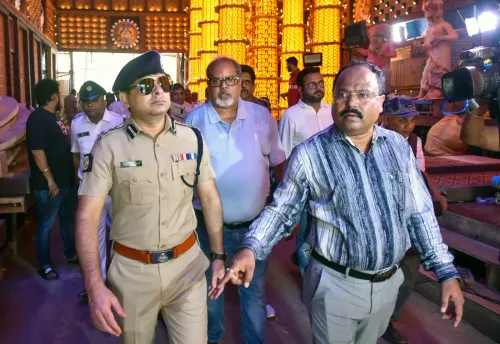
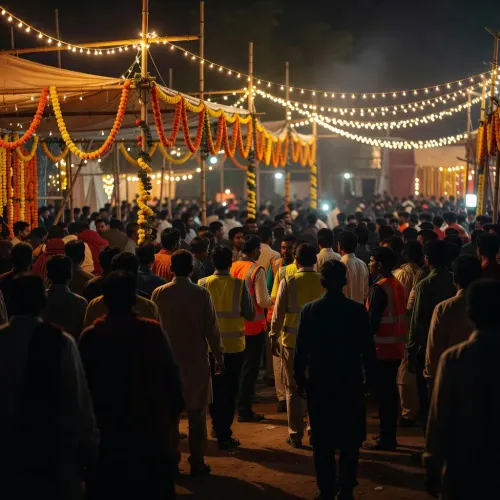
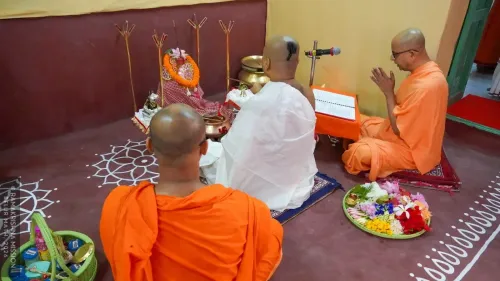
Thousands of devotees converged on Belur Math — the global headquarters of the Ramakrishna Math and Ramakrishna Mission in Kolkata — on Monday, 19 October 2025, to witness the sacred ritual of Kumari Puja on Maha Ashtami, with authorities drawing widespread praise for their seamless management of the massive gathering. The event drew sharp public comparisons with a community Durga Puja pandal stampede in north Kolkata on 17 October that claimed 19 lives amid serious lapses in crowd control.
Orderly Devotion at Belur Math
Despite the scale of the gathering — with devotees travelling from multiple states specifically to attend — proceedings at Belur Math unfolded without incident. A senior Belur Math official described the occasion as consistent with the institution's long-standing tradition of disciplined observance.
"For years, Kumari Puja has been celebrated with enthusiasm and devotion by followers of Shri Ramakrishna Paramhansa, his spiritual consort Maa Sarada, and Swami Vivekananda," the official said. "This year was no different. The enthusiasm and spiritual earnestness of the devotees and followers of Thakur Ramakrishna, Sarada Maa and Swamiji could never compromise the sanctity, spiritual essence and organised manner in which the occasion is celebrated."
This year carries added significance: Belur Math is marking the 125th anniversary of its Durga Puja, drawing larger-than-usual participation from devotees across the country.
Stark Contrast with the North Kolkata Stampede
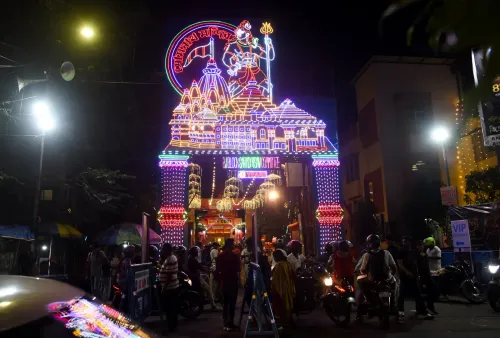
The orderly scenes at Belur Math stood in marked contrast to the tragedy at a community pandal in north Kolkata just two days earlier. The 17 October stampede, which killed 19 people, has since triggered urgent questions about crowd management protocols at large religious gatherings across the city. Observers noted the apparent paradox: an institution handling far larger crowds with measurably greater discipline than neighbourhood pandals operating at lower footfalls.
Reports indicate that lapses at the north Kolkata pandal included inadequate crowd channelling and insufficient barriers during peak pandal-hopping hours — conditions that Belur Math systematically avoids.
No VIP Culture, No Chaos
Devotees and observers attributed the difference primarily to Belur Math's categorical rejection of VIP culture and special-access passes — a practice that critics say contributes to bottlenecks and disorder at community pandals.
"One reason is that Belur Math authorities have never encouraged VIP culture. On the contrary, the system of VIP passes has existed among community Durga Pujas for years, making efficient crowd management more difficult during peak hours of pandal-hopping," a regular attendee who visits the Math annually for Kumari Puja said. "The ambience within Belur Math is so sacred that devotees do not mind standing for hours and instead of trying to use their influence to get additional benefits."
The devotee added: "It is a different issue altogether that even if anyone tried to use their influence, it would have no impact on the Belur Math management."
The Significance of Kumari Puja
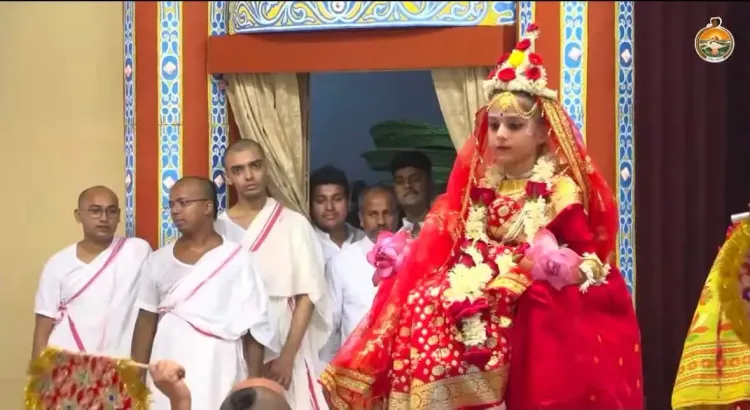
The ritual of Kumari Puja involves the worship of a young girl as a living manifestation of the Divine Mother, symbolising Matru-Shakti — feminine power and dignity. Swami Vivekananda introduced the practice at Belur Math, rooted in Shri Ramakrishna's spiritual conviction that the Divine Mother is present in every woman. Historical records indicate that nine girls were worshipped during the first Kumari Puja at the Math in 1901, and the ritual has since become an inseparable part of the institution's Maha Ashtami observances.
For followers, the ceremony is not merely devotional but also a reaffirmation of the Ramakrishna tradition's emphasis on women's dignity — a vision Swami Vivekananda articulated as central to any genuine social transformation.
Crowd Safety Under the Spotlight
The twin events — the tragedy at the pandal and the discipline at Belur Math — have placed crowd safety at large religious gatherings squarely in public and administrative focus. Civic authorities and puja organisers are expected to face heightened scrutiny over safety arrangements for the remainder of the festival season. Whether the Belur Math model — strict egalitarianism, no VIP access, clear spatial management — can inform broader policy for community events remains an open question that administrators will likely be pressed to answer.
Point of View
On a single day, without incident, year after year, precisely because it refuses the VIP-pass economy that has become endemic to community pandals. That economy is not merely inconvenient; the north Kolkata stampede suggests it is lethal. The real question is whether civic authorities will move beyond post-tragedy hand-wringing and mandate the egalitarian crowd protocols that Belur Math has demonstrated are entirely workable — or whether next year's festival season will see the same preventable chaos.
NationPress
19 Oct 2026
Frequently Asked Questions
What happened at the north Kolkata Durga Puja pandal on 17 October?
A stampede at a community Durga Puja pandal in north Kolkata on 17 October killed 19 people amid reported lapses in crowd management. The incident has triggered widespread scrutiny of safety arrangements at large religious gatherings across the city.
How did Belur Math manage its Kumari Puja crowds without incident?
Belur Math's crowd management is credited to a strict no-VIP-culture policy and the absence of special-access passes, which observers say prevents the bottlenecks that cause stampedes at community pandals. The institution's sacred ambience also reportedly encourages devotees to queue patiently without seeking preferential entry.
What is Kumari Puja and why is it significant at Belur Math?
Kumari Puja is a ritual in which a young girl is worshipped as a living manifestation of the Divine Mother, symbolising feminine power or Matru-Shakti. Swami Vivekananda introduced it at Belur Math in 1901, when nine girls were first worshipped, and it has been an integral part of the institution's Maha Ashtami celebrations ever since.
What is the significance of the 2025 Belur Math Durga Puja?
Belur Math is celebrating the 125th anniversary of its Durga Puja in 2025, adding to the fervour among devotees and drawing visitors from multiple states. The milestone has brought larger-than-usual crowds to the Math's Maha Ashtami and Kumari Puja events.
What broader lessons does the Belur Math model offer for crowd safety?
The Belur Math model — strict egalitarianism, no VIP passes, clear spatial management — is now being cited by observers as a template for community puja organisers. Civic authorities are expected to face pressure to mandate similar protocols following the fatal 17 October stampede.