Bihar cabinet expansion: Sons of 3 ex-CMs join Samrat Chaudhary's ministry
Synopsis
: Tiwari said after the ceremony. His remarks reflect a broader messaging effort by the BJP to frame the expanded cabinet as a Modi-endorsed administration rather than a purely state-level exercise.
Modi-Nitish Moment Captures National Attention
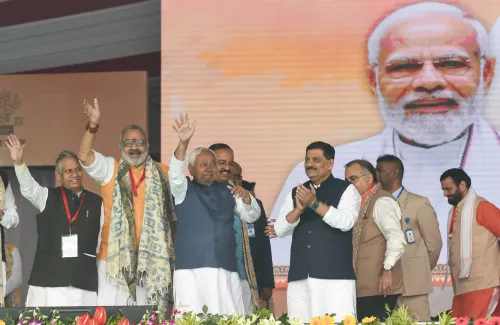
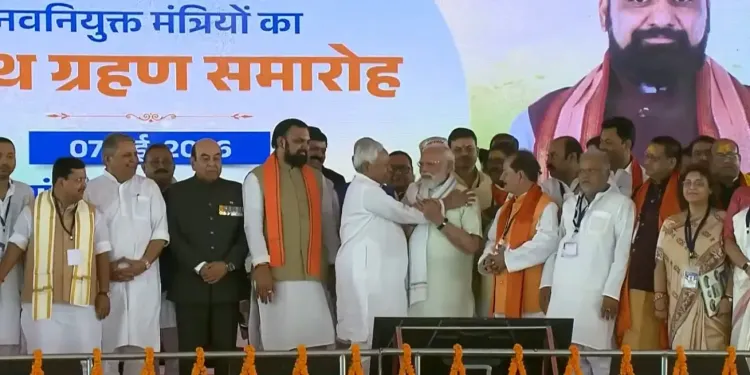
The ceremony produced a moment that quickly went viral: after the conclusion of the swearing-in, Prime Minister Modi called Nitish Kumar towards him on the dais. The two leaders exchanged a handshake, during which Nitish Kumar was seen playfully holding and gently shaking the Prime Minister's shoulder. Within minutes, visuals of the interaction began circulating widely on social media, becoming a talking point in political circles about the personal warmth — and strategic alignment — between the two leaders.
Significance Beyond a Routine Reshuffle
Political analysts argue that the Samrat cabinet expansion represents far more than a routine administrative exercise. The induction of political heirs, the presence of three senior Union ministers, and the viral Modi-Nitish exchange together signal that Bihar is being positioned as a critical NDA stronghold ahead of future electoral cycles. This comes amid ongoing speculation about the state's 2025 assembly election dynamics and the long-term question of who leads the JD(U) in the post-Nitish era. How the new ministers perform — and whether Nishant Kumar emerges as a credible political force — will be closely tracked in the months ahead.
Key Takeaways
Chief Minister Samrat Chaudhary expanded the Bihar cabinet on 7 May at Gandhi Maidan, Patna .
Sons of three former Chief Ministers — Nishant Kumar (son of Nitish Kumar), Nitish Mishra (son of Jagannath Mishra), and Santosh Kumar Suman (son of Jitan Ram Manjhi) — were inducted as ministers.
The cabinet includes 15 BJP , 13 JD(U) , 2 LJP (Ram Vilas) , and 1 each from HAM(S) and Rashtriya Lok Morcha.
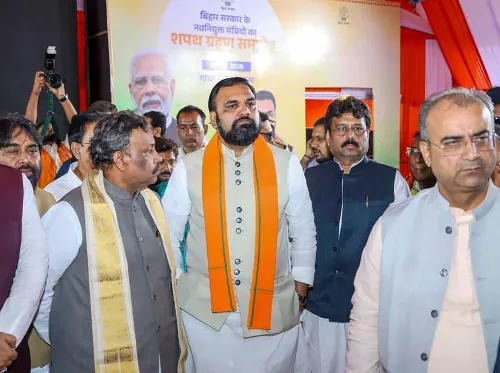
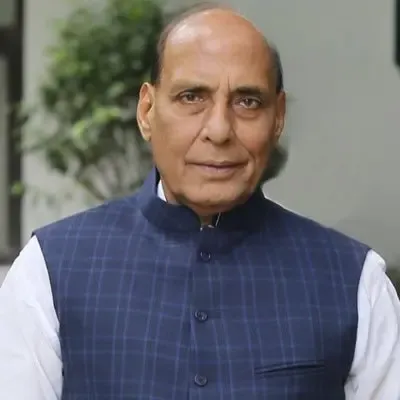
PM Modi , Home Minister Amit Shah , and Defence Minister Rajnath Singh attended the ceremony, elevating its national political profile.
A handshake between PM Modi and Nitish Kumar on the dais went viral on social media.
Political observers see Nishant Kumar's induction as a possible signal of a gradual leadership transition within the JD(U).
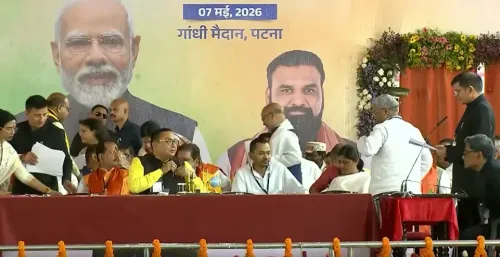
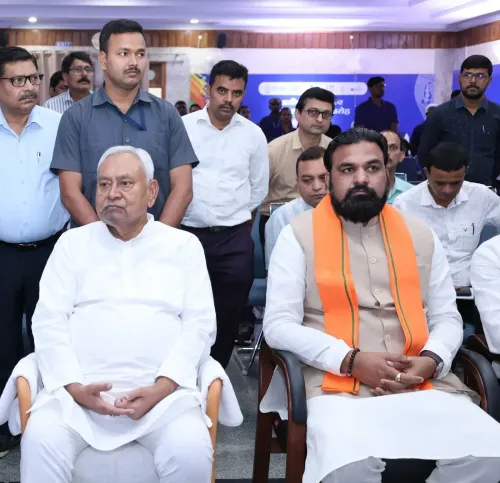
Patna, 7 May — Bihar's political landscape shifted on Wednesday as Chief Minister Samrat Chaudhary expanded his cabinet in a ceremony at Gandhi Maidan, Patna, inducting the sons of three former Chief Ministers and drawing Prime Minister Narendra Modi, Union Home Minister Amit Shah, and Defence Minister Rajnath Singh to the state capital — a rare show of national NDA muscle for a state-level reshuffle.
Sons of Former Chief Ministers Take Oath
The most closely watched inductions were those of Nishant Kumar, son of former Chief Minister Nitish Kumar; Nitish Mishra, son of former Chief Minister Jagannath Mishra; and Santosh Kumar Suman, son of former Chief Minister Jitan Ram Manjhi. The simultaneous entry of three political heirs into the same cabinet has few precedents in Bihar's post-liberalisation history.
Among the three, Nishant Kumar's induction drew the sharpest attention. Having remained largely absent from active politics for years, his decision to take the ministerial oath is being widely read as a deliberate step into Bihar's political mainstream. Political observers believe the move could carry long-term implications for the future leadership structure of the Janata Dal (United), with speculation intensifying that Nishant's emergence may signal the beginning of a gradual succession conversation within the party.
Cabinet Composition and NDA Balance
The expanded cabinet reflects a carefully calibrated distribution among NDA allies. Of the total ministerial berths, 15 went to the Bharatiya Janata Party (BJP), 13 to the Janata Dal (United), two to the Lok Janshakti Party (Ram Vilas), and one each to the Hindustani Awam Morcha (Secular) and the Rashtriya Lok Morcha. The allocation underscores the coalition arithmetic that governs Bihar politics, where caste, regional identity, and alliance loyalty are carefully weighed in every cabinet formation.
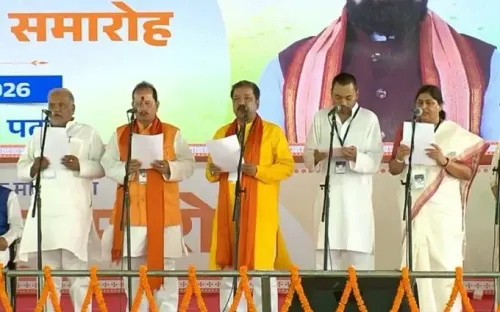
In the opening phase of the swearing-in, leaders including Shravan Kumar, Vijay Kumar Sinha, Leshi Singh, Nishant Kumar, and Dilip Jaiswal took oath as ministers.
What the New Ministers Said
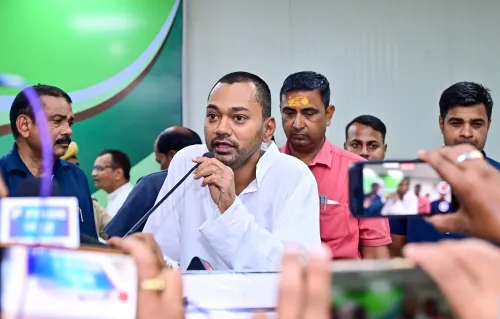
BJP leader Mithilesh Tiwari, after taking the oath, expressed gratitude to the party's central leadership.
Point of View
And this step does not resolve that question, but it does begin to answer it. Meanwhile, the presence of Modi, Shah, and Rajnath Singh at a state cabinet swearing-in is unusual enough to be deliberate — a message to Bihar's voters and rivals alike that the NDA's Bihar architecture is centrally endorsed and structurally intact heading into the next electoral cycle.
NationPress
12 May 2026
Frequently Asked Questions
Who are the sons of former Chief Ministers inducted into the Bihar cabinet?
Three political heirs were inducted: Nishant Kumar, son of former Chief Minister Nitish Kumar; Nitish Mishra, son of former Chief Minister Jagannath Mishra; and Santosh Kumar Suman, son of former Chief Minister Jitan Ram Manjhi. All three took the ministerial oath at Gandhi Maidan, Patna on 7 May.
What is the party-wise composition of the expanded Bihar cabinet?
The expanded cabinet allocates 15 seats to the BJP, 13 to the JD(U), two to the Lok Janshakti Party (Ram Vilas), and one each to the Hindustani Awam Morcha (Secular) and the Rashtriya Lok Morcha, reflecting the NDA's coalition balance in Bihar.
Why is Nishant Kumar's induction considered significant?
Nishant Kumar had remained away from active politics for years before taking the ministerial oath. His entry is being read by political observers as a possible signal of a gradual leadership transition within the JD(U), raising questions about the party's post-Nitish succession planning.
Which central leaders attended the Bihar cabinet swearing-in?
Prime Minister Narendra Modi, Union Home Minister Amit Shah, and Defence Minister Rajnath Singh attended the ceremony, making it a high-profile national political event rather than a routine state-level reshuffle.
What was the viral moment at the Bihar cabinet swearing-in?
After the ceremony concluded, PM Modi called Nitish Kumar to the dais, where the two leaders shared a handshake. Nitish Kumar was seen playfully holding and gently shaking the Prime Minister's shoulder — visuals that spread rapidly on social media and sparked wide political commentary.