Bihar CM Samrat Choudhary hands Rs 9 lakh to junior Asian medallist
Synopsis
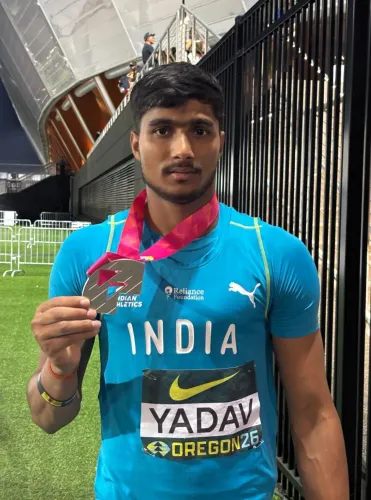
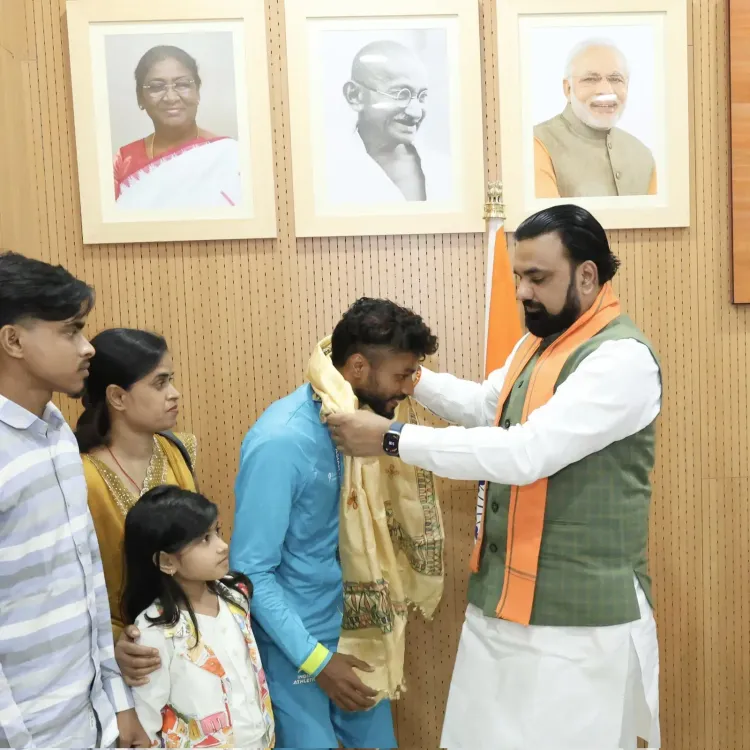
Bihar Chief Minister Samrat Choudhary handed a Rs 9 lakh cheque to athlete Piyush Raj at the Lok Sevak Awas in Patna for his medal-winning performance at the 22nd Junior Asian Athletics Championship, the Chief Minister's Office said, as the state continues its practice of publicly rewarding international sporting success.
Key Takeaways
Bihar CM Samrat Choudhary felicitated athlete Piyush Raj at the Chief Minister's residence in Patna .
Piyush Raj received a cash award of Rs 9 lakh for winning a medal at the 22nd Junior Asian Athletics Championship .
The ceremony took place at the Lok Sevak Awas , the official Chief Minister's residence.
The award fits a long-standing Bihar government practice of cash incentives for medal-winning athletes.
State-level rewards complement central programmes such as Khelo India for grassroots sports development.
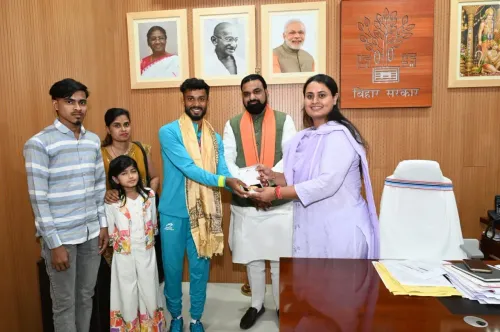
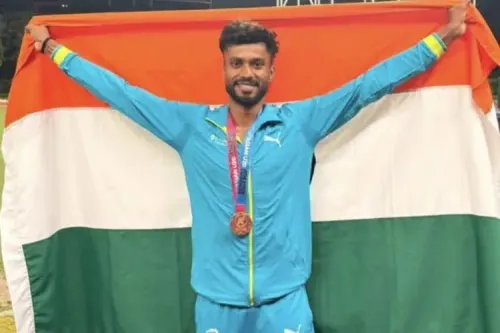
The Chief Minister's Office of Bihar announced on Wednesday that Chief Minister Samrat Choudhary felicitated state athlete Piyush Raj at the official Chief Minister's residence in Patna, presenting him a cheque of Rs 9 lakh for winning a medal at the 22nd Junior Asian Athletics Championship. The recognition, the office said, was meant to honour and encourage a young sportsperson who had 'brought pride to the country and to Bihar'.
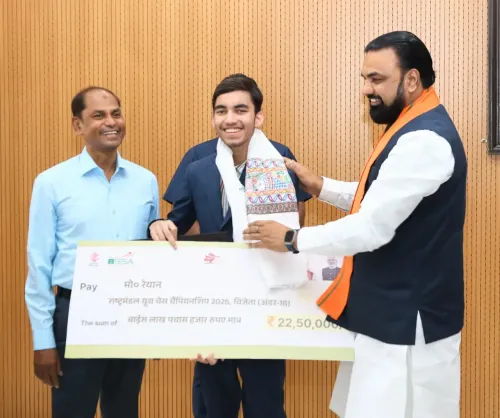
In its post, the Chief Minister's Office said in Hindi that 'माननीय मुख्यमंत्री श्री सम्राट चौधरी जी' (Honourable Chief Minister Shri Samrat Choudhary) handed over the cash award to the 'talented player of Bihar' as a gesture of both reward and motivation. The interaction was accompanied by four photographs from the felicitation at the Lok Sevak Awas (the official Chief Minister's residence).
Context
The Junior Asian Athletics Championship is a continental, age-group meet organised under the umbrella of the Asian Athletics Association, bringing together under-20 track-and-field athletes from across Asia. A podium finish at this level is typically regarded as a stepping stone towards senior continental and global competition.
For Bihar — a state that has historically lagged behind sporting powerhouses like Haryana, Punjab and Kerala in producing international athletes — a junior Asian medal from one of its own carries outsized symbolic value, which the state government appears to have moved quickly to capitalise on.
Policy backdrop
Successive Bihar governments have, over the years, adopted the practice of announcing cash incentives for state athletes who win medals at national and international competitions. Such awards are usually presented in person by the Chief Minister, often at the official residence, and are designed to function as both reward and visible policy signal.
The state's approach broadly mirrors the wider Indian pattern, in which state administrations layer their own cash prizes and job offers on top of central initiatives such as Khelo India and the Target Olympic Podium Scheme. The objective is to deepen the pipeline of athletes emerging from smaller centres beyond the traditional sporting belts.
Stakeholders and impact
The most immediate beneficiary is Piyush Raj himself, whose Rs 9 lakh award represents a substantial financial cushion for continued training, equipment and travel — costs that often weigh heavily on young athletes from non-metropolitan backgrounds.
Beyond the individual, the felicitation is aimed at Bihar's broader cohort of junior athletes and coaches working in district-level academies and stadia. Public ceremonies of this kind are commonly used to advertise the financial upside of competitive success and to encourage parents to back sporting careers for their children.
For the Chief Minister's Office, the event also slots into a familiar political template: positioning the state leadership as personally invested in the achievements of ordinary citizens, with the Chief Minister's residence used as the stage for that engagement.
What's next
Attention will turn to whether the felicitation is followed by structural commitments — fresh budgetary outlays for sports infrastructure, expansion of district-level training facilities, or new selection pipelines for Bihar athletes heading into subsequent junior Asian and world meets.
The state's sports department will also be watched for how it integrates emerging names like Piyush Raj into longer-term support frameworks, including coaching, sports science access and competition exposure abroad. For now, the cheque presented at Lok Sevak Awas sets a public benchmark that future medal winners from the state are likely to invoke.
Point of View
Especially in regions still building their sporting credentials. For Bihar, publicly rewarding a junior Asian medallist allows the government to signal that competitive sport is a viable, state-backed career path beyond traditional academic and civil service routes. The real test, however, lies less in the size of the cheque and more in whether such gestures are followed by sustained investment in coaching, district academies and athlete welfare. Without that follow-through, cash awards risk becoming episodic photo opportunities rather than the front end of a coherent sports policy.
NationPress
21 Sept 2026
Frequently Asked Questions
Who is Piyush Raj and what did he win?
Piyush Raj is a Bihar athlete recognised by the state government for winning a medal at the 22nd Junior Asian Athletics Championship, a continental under-20 track-and-field competition organised by the Asian Athletics Association.
How much cash award did Bihar CM Samrat Choudhary give Piyush Raj?
Chief Minister Samrat Choudhary presented Piyush Raj with a cheque of Rs 9 lakh as a reward for his medal-winning performance at the 22nd Junior Asian Athletics Championship.
Where was the Bihar athlete felicitation held?
The felicitation was held at the Lok Sevak Awas, the official Chief Minister's residence in Patna, where Samrat Choudhary personally handed over the cheque to the athlete.
What is the 22nd Junior Asian Athletics Championship?
It is the 22nd edition of the continental junior-level athletics championship organised by the Asian Athletics Association, featuring under-20 track-and-field athletes from across Asia.
Does the Bihar government regularly give cash awards to athletes?
Yes, successive Bihar governments have followed a practice of announcing cash awards for state athletes who win medals at major national and international competitions, often presented by the Chief Minister in person.